
Cook Islands down to just 20 days of fuel stock as local suppliers warn of 'significant price increases'
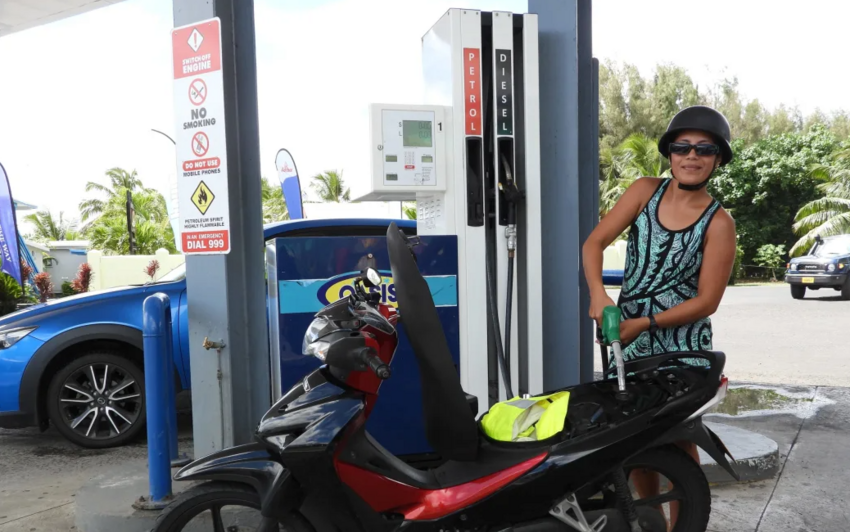
Fuel stocks in the Cook Islands have dropped to just 20 days - less than half of full capacity - and while suppliers are confident this is sufficient, they warn of further price hikes.
"Our fuel storage capacity, if we think about the full capacity, is about 45 days. We currently have around 20 days of stock. Compared to other Pacific islands, we are relatively well positioned," Ministry of Finance and Economic Management (MFEM) director of Economic Planning Division, Joaquin Vespignani, said while speaking at the Cook Islands Tourism global update on Thursday (Friday NZ time).
Local suppliers are confident that current stock is sufficient to last until the next shipment in early April - provided there is "no panic buying" - but they have warned of looming price increases.
A new price order that took effect on Friday has pushed fuel and LPG prices to among the highest ever recorded in the Cook Islands. The new rates - linked to supply disruption concerns stemming from conflict in the Middle East - have resulted in massive increases in petrol, diesel and LPG prices nationwide.
TOA Petroleum owner Brett Porter says fuel stocks are currently adequate for both unleaded petrol and diesel, ahead of the next tanker delivery from Fiji early next week.
This is provided there are normal purchasing conditions "meaning there's no panic buying behaviour".
"We don't anticipate any disruptions to delivery of our fuel requirements over the next few months," Porter assured.
However, he warned of looming price hikes.
"There is without doubt significant price and costs increases though on the horizon for the foreseeable several months," Porter said.
"The whole fuels business environment has changed. The buying of fuels now has moved from contractual arrangements to spot market fixing. This is a volatile market situation and now requires that stock is prepaid upon order placement and loading of vessels.
"Pricing predictors from our suppliers for the next deliveries in late April are huge. The Government is aware of this. We are endeavouring to assist in planning to soften the inevitability of the economic impacts."
According to chief economist Vespignani, global oil prices have surged to around US$90 per barrel - well above pre-crisis levels of approximately US$65.
He said while prices appear to be stabilising, they remain high enough to affect every layer of the Cook Islands economy, from electricity generation to transport and tourism operations.
Cook Islands is heavily reliant on imported fuel, which accounts for about 90 per cent of electricity generation and 97 per cent of transport.
"We are 100 per cent importers," he said. "We don't control production, and we don't control global prices. We are price takers."
Vespignani urged conservation efforts, stating they could stretch the fuel supply by 30 per cent - a critical buffer aimed at avoiding supply disruptions and ensuring national economic stability.
Tourism Industry Council calls for urgent renewable shift
Cook Islands government, through the Office of the Public Service Commissioner, has directed all agencies and ministries to implement immediate energy-saving measures.
The leading private sector, tourism industry, is also actively participating in energy conservation.
Cook Islands Tourism Industry Council president Liana Scott said the industry is already actively practising energy efficiency easures across hotels, resorts and accommodation providers.
"These include the use of energy-efficient appliances, solar water heating, smart air-conditioning systems and operational adjustments to reduce unnecessary consumption," Scott, who is also the general manager of the Muri Beach Club Hotel, said.
"However, as costs continue to rise, there is recognition across the sector that more can and will be done."
Scott said that despite the tourism sector's resilience during the ongoing war in the Middle East, sustained high fuel prices could place pressure on margins and influence visitor costs over time.
"While the sector remains resilient, sustained high fuel prices will place pressure on margins and could influence visitor costs over time, but for now our attractiveness of a safe desirable destination remains."
She said the current global situation would likely see an increase in operational costs for the tourism industry - "what sort of increase, only time will tell".
"We are conscious that this time is very volatile and there are moving parts outside of our control, so we just need to adapt and be practical.
"While the sector remains resilient, sustained high fuel prices will place pressure on margins and could influence visitor costs over time, but for now our attractiveness of a safe desirable destination remains.
"Overall, strengthening collaboration between government and industry - particularly in accelerating renewable energy adoption - will be critical to ensuring a sustainable and resilient tourism sector into the future."
Scott reiterated a key priority moving forward is the role of the government in enabling and encouraging greater investment in renewable energy.
"Transitioning to solar and other renewable solutions is one of the most effective ways to reduce long-term reliance on imported fuels, improve energy security, and manage operating costs," she said.
"This will require supportive policies, incentives and financing mechanisms to help businesses make these upfront investments. There is no better time than now to make the necessary moves that protect us from future shortages."
Thumbnail - One of the commuters filling up her bike at OASIS yesterday when she heard that the fuel price will increase today. TALAIA MIKA/26032616 Photo: Cook Islands News / Talaia Mika