
Deep Sea Mining in American Samoa: What You Need to Know
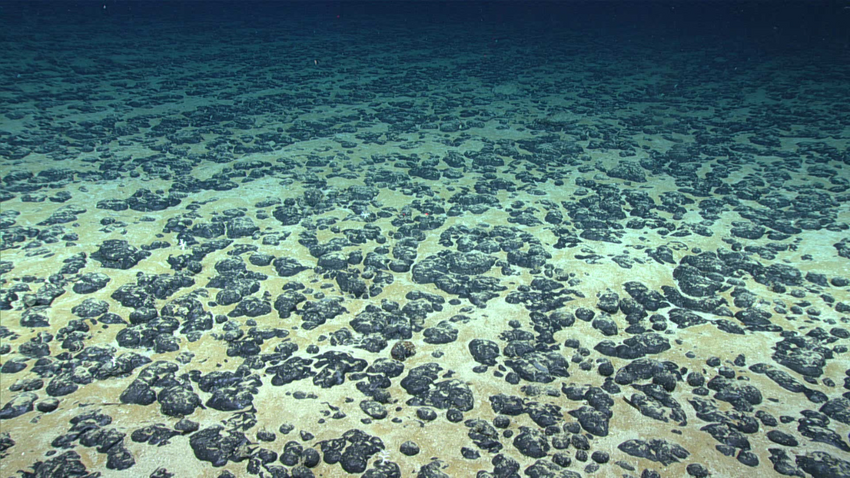
Polymetallic nodules, such as those shown here, can occur on the ocean floor and are of interest for the critical minerals they contain. (Image credit: NOAA)
Our ocean's future is once more the subject of a global trade for profit.
Recent announcement that the United States is moving to open waters around American Samoa to deep sea mining have sparked widespread concern among Pacific leaders, scientists, and environmental advocates. News broke that the US federal government will be proceeding with its first proposed lease sale for mining the deep sea on American Samoa’s Outer Continental Shelf. A Federal Register notice announced the plans last week. The proposal would offer over 31 million acres for mining in a sale on November 19, 2026. That area for sale is 632 times the total land area of American Samoa.
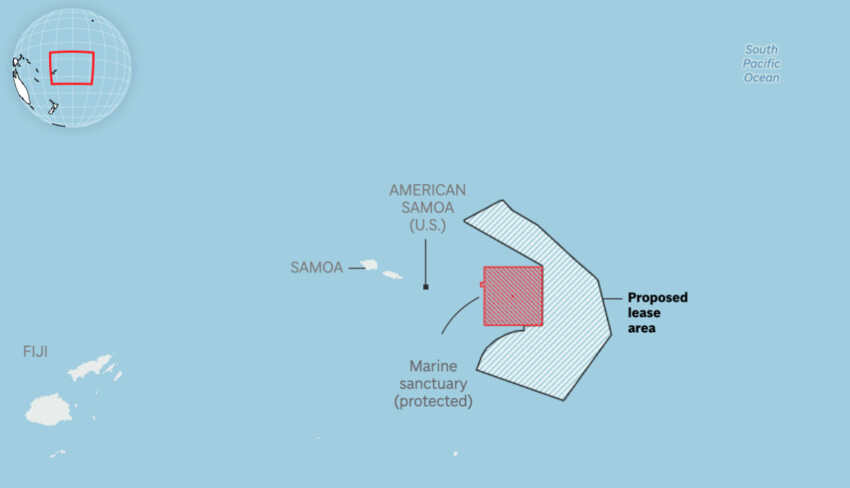
For many Pacific Islanders, this debate is not about minerals, it is about protecting the ocean that sustains livelihoods, traditions and culture. As pressure to exploit the deep sea intensifies, so too does the call for precaution, transparency, and the right of American Samoa’s community to shape the future of their own waters.
What is Deep Sea Mining?
Deep sea mining is the process of extracting minerals from the ocean floor, often at depths of 4,000 to 6,000 metres below the surface. The primary target are potato-sized rocks that have formed over millions of years called polymetallic nodules. These contain metals such as nickel, cobalt, copper, and manganese.
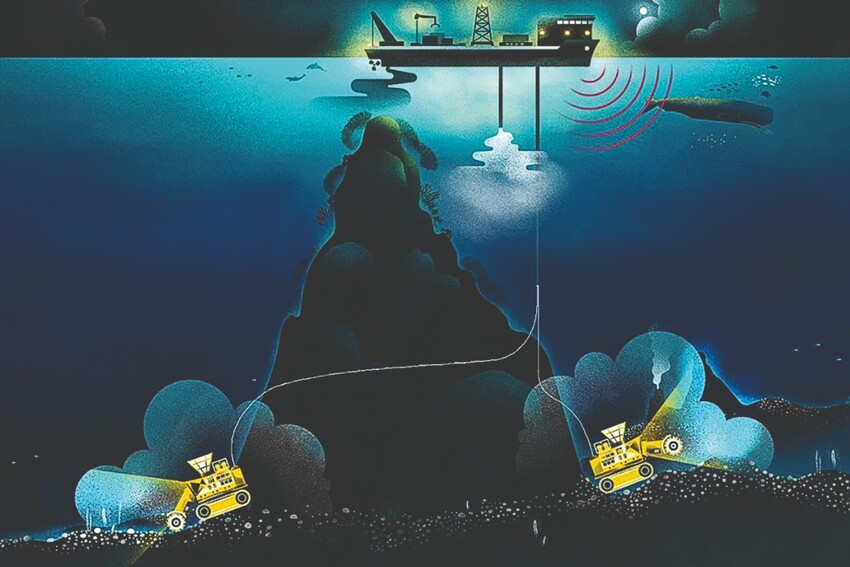
Mining operations involve large robotic machines collecting these nodules from the seabed before pumping them to surface vessels for processing. The removal of nodules would destroy homes for deep-sea species, while sediment plumes, noise, and light pollution could disrupt marine life. Because so little is known about these ecosystems, many researchers and governments have called for a precautionary approach, arguing that mining should not proceed until its environmental impacts are fully understood.
The Planet Tracker team have estimated the total cost of ecosytem restoration in the aftermath of deep sea mining at 5.3 to 5.7 million USD per km2. This is more than the revenue a typical company would make from mining. The cost of restoration would be so high it would be impossible for deep sea mining companies to pay for it and operate at a profit.
What is the US proposing
The recent notice published in the U.S. Federal Register does not mean that deep sea mining has been approved or that mining activities will begin immediately. Rather, it marks a significant step in the federal government's leasing process by proposing the terms and conditions for a potential commercial lease sale in the waters off American Samoa. The notice identifies areas that could be offered for lease, outlines the proposed rules for companies wishing to bid, and gives the Governor of American Samoa an opportunity to review and comment before any final leasing decision is made.
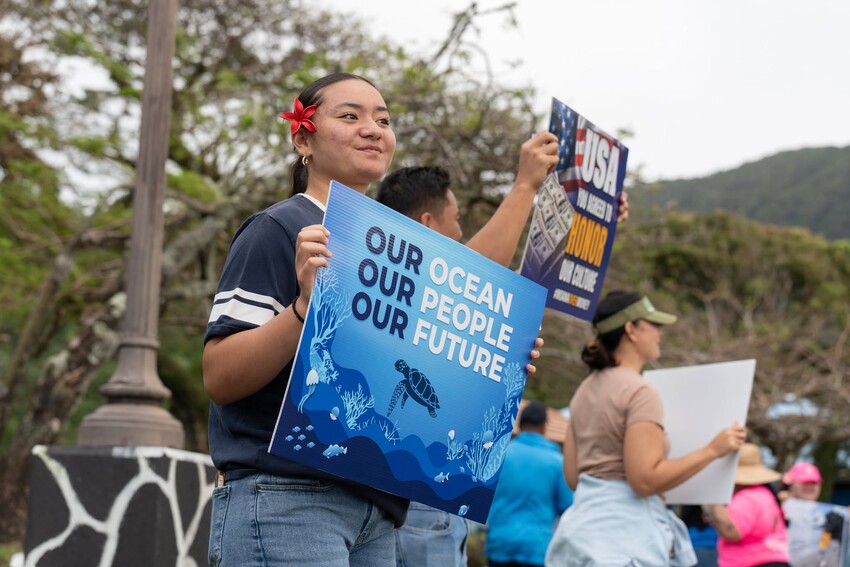
PC: Finafinau
If the process continues, the U.S. Bureau of Ocean Energy Management (BOEM) would still need to issue a Final Leasing Notice before holding a competitive lease sale, and any company awarded a lease would be required to obtain additional approvals before exploration or mining could proceed. While the notice does not authorize mining, it signals that the U.S. government is actively advancing plans that could eventually open parts of American Samoa's outer continental shelf to deep sea mineral exploration and development.
Impossible Metals and the 1%
Impossible Metals, a California-based deep sea mining company, has emerged as one of the leading commercial interests seeking access to seabed minerals in waters off American Samoa. In April 2025, the company submitted an unsolicited request to the U.S. Bureau of Ocean Energy Management (BOEM) to begin the process for a commercial mineral lease sale. Becoming the catalyst for the federal leasing process now underway. The company argues that the region's polymetallic nodules could help strengthen U.S. supplies of critical minerals, reducing reliance on foreign supply chains.
As part of its proposal, Impossible Metals has pledged to share 1% of future profits from any commercial mining operations with the people of American Samoa. The company has presented this commitment as a way to give back to local communities. However, the pledge is contingent on a mine becoming commercially profitable, and no such operations have yet been authorised. When Impossible Metals representatives took the floor at a Natural Resources Committee hearing, Congresswoman Adelita Grijalva asked them “Have you made any binding local commitments?”. To which one representative replied “we have verbalised that commitment and are very willing to make a binding commitment”. Confirming there is not yet a binding commitment for the 1% of profits.
Lessons from Naeoro (formerly Nauru)
Resource mining and offshore corporations interest in Pacific islands is not new to the region. There are lessons to be learnt from Nauru's phosphate mining history. For much of the twentieth century, Nauru's rich phosphate deposits were extracted on an industrial scale, first under German colonial rule and later by a British, Australian, and New Zealand administration. The mining generated enormous wealth from Nauru's natural resources, but for decades much of the financial benefit flowed overseas while the island itself was left with severe environmental damage. By the time Nauru gained independence in 1968 and assumed control of its phosphate industry, around 80 percent of the island's land had already been mined, leaving a landscape of jagged limestone pinnacles that remains largely uninhabitable today.
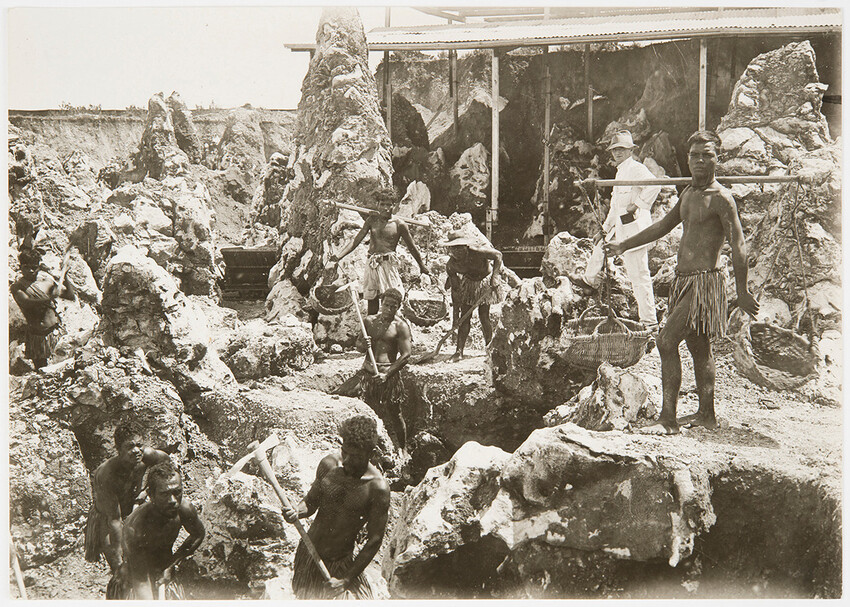
Although phosphate mining later brought significant income to the independent Nauruan government, much of this wealth was depleted through declining phosphate reserves, risky investments, and financial mismanagement. Today, Nauru's experience is often cited as a cautionary tale about the long-term consequences of resource extraction. It serves as a reminder that promises of economic prosperity must be carefully weighed against the risk of irreversible environmental damage and the possibility that the greatest benefits may not ultimately remain with the communities whose natural resources are being exploited.
The Campaign Against
Opposition to deep sea mining in American Samoa has been driven not only by regional and international environmental organisations, but the heart of it has been local community leaders determined to protect their ocean. Advocates including Sabrina Mahuku, organisation Finafinau, Pacific Roots Open Mic artists and other members of the growing grassroots movement. They have been working to educate communities about the proposed mining plans, raise awareness on how to lobby their government, and ensure that local voices are heard in decisions affecting their waters.
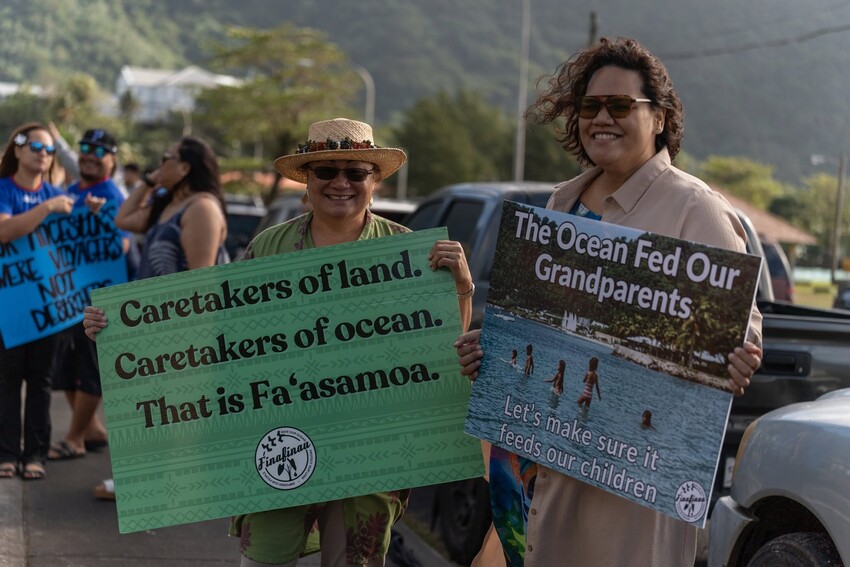
PC: Finafinau
Through community meetings, public outreach, media engagement, and collaboration with civil society organisations, campaigners have argued that American Samoa's ocean should not be opened to industrial extraction without informed participation of its people.
Their campaign reflects a broader Pacific movement calling for a precautionary approach to deep sea mining and asserting that the ocean is not simply an economic resource, but a source of identity, culture, food security, and intergenerational responsibility.
-
By Suluafi Brianna Fruean