
Growing Hope in Remote Savai'i: How Auala is Transforming Food Security Through Hydroponics
By Lagomauitumua Elizabeth Ah-Hi
Lettuce is not something you expect to find thriving on volcanic rock.
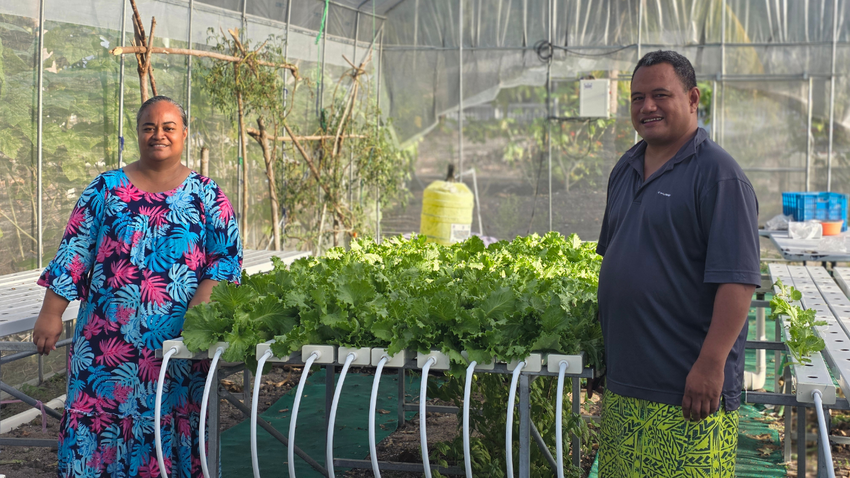
Yet in the village of Auala on the western coast of Savai'i, rows of bright green lettuce rise from a hydroponics system that has transformed an unlikely patch of land into a thriving community garden. In a place where rocky terrain has long limited vegetable production, the project is helping to strengthen food security while creating new opportunities for local youth.
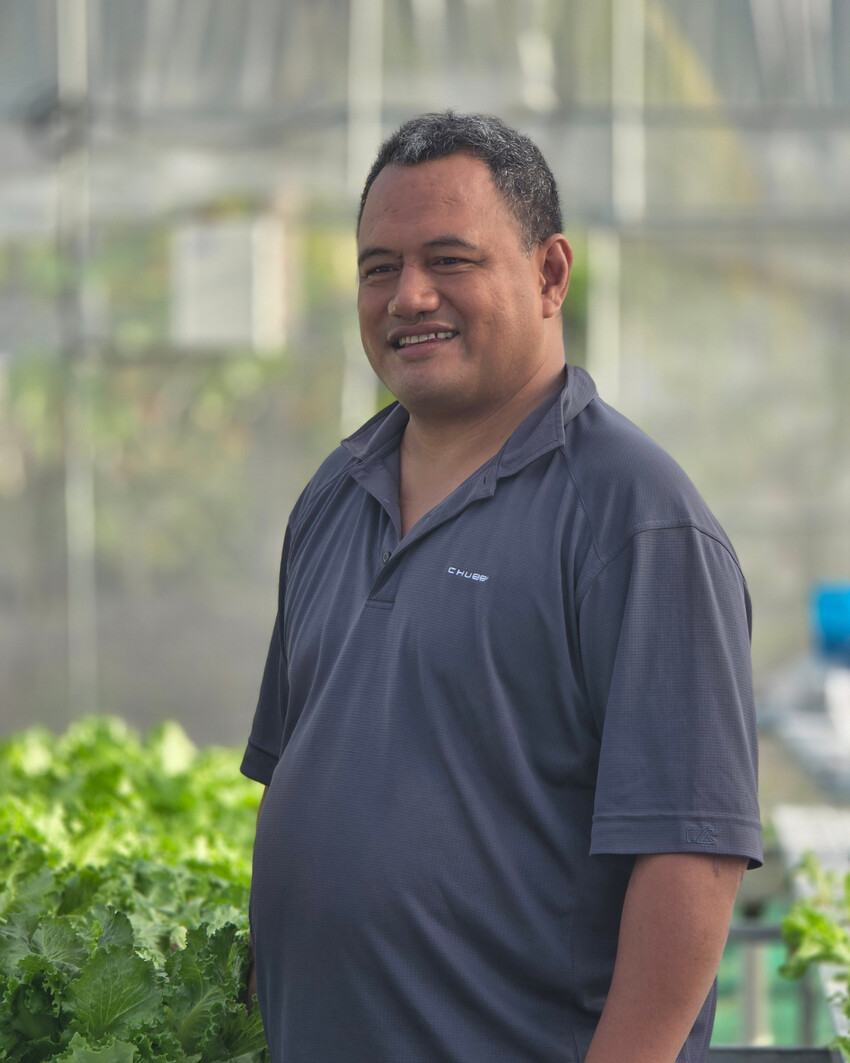
For Reverend Motusaga Lesa, however, the story began with something much simpler: a love of gardening.
When he and his wife arrived in Auala eight years ago to serve the local EFKS congregation, they quickly discovered that one of the most ordinary parts of life back home in Upolu was far more difficult here.
Gardening had always been second nature, but Auala's rugged lava fields and limited arable land made growing vegetables a challenge. While recent improvements to the local water supply have made life easier for residents, families have mostly relied on produce brought in from elsewhere or travelled inland to plantation areas where soil conditions were more suitable.
For someone who genuinely enjoyed gardening, it was difficult not to see the opportunity hidden within the challenge.
"One of my favourite things to do is gardening," Reverend Lesa recalls. "But since there is not much suitable soil here in Auala that can be ploughed for farming, we were looking for an alternative." His answer came in the form of hydroponics, a method of growing crops using nutrient-rich water rather than soil.
Hydroponics offered a way to bring vegetable production back into the village itself.
By growing crops in nutrient-rich water rather than soil, the system requires less land, uses considerably less water and allows vegetables to be produced consistently throughout the year. For a community that has historically struggled to grow fresh produce locally, those advantages are transformative.
"The good thing about hydroponics is that we actually save water," Reverend Lesa explains. "We use about 600 litres of water for around two weeks, which is far less than what would normally be used in traditional farming."
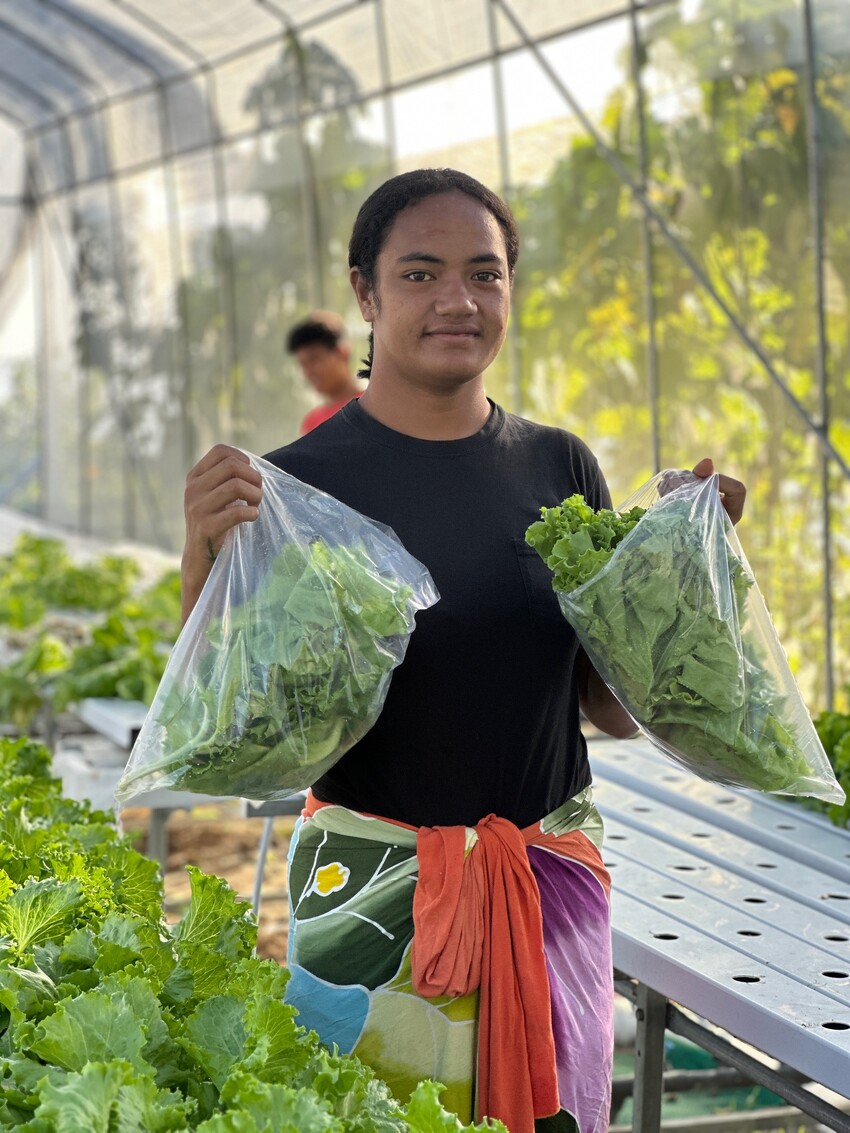
The system also provides a level of consistency that traditional farming often cannot. Lettuce seedlings spend approximately two weeks establishing before being transferred into the hydroponics system, with harvests typically ready within four to five weeks.
"We would not be able to grow lettuce in this area if hydroponics did not exist," he says.
In 2024, Reverend Lesa and his wife successfully secured support through Samoa's Civil Society Support Programme (CSSP) and the Ministry of Agriculture and Fisheries. The funding allowed them to transform years of conversations and planning into reality by establishing a hydroponics system capable of growing lettuce in conditions where conventional farming struggled.
Like many good ideas, the reality proved more complicated than the dream.
Hydroponics was still relatively unfamiliar in Samoa and there was no blueprint for how such a system would perform in Auala's unique environment. High temperatures, humidity and plant diseases presented challenges from the outset, requiring constant experimentation and adaptation. But Reverend Lesa viewed these setbacks as part of the journey.
"There were a lot of challenges along the way," he says. "Theres that saying in Samoan; ‘e aogā mea e tutupu e a'oa'oina mo le lumana'i’ - our mistakes teach us how to improve for the future."
Gradually, the system began to find its rhythm. The first seedlings survived. Then came the first harvests. Soon after came the first customers.
Perhaps the greatest surprise was not the lettuce itself, but the response from the community.
Many residents were unfamiliar with hydroponics and unsure whether lettuce would ever become popular in the village. Yet as more people learned about its health benefits and began seeing customers arrive from outside the community, attitudes slowly began to shift.
Social media also played an unexpected role. Photos of the garden reached Samoans living overseas, who encouraged their families back home to support the project and incorporate more fresh vegetables into their diets.
But if the lettuce garden was created to improve food security, it quickly became something else as well because the project was always about the youth.
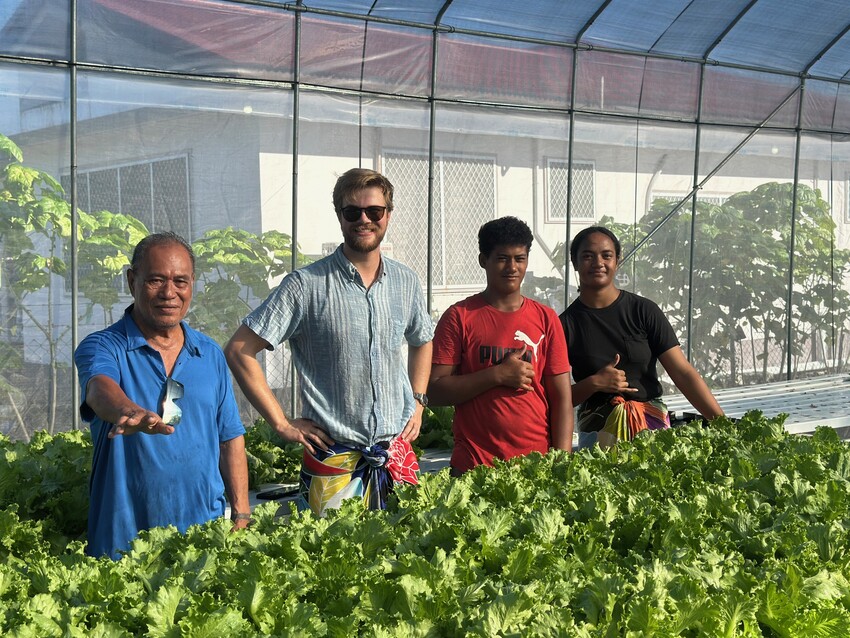
Reverend Lesa and his wife wanted young people in Auala to be involved from the very beginning. They saw the garden as an opportunity not only to introduce a different way of farming, but also to create a space where youth could develop practical skills, earn an income and build confidence in their own abilities.
The youth learned how to manage seedlings, monitor nutrients, maintain equipment and harvest produce. Alongside these technical skills, they learned the importance of responsibility, teamwork and commitment.
"We hope they will understand the value of committing to a long-term goal," Reverend Lesa says. "Not just here in the garden, but for their own lives."
Convincing young people to participate was not always easy. In the early days, many struggled to see the value of hydroponics or imagine how it could benefit them. That changed once the first harvests generated sales and the project began producing visible results.
For Reverend Lesa, one of the most rewarding outcomes has been watching the confidence of the youth grow alongside the lettuce.
"My wife and I, along with the senior members of the group, are now able to step away and let the youth run the garden," he says. "That has been a big step in this journey and an important sign that the project can continue into the future."
Today, the hydroponics garden supplies a growing list of customers across Savai'i, including hotels, resorts and supermarkets seeking a reliable source of fresh produce. Among its regular customers are Amoa Resort, Le Lagoto Resort, Savai'i Lagoon Resort, Vaisala Hotel and Vaimoana Resort, whose ongoing support helps sustain the project and generate income for the youth involved.
What began as an effort to overcome the limitations of rocky terrain has evolved into a small but thriving enterprise that contributes to local food security while creating economic opportunities within the community.
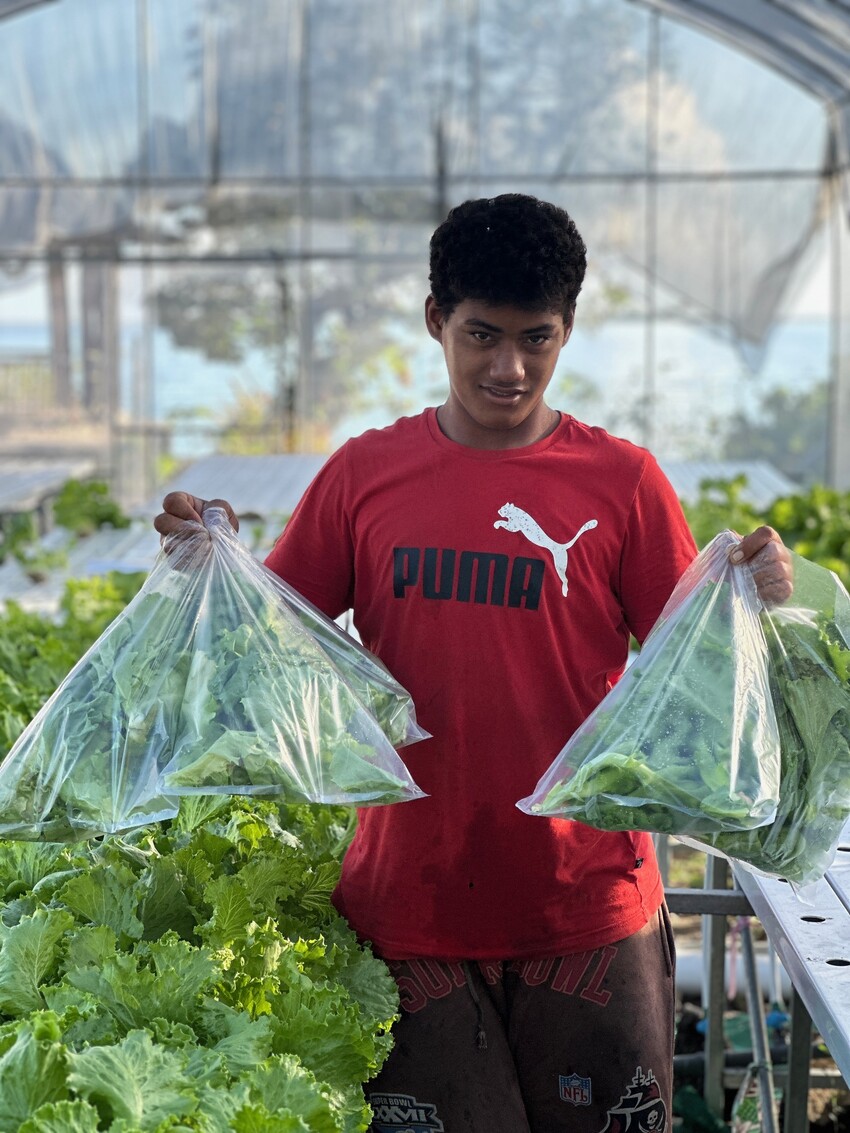
Looking across the thriving rows of lettuce today, Reverend Lesa is quick to point out that the success of the project belongs to many people.
He credits the Civil Society Support Programme and the Ministry of Agriculture and Fisheries for believing in an idea that once existed only as a dream. He acknowledges the village of Auala for embracing something unfamiliar and supporting the project from its earliest stages. He also expresses gratitude to the customers whose purchases continue to sustain the garden and create opportunities for local youth.
"This is a project that we dreamed about for a long time," he says. "Now it has become a reality. Thank you to the village of Auala for believing in us because this project is not only for the youth. It impacts the whole community."
Standing among rows of lettuce thriving above volcanic rock, it is difficult not to appreciate the significance of what has been achieved.
The hydroponics garden has brought fresh vegetables to a place where they were once difficult to grow. It has created opportunities for young people, strengthened local food security and demonstrated that some of the most effective solutions can come from the communities facing the challenges themselves.