
Makali’i: The Pacific connection to Matariki
by Mariner Fagaiava-Muller & Teherenui Koteka
Māori herald their New Year with the rising of the Matariki star cluster, but it’s used too by Pacific Islanders to track time and seasons.
In Hawai’i, the Pleiades star cluster is called Makali’i. It appears at sunset, as opposed to sunrise as Aotearoa sees it.
Whereas Matariki is observed in Aotearoa during June/July, Makali'i in Hawai'i comes about during the latter end of the year around October.
Kamehameha Schools tells the traditional mo’olelo (story) about how the name came to be.
“It begins with the evil deeds of an aliʻi of Kona on the island of Hawaiʻi. He greedily decides to hoard everyone’s food into one enormous carrying net and travels with it to the highest stratum of the heavens, where he hangs it up.”

“Meanwhile, the ravenous people hastily gather to plan a way to get their food back. A little mouse bravely consents to take on the arduous task. He successfully gnaws on the net until the food drops to the earth. Thus, the constellation takes the name Makaliʻi, the aliʻi who hung the net of food in the stars.”
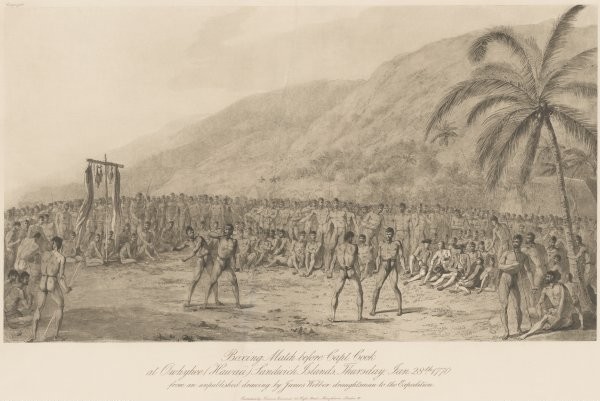
Makali’i is a symbol of the ancient Hawai'ian harvest known as ‘Makahiki’; sacrifices were offered up to Lono, the god of fertility and agriculture.
Makahiki meaning ‘year’, was a time when war was banned so the people and land could rest.
In Samoa, Mataalii (“eyes of the chiefs”) has a different origin story. The seven stars are the eyes of the seven chiefs who went to heaven after death, with only one eye of each being visible today.
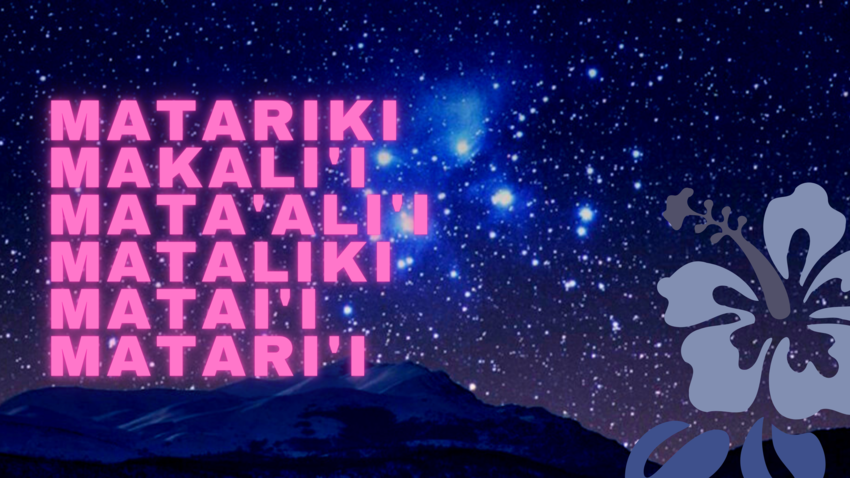
Makali'i - Hawai'i
Mata'ali’i - Samoa
Matariki - Cook Islands
Matari’i - Tahiti
Mataiki/Matai'i - The Marquesas Islands
Mataliki - Tonga, Niue, Tokelau, Tuvalu, Wallis and Futuna
Matari’i: Tahiti’s season of abundance recognised with new public holiday
For Tahitians, the Pleiades star cluster is known as Matari’i.
In November 2025, Tahiti marked Matari’i as a national public holiday for the first time, recognising the ancestral knowledge and seasonal practices connected to the stars.
Matari’i marks the beginning of Matari’i i ni’a, the six-month season of abundance, followed by Matari’i i raro, the six-month season of scarcity.
The people of Tahiti have traditionally lived in accordance with these two seasons, using the movement of the stars to understand cycles of nature, food and preparation.
Many traditions connected to Matari’i are linked to the Arioi, a revered group of artists, priests, navigators and diplomats who held important cultural roles in Tahiti.
Speaking to RNZ, Mr Whakataka-Brightwell said:
"Bringing that back into the public space is good to sort of recognise the ancestral practice of not only Matariki in terms of the abundance but also giving more credence to our tūpuna kōrero and mātauranga tuku iho."
He said the new holiday would encourage people to reconnect with ancestral practices:
"I think this will be a little bit more of an incentive for everything else to align to those sorts of celebrations."
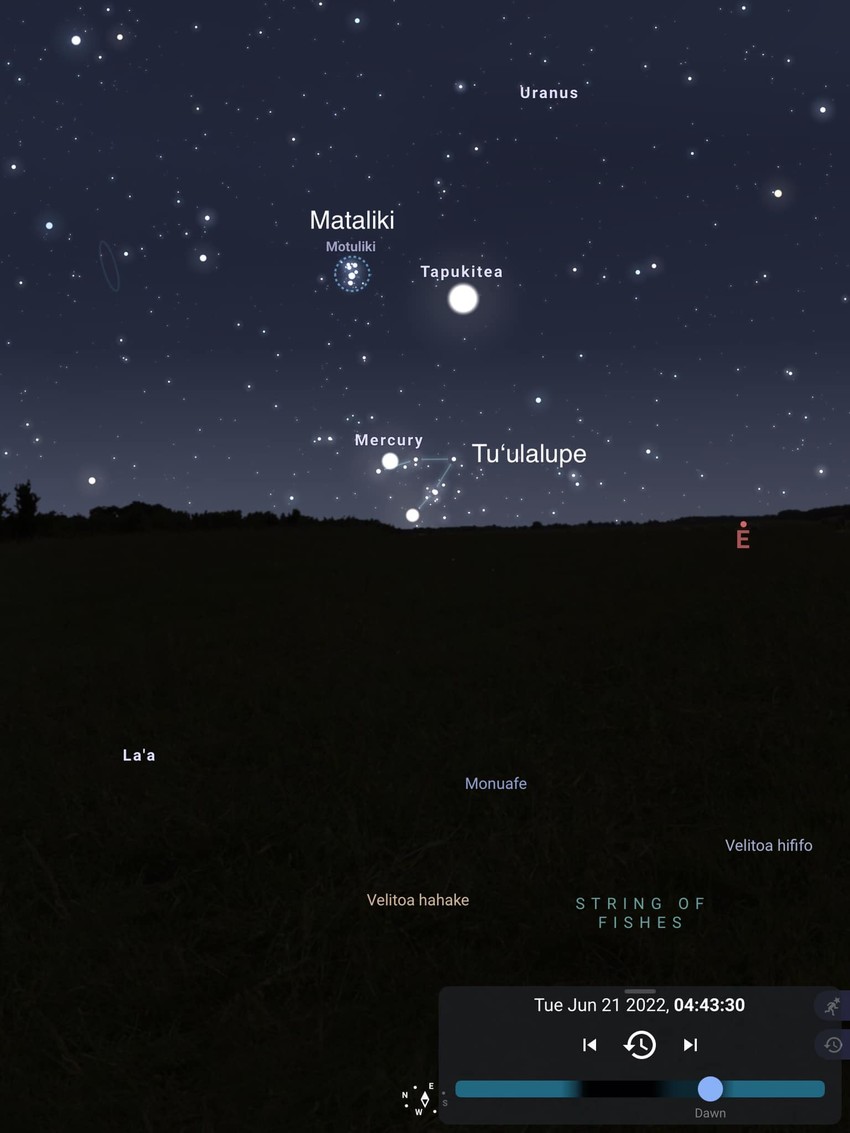
Anthropologist Tēvita Ka’ili explains the relevance of Mataliki to ancient Tongan navigators.
“The rising of Mataliki (Pleiades) and the Laʻā (Sun) on Tele-ki-Tokelau (Tropic of Cancer) marked the beginning of the Tongan Kātoanga ʻInasi, Tribute Festival, to Hikuleʻo, the highest ranking Tongan deity.”
“In Tongan cosmogony, Hikuleʻo is the elder sibling of Tangaloa and Maui, and Hikuleʻo has the dual nature of female and male, life and death, and the guardian of water and fire. Hoa, duality, is a fundamental character of Hikuleʻo.”
Though the origin stories of Matariki may vary throughout Pacific cultures, people of Te Moana Nui o Kiva are united in our celebration of Matariki as a time of honoring those who came before us and a period to look ahead and plan for prosperity.
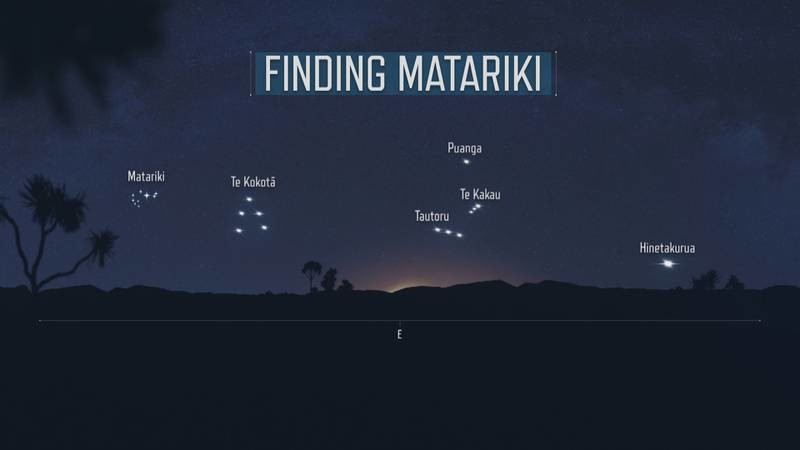
The best time to observe Matariki in Aotearoa is before sunrise NZT on Friday 28th of June.
It’s expected to remain visible for around eight days, and again during the summer months.
Here’s how you can spot it:
- Look east and find three stars in a row, known as Orion’s Belt or ‘Tautoru’ in te reo Māori.
- Trace a line northwards from Tautorun to the triangular-shaped star cluster Te Kokotā.
- Look further left and you’ll find Matariki.
Ngā mihi o Matariki! Celebrate Matariki/Matali’i/Matari’i/Makali’i/Mataliki/Mata’iki.
–
Public Interest Journalism funded through NZ On Air