
Pacific unemployment still highest in NZ months after State of the Nation warning

State of the Nation report warned Pacific families were falling behind. New unemployment figures show little has changed.
When The Salvation Army released its State of the Nation 2026 report in February this year, it painted a devastating picture for Pacific communities across Aotearoa.
The report found Pacific children were experiencing the highest rates of material hardship in the country. Nearly three in every ten Pacific children were living without essentials, almost half were experiencing food insecurity, and Pacific people faced the highest unemployment rate of any ethnic group.
Three months later, new unemployment figures suggest those warnings have not eased.
Statistics released on 7 May show Pasifika unemployment remains the highest in New Zealand at 11.9 percent, compared with a national unemployment rate of 5.3 percent. In Auckland, where nearly two-thirds of Pacific people live, unemployment sits even higher at 13 percent.
Although slightly lower than the December 2025 quarter, the rate is still higher than this time last year.
At the same time, 20.1 percent of Pasifika workers are considered underutilised, meaning many are unable to access enough work or stable hours.
Deputy Labour leader Carmel Sepuloni said the shift in numbers was marginal.
“It's still double what the national average is,” she said.
“We know that there are 20,000 fewer jobs in the construction industry, and that many of our Pacific people have been working and serving in that industry.”
The updated data adds further weight to concerns first raised in February’s State of the Nation report, which found Pacific families were being disproportionately impacted across nearly every major hardship indicator.
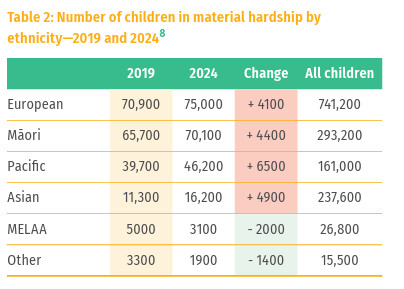
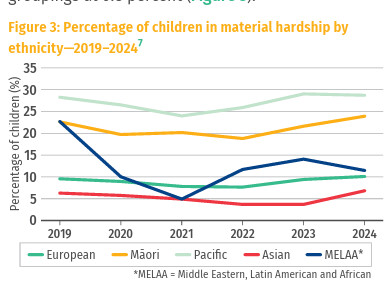
The report showed 28.7 percent of Pacific children were living in material hardship, the highest rate across all ethnic groups. That equated to 46,200 Pacific children, an increase of 6,500 since 2019, the largest rise experienced by any ethnic community in Aotearoa.

Material hardship refers to going without basics many families rely on, including adequate food, heating, healthcare, transport, warm clothing or stable housing.
For Pacific families, the report suggested hardship was no longer isolated. It had become widespread.
Labour’s Pacific caucus chair Jenny Salesa said at the time the statistics reflected the lived reality of many Pacific households.
“My heart breaks for our Pacific children who continue to struggle. The statistics represent real stories, real pain being experienced by Pacific families who are being left behind by this government.”
The February report also linked rising hardship directly to food insecurity and unemployment.
It found 44 percent of Pacific children were experiencing food insecurity, nearly double the national average for households with children.
At the same time, the number of children living in benefit-dependent households had reached its highest level in a decade. Almost half of all children experiencing material hardship were living in households dependent on welfare support.
Pacific people were also disproportionately impacted by benefit sanctions, accounting for 23.9 percent of all sanctions despite making up only 13 percent of welfare recipients.
Salesa said those figures highlighted the growing pressure Pacific families were facing during the cost-of-living crisis.
“It’s unacceptable that almost half of Pacific children experience food insecurity and Pacific people have the highest unemployment rate of any ethnic group. Christopher Luxon promised to address the cost of living but instead, life has gotten harder.”
The latest unemployment figures arrive alongside scrutiny of government-funded Pacific employment initiatives.
The State of the Nation report also warned that financial stress was spilling into wider child wellbeing outcomes.
Reports of concern for child abuse or neglect rose 44 percent in 2025, the largest annual increase recorded. Cases of substantiated neglect and emotional abuse also increased, while more than 9,000 children under 15 became victims of violent crime during the year.
The report linked worsening outcomes to sustained economic stress, overcrowded housing and reduced access to support services, conditions Pacific families are more likely to experience.
Despite the figures, Prime Minister Christopher Luxon has continued to defend the government’s economic direction, arguing falling inflation, lower interest rates and improved business confidence are signs recovery is underway.
But for many Pacific families, that recovery remains difficult to see.
As election year continues, the gap between economic messaging and the lived experiences of Pacific communities appears to be growing wider.
For Pacific children and families, the warning signs outlined in February’s State of the Nation report are no longer predictions.
The latest data suggests many are still living that reality now.