
Palau Linked Tanker Hit Near Strait of Hormuz as Pacific Braces for Higher Oil Prices
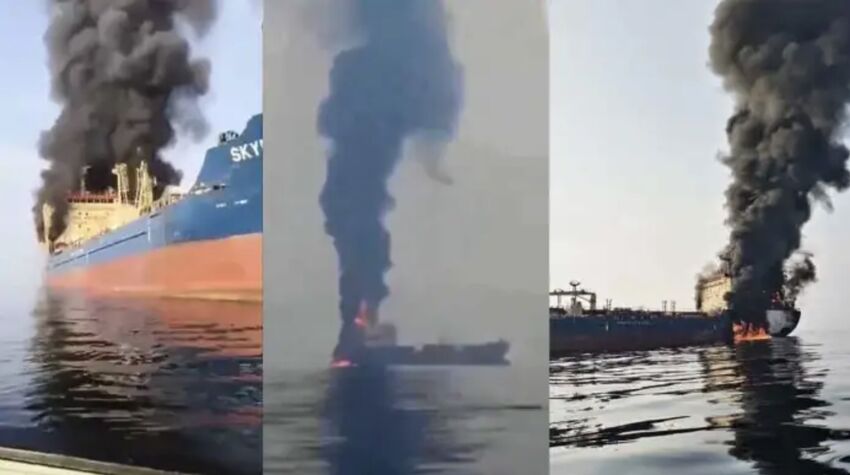
A ship linked to Palau has been seen ablaze near the Strait of Hormuz after reportedly being struck by a projectile, as tensions between the United States and Iran continue to escalate.
The tanker at the centre of the incident, MT Skylight, was widely identified in early reports as Palau-flagged. However, the Palau Ship Registry has clarified that the vessel was no longer registered under Palau at the time of the attack.
In a statement issued from Koror on March 2, 2026, the registry said the tanker had been removed from its records in January 2026 under established compliance and regulatory procedures.
“Certain media reports have referred to the vessel as being registered under the flag of Palau,” the statement read. “The vessel was removed from the Palau registry in January 2026 in accordance with the Registry’s established compliance procedures and applicable regulatory requirements.”
The clarification follows reporting from the Oman Maritime Security Centre, which said the incident occurred about five nautical miles north of Khasab Port in the Strait of Hormuz. Twenty crew members were reportedly on board at the time, with four injured and taken ashore for medical treatment. The registry expressed concern for the seafarers and their wellbeing.
Fuel price shock looms for Pacific
Beyond the immediate maritime security concerns, analysts are warning the fallout could be felt across the Pacific in the form of higher fuel costs.
According to RNZ Pacific, Brent crude prices could climb as high as US$100 per barrel amid fears the conflict could spiral into what one analyst described as “a global energy crisis”.
Saul Kanovic, an energy sector analyst at MST Financial in Sydney, told RNZ Pacific the “threat is severe”.
“If the situation doesn't de-escalate and the passage through [the Strait of Hormuz] remains significantly disrupted, we're looking at a global energy crisis that we haven't seen since the '70s,” Kanovic said.
“This could be bigger than that.”
The Strait of Hormuz, which borders Iran, carries around 20 percent of the world’s oil and gas supply. Shipments have reportedly been suspended following the latest attacks.
Pacific Island nations are particularly vulnerable due to their heavy reliance on imported fuel and long shipping distances. Kanovic warned that more isolated economies would face greater exposure to price shocks, with transport costs and even insurance premiums likely to rise.
Glen Craig, Vanuatu’s special envoy for international development, told RNZ Pacific that the full impact would depend on how long the conflict continues and whether it outlasts national fuel reserves.
“No one is panicking now, but there is definitely going to be some fuel price increases at some stage,” Craig said.
When those increases come, he warned they would likely filter through to the cost of imported goods, tourism and regional travel.
“I would dare say we're looking at something in maybe four months' time.”
In Papua New Guinea, there could be mixed effects. Foreign Minister Justin Tkatchenko told RNZ Pacific higher global energy prices would “definitely benefit PNG” as a petroleum exporter.
“It will definitely benefit PNG, but then there's the other side, where fuel prices for the domestic market will then go up,” Tkatchenko said.
He acknowledged that while government revenues may rise, “it's the consumers that will cop it”.
With global markets watching closely, Pacific governments now face the dual challenge of navigating geopolitical instability while shielding households from the ripple effects of a potential energy price surge.