
Pay Equity Rollback Discriminated Against Women, High Court Rules
Undervalued, unseen, and struggling to survive, this is the daily reality for many Pasifika women working at the coalface of Aotearoa's lowest-paid sectors. They are our nurses, teachers, essential service workers, and frontline staff across a range of industries.
When the coalition Government rushed its changes to the Equal Pay Act through Parliament under urgency in May 2025, Pasifika women warned they would be hit harder than anyone. Now the High Court has confirmed that the law discriminated against women.
What the court found
In a judgment released on 19 November 2026, Justice Paul Radich ruled that the Government breached women's rights when it scrapped dozens of pay equity claims and made it harder to lodge new ones. He found the tightening of the Equal Pay Act discriminated against women and was inconsistent with the New Zealand Bill of Rights Act.
The Government's lawyers argued the changes were meant to make the system more robust and sustainable. Justice Radich disagreed. He said the Crown had provided "nothing tangible" to show the previous approach wasn't working, and that official papers showed the changes were mainly motivated by the cost of settling pay equity claims.
He also found ministers could have taken "more proportionate" steps that did less harm to women's rights — such as allowing existing claims to continue. Women in undervalued, female-dominated jobs, he said, had been subject to "unjustified discrimination" because of their sex.
"They deserve to have the importance of the right, and the fact of its breach, recognised by the Court."
The court did reject a separate argument from the unions that the Government breached their rights by passing the law without consultation, finding there is no legal requirement to consult before introducing a bill.
The case was brought by five unions — the NZ Nurses Organisation, the Public Service Association (PSA), the Post-Primary Teachers' Association, the Tertiary Education Union and the NZ Educational Institute — with the Human Rights Commission joining as an intervener. It follows an earlier High Court ruling this year that found the Crown discriminated against self-employed midwives by failing to pay them fairly.
What the ruling does — and doesn't — do
The ruling is a declaration of inconsistency. It does not overturn the law or bring back the claims that were wiped out. But it does force the issue back into Parliament: the next government must issue a formal response, which MPs must then debate.
The Crown could also still appeal. Workplace Relations Minister Brooke van Velden said she couldn't respond in full while the Crown considers an appeal, but maintained that "pay equity claims can continue to be identified and addressed under the new law."
The PSA called the ruling a "groundbreaking historic decision" and is demanding the next government restore the original regime without delay. National secretary Fleur Fitzsimons described the 2025 changes as "an immoral and now an unlawful betrayal and wage theft, plain and simple."
The timing matters. Provisional election results give National, ACT and New Zealand First a narrow majority, but the final count could leave them relying on the Opportunity Party, which campaigned on restoring pay equity to the 2020 settings, though not as a bottom line. Fitzsimons has urged Opportunity to "take leadership" in any coalition talks.
Pasifika women were always going to pay the price
Pasifika women are, proportionally, the lowest-paid workers in Aotearoa across most sectors. The court's finding that the law discriminated against women in undervalued, female-dominated work describes exactly where so many of them work.
When the law passed, Pacific nurse and mother Jaz Bee said: "The Pay Equity Bill was rushed through Parliament then passed to save money, which feels like a slap in the face. Pacific nurses have been undervalued for years — now we're being told our worth is too expensive. This isn't equity, it's exploitation."
The court has now found that saving money was indeed the main driver. For Jaz, the changes came in an already difficult climate in the health sector, where jobs are being cut and employment prospects are increasingly unstable.
The Pasifika early childhood education (ECE) sector, largely staffed by Pasifika women, was also expected to feel the immediate impact. Italia Taouma, manager of A'oga Fa'asamoa, warned the legislation would widen existing inequalities: "The current Government's changes to the Equal Pay Act mean that the pay gap that ECE teachers already have will widen even more. For Pasefika, it means that ECE will not appeal to young people with Pasefika language and culture to take up the profession. It will mean we won't have up-and-coming teachers to take the reins from our ageing staff."
She added: "This also sends the message that we are not valued — that our profession is not as worthy as others. The Government's patriarchal view that employment which emphasises nurturing, empathy, caring and alofa does not produce economic gains is regressive and closed-minded. These types of jobs are ones that women excel in, and in which they often dominate. This Bill puts another screw in the lid."
The numbers
According to the 2021 Household Labour Force Survey (Stats NZ), for every $1.00 earned by a Pākehā man:
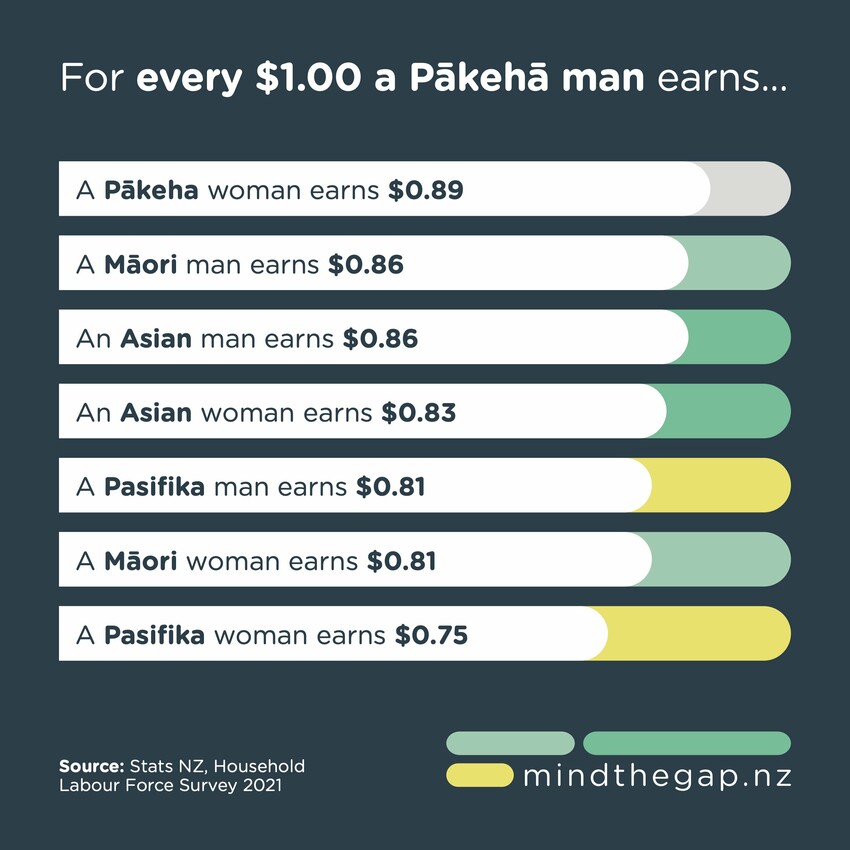
Māori and Pasifika women already experience the largest pay gaps in Aotearoa. The disparity is so significant that experts say it equates to Māori and Pasifika women "working for free" from the end of October for the rest of the year.
What the 2025 law changed
The amendment raised the threshold for bringing a pay equity claim. Workers must now provide stronger evidence of discrimination at an earlier stage. The criteria for classifying an occupation as "female-dominated" were made stricter, and employers were given more flexibility to exit the claims process. Provisions for back pay were removed, and any agreed pay increases can now be phased in over three years. Dozens of claims already underway were extinguished overnight.
The previous legislation, introduced in 2020, was designed to make pay equity claims more accessible. The 2025 amendments reversed many of those protections — and critics have long argued this would disproportionately disadvantage women in lower-paid sectors, particularly Māori and Pasifika women.
What happens next
The High Court has now said what Pasifika nurses and teachers said from the start: this law discriminates against women, and it was driven by cost rather than need. Whether that finding turns into restored rights depends on what happens next — a possible Crown appeal, the shape of the next government, and how Parliament responds to the court's declaration.
For the women at the coalface, the question is no longer whether the law was fair. A court has answered that. The question is whether the next government will act on it.
-
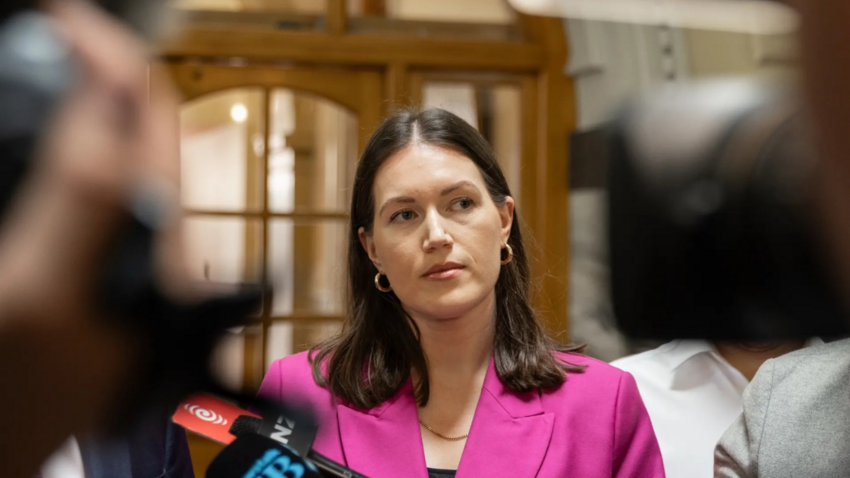
Thumbanail: Brooke van Velden.Photo credit:RNZ / Samuel Rillstone