
THE COST OF “JUST PLAYING WITH AI”: STOLEN INDIGENOUS IMAGES RECREATED FOR WHITE CLICKBAIT
The Harm is Real
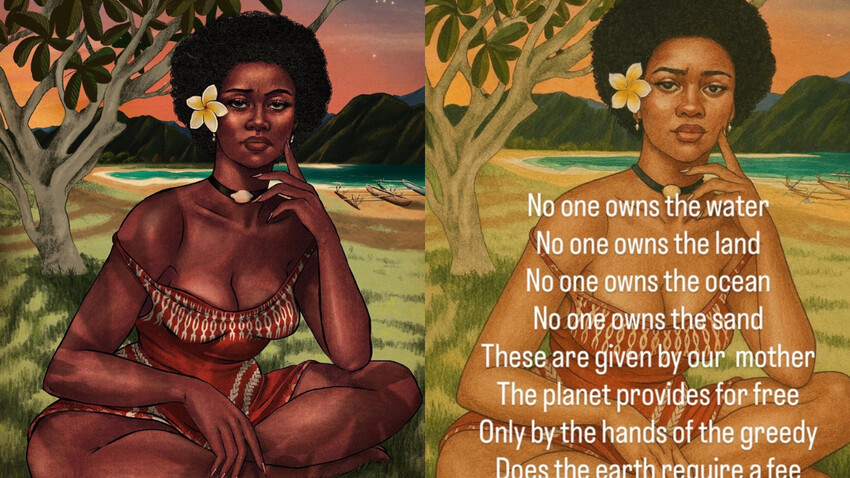
Recently, the work of Tongan artist Lucid Luca was fed into AI and reposted online. The original piece, inspired by his birthplace of Lautoka, captured the warmth of Fiji’s western coast.
The AI version, however, altered the work: it softened features, lightened skin, and stripped away the cultural depth Luca had embedded into every brushstroke. The repost went viral before it was eventually removed, but the broader harm remained.
Luca explains, “It chips away at the work we’ve put years into, and it distorts how our people see themselves. It may depict brown people, but it has been trained on a western lens and western data. We may become redundant but everyone else will not be far behind, so I resent being offered up as the sacrificial lamb to this shift in attitude.”
Colourism in AI, where dark-skinned Pacific faces are lightened to fit Western ideals, is a reflection of a broader, pervasive issue in Pacific communities. As AI “repackages” our art, it is not only erasing the individuality of creators like Luca, but reinforcing a colonial legacy of colour hierarchy.
Pacific Artists speak out
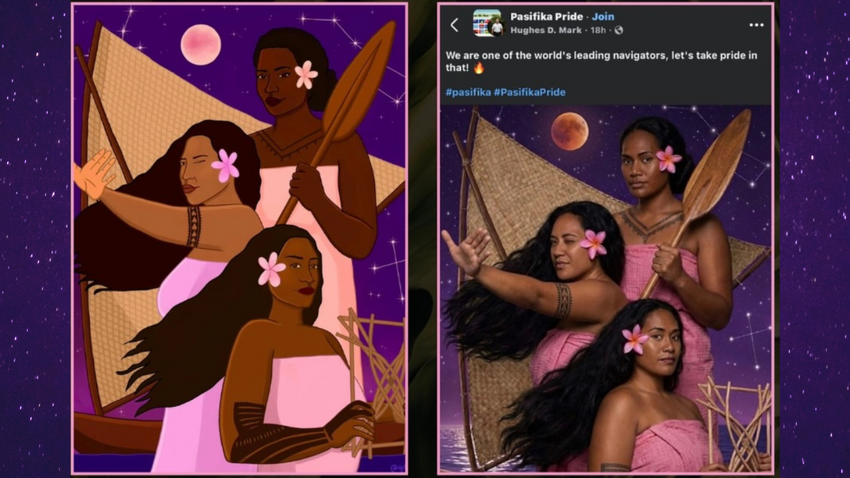
Chamoru-Micronesian artist Gillian Dueñas, whose original artwork celebrating the diversity and beauty of Pasifika women was recreated by AI without permission. The digital version erased the genealogy, the stories, and the ancestral knowledge held in her work. (As seen in thumbnail)
Gillian says:
“With this particular piece, I wanted to celebrate the beauty and diversity of Pasifika women from my perspective as a Pasifika woman, as well as highlight our legacies of seafaring and wayfinding across the region.”
“ As a Chamoru, as a Micronesian, I strongly believe in (re)strengthening our genealogical connections as Pacific Islanders to create a better future for those who will come after us. This means addressing and repairing the colonial violence that has been inflicted on us that we have then internalized and inflict on each other. This incident erased these values and intentions, and severed me from my own storytelling.”
She continues:
“I want people to know and remember that AI can never replace or replicate the things that make us human. The beauty of visual storytelling is not only in the end result but in its genealogy, in the peoples, places, and ancestral knowledges that inspire us and inform our creative processes.”
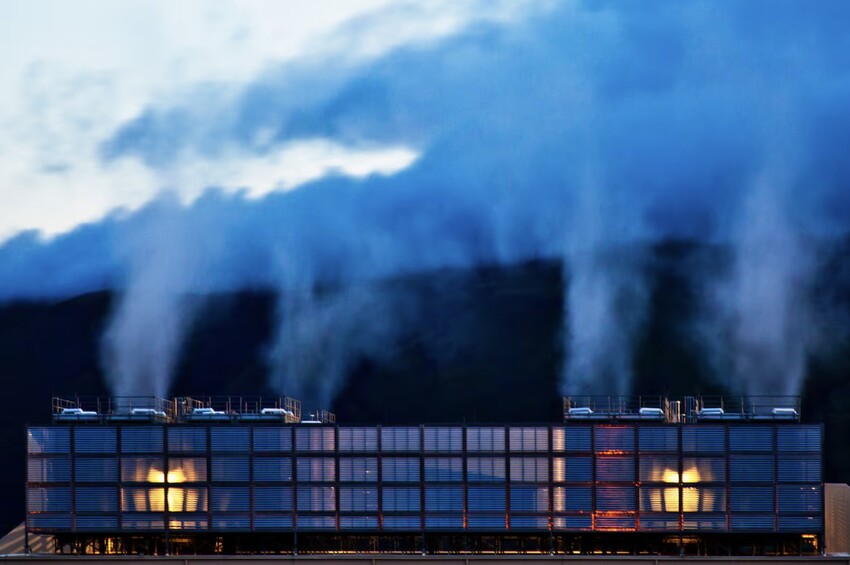
“I also want people to consider the environmental impacts of generative AI use. We are navigating a climate crisis, ongoing colonization, as well as the fallout from the nuclear legacy in the Pacific. The use of generative AI to desecrate original artworks by our peoples dishonours our ancestral legacies of creativity, harms our artist community members, and further compromises the health of our lands and ocean.”
“For artists like us, it’s not harmless it chips away at the work we’ve put years into, and it distorts how our people see themselves. It may depict brown people, but it’s been trained on a western lense and data sets.” states artist Lucidluca
Across the Pacific, artists have spent decades building visual languages that carry whakapapa, genealogy, memory, and the spirit of their homelands. Our kupesi, our motifs, our colours, our faces, and our stories are not aesthetic choices, they are identity, they are taonga, sacred items passed down and nurtured through generations.
That’s why the rise of generative AI reproducing “Pacific looking” art is being felt not as innovation, but as harm. For Pacific creatives, it is an erasure of intent, ancestry, and community.
When Innovation Becomes Erasure
Experts in Pacific technology and culture are sounding the alarm about how AI is impacting creative communities. Namulauu'u Nu'uali'i Eteroa Lafaele, who works at the intersection of tech and Pacific culture, says responsible AI use is not hypothetical:
“For Indigenous and Pacific art, responsible AI looks like honouring our people by resisting the urge to use AI to recreate or remix cultural work, Our art is not a google image. It is genealogy, story, mana and identity. Being responsible means choosing to be a good ancestor, not someone chasing productivity or something that looks flash.”
The consequences are already visible. Pacific businesses are using AI-generated logos and illustrations that mimic cultural styles, often without hiring Pacific artists. This undermines livelihoods, devalues years of skill-building, and creates a dangerous precedent: if our own communities do not honour the work of Pacific creatives, why would anyone else?
Power, Profit, and Storytelling
Much like the conversations surrounding corporate media appropriation, AI amplifies a structural problem. Technology and profit are controlled by outsiders, while the people whose cultures and creativity are being exploited are excluded from decision-making. As Namulauu'u points out:
“Our communities are not at the table where these decisions are being made. We are not shaping the rules. We are not being asked what protection should look like for us. When we are not present, our cultural work is not protected.”
This underscores that the harm is not just personal, but also communal. Pacific art, motifs, and visual storytelling are taonga. They carry our mana, our identity, our whakapapa. When AI repurposes them, it severs connections that have existed for generations.
Choosing Care Over Convenience
Pacific creatives are not asking for fear of technology—they are asking for accountability. AI can have a place in creative industries, but only when it is guided by intentional use and respect for cultural heritage.
Luca emphasises “It really needs to be considered as a tool that works for us. Never as a replacement. Its whakapapa is too alien to our cultures to be used in place of them.”
Namulauu agrees “Quick prompts can create long term harm to our ancestral ways of being. They encourage a generation of ‘It is AI so it is fine’ thinking, and that is so dangerous.”
Tech Expert Namulauu provides a list of ways AI can be used ethically
- Use AI with intention, not pressure or hype
- Do not use AI to copy or replace cultural work or community knowledge
- Support Indigenous creators by paying them, crediting them and choosing their work over AI replicas
- Slow down and think about the long term impact before generating cultural images
- Be transparent about when and how you use AI, especially in creative or community spaces
- Keep learning about AI so you understand both the opportunity and the responsibility
Climate and AI: Double Burden on the Pacific
Pacific communities contribute only 0.02 percent of global emissions, yet they are among the first to feel the effects of climate change. Rising seas, warmer oceans, acidification and more frequent heatwaves threaten our islands, our fisheries and our way of life.
At the same time, AI uses huge amounts of electricity and water, which adds to the problem. Training these systems relies on power and cooling that often come from fossil fuels. Every AI query adds to carbon emissions, affecting the very communities whose stories are already being taken without care.
As Gillian observes, “While our islands are sinking and our waters are warming, the AI industry continues its unchecked growth. The people whose culture is being mined are also the ones fighting for their homes, livelihoods, and future.”