
From Fasi to Disney: How a Tongan costume designer wove the Pacific into every thread of Moana
By Destiny Momoisea
"I truly felt the weight of the responsibility I had been entrusted with and hope the work we achieved honours the Pacific cultures and peoples they represent, including my own."
When audiences watch Disney's live-action Moana, they'll see woven mats, tapa, siapo, ti leaves and hand-painted textiles filling the screen.
What many won't realise is that behind every stitch, braid and woven fibre is a Tongan woman who grew up surrounded by those very traditions.
For Emmy Award-winning costume designer Liz McGregor, designing the costumes for one of Disney's biggest productions became a deeply personal mission to honour the cultures that shaped her.
A little girl from Tonga with big dreams
McGregor grew up in Fasi, Tongatapu, although her Fifita family is from Kolomotu'a, her mother's village.
She spent much of her childhood around family in Kolomotu'a, "hanging out with my cousins", surrounded by the traditions and craftsmanship that would later become such an important part of her career.
As a young girl in Tonga, she watched movies at Finau Theatre and Loni's in the 1970s, captivated by the worlds unfolding on screen.
At the time, she never imagined that she would one day be creating costumes for Disney.
"I could not imagine that at all, not at all!" she said.
"My world nowadays is so far away from that little girl with the big eyes watching movies at Finau Theatre and Loni’s in the 70’s, but I can remember the impression, wonder and curiosity that those movies created."
Those films sparked something in her.
"And I also remember the fire it stoked in me and the want to explore the world, to see those foreign countries depicted on screen and experience the weird and wonderful things I was seeing."
"But all I had known was my life in Tonga, my family and the island I called my home."
That dream only became imaginable years later after moving to Aotearoa. At 18, McGregor landed her first job in film as a hand stitcher on The Piano.
"It was then I realised that it was a career that I could possibly even consider."
"But I tell you what, it all of a sudden hit me like a lightning bolt and I knew from that first day that this was definitely what I was going to do for the rest of my life. No question."
Thirty-two years later, Disney came calling.
More than costumes
While Moana is beloved around the world, McGregor knew Pacific audiences would be looking far deeper than beautiful costumes.
She carried the enormous responsibility of ensuring every garment respected the cultures they represented.
"The weight of that responsibility was actually really heavy and at times in the beginning, I did feel it overwhelm me."
But McGregor knew the way forward.
"I knew what I had to do to make it happen but I also knew how to approach everything that we had to do, and that was with honour, respect and to be as authentic as possible to the Pacific cultures we were representing."
That meant years of research where McGregor visited Te Papa, Auckland Museum and Samoa, building a vast library of research and speaking with curators, archaeologists, botanists, artisans and elders.
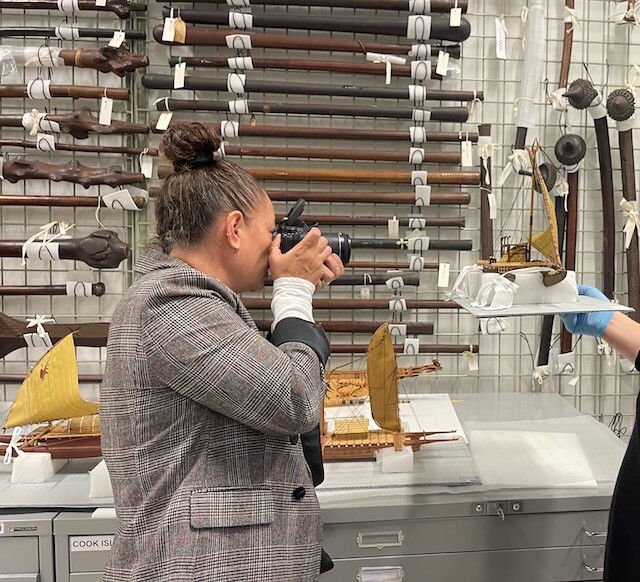
"We consulted at every stage of the process as well and made sure we had the inclusion of as many Pacific cultures as we could."
Her research took her beyond books and museum collections and directly to Pacific practitioners.
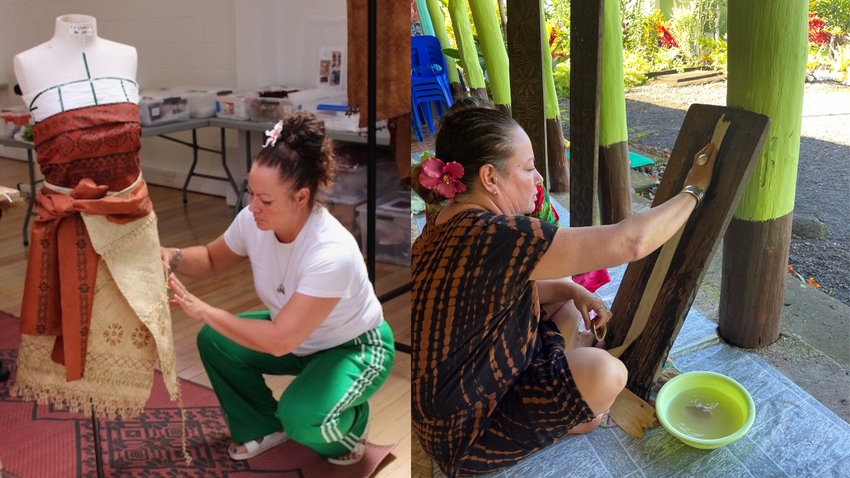
On a visit to Savai'i, McGregor and her costume supervisor Jenny Rushton learnt how to make siapo from scratch.
The work was also guided by the Moana Oceanic Cultural Trust, led by Kalikolehua Hurley, with Dr Dionne Fonoti and Su’a Sulu’ape Peter reviewing designs and prototypes and advising throughout the process.
McGregor never really stopped researching.
"I actually never stopped my research through the whole process of making Moana as I had fallen into a very deep rabbit hole of Pacific culture, one that I continue to love to this day."
Her greatest design advantage? Growing up Tongan.
While extensive research was essential, McGregor says some of her greatest knowledge was something she had grown up with.
Her late mother Mele Ti taught her to hand sew. Her weaving skills came from watching her aunty’s weave back home.
And the ngatu and fala that many Tongan families treasure weren't museum pieces to her. They were part of everyday life.
"In designing costumes for Moana, I was very familiar with the textiles and fibres we were going to be dealing with, tapa, pandanus and fau."
In fact, she didn't need to look very far for examples.
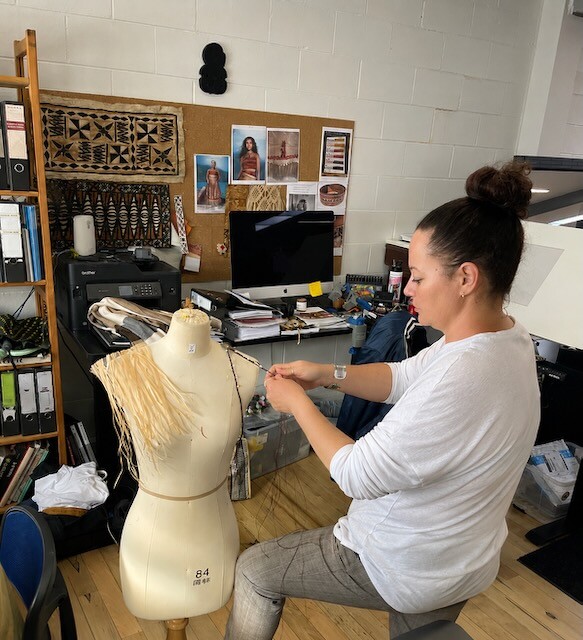
"I didn’t have to look any further than my own bedroom for examples, as like so many other Tongans, my koloa consisting of ngatu and fala were all lying safely under my mattress."
And this is the value of putting a Pacific woman in this role - McGregor had intimate knowledge of the fabrics that would be used.
"I understood how these textiles were made, how they looked and how they would move."
"I knew what would happen to them when they got wet, sat in the sun for too long and how much use they could handle."
"This gave me a great advantage in how I would go about designing these costumes."
Every detail mattered
Rather than simply copying the animated costumes, McGregor and director Thomas Kail decided to keep the elements audiences already recognised while bringing them back to the cultures that inspired them.
"To begin with director Thomas Kail and I decided not to veer too far away from the basic elements in my recreation of the two main costumes for Moana and Maui, as they are so iconic to audiences."
"The elements that make Moana so recognisable are the paua Heart of Te Fiti necklace, her orange bandeau top - which is made of a specific Fijian masi called masi kuvui, her ‘ie toga pandanus overskirt with its tapa tie and her fau fibre underskirt. Maui of course wears a titi of leaves and his necklace."
Moana's orange top is made from traditional Fijian masi kuvui, hand painted and wrapped rather than fastened.
But McGregor made a deliberate decision not to simply reproduce every detail from the animation.
"It may be controversial but I did not include the shells on her top as per the animation as they are not an element that is done traditionally on Fijian masi costumes."
The production also had to develop materials that could survive the physical demands of filming.
"We also had to invent an imitation tapa and printing inks as it had to look and feel like the real thing, but survive months of being in and out of water and survive a multitude of stunts."
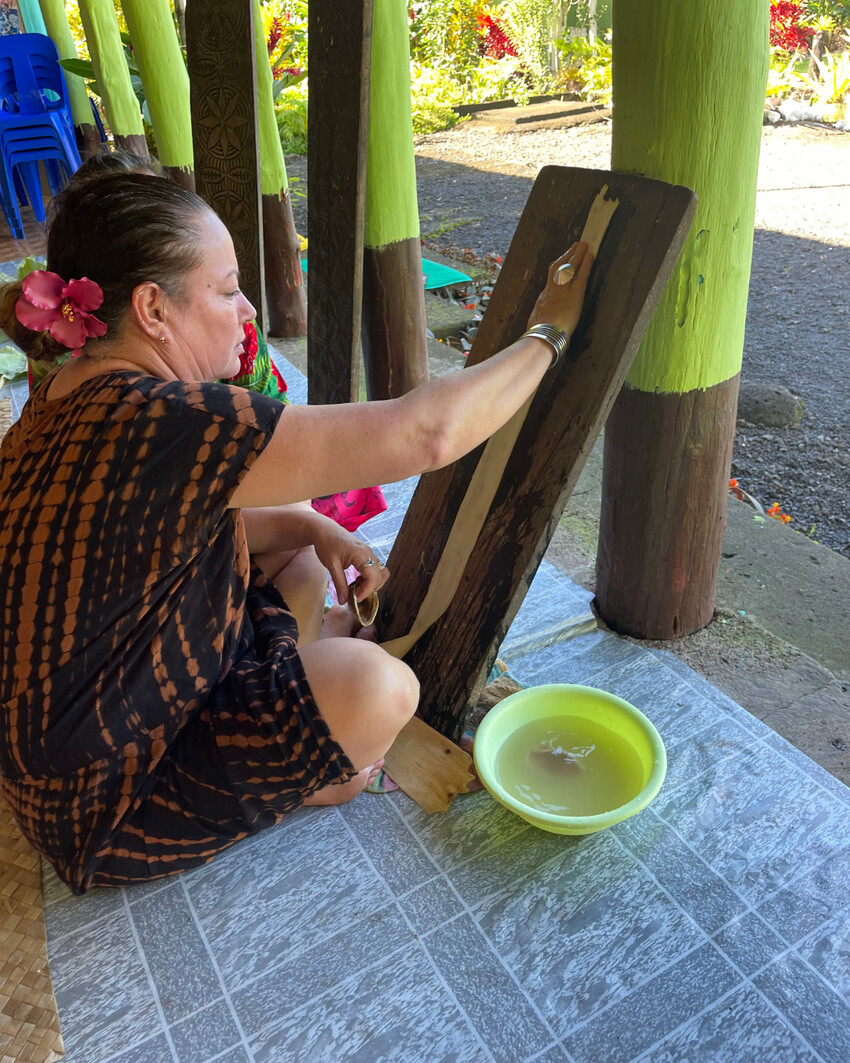
Moana's pandanus overskirt became an 'ie tōga, a finely hand-woven Samoan mat with decorative symbols printed and hand stitched into it.
"The decorative pandanus fringe on this mat was designed specifically and hand woven by an incredible Samoan textile artist named Rowan Panther. This was weeks and weeks of work."
The Heart of Te Fiti necklace was another detailed collaboration.
"With the Heart of Te Fiti necklace, the cord is woven and interspersed with black pearls - which hold high value in the Pacific and the catch at the back is a split cowrie shell."
The paua pendant was carved and made by jeweller Jasmin Watson and designed to hold the pounamu Heart of Te Fiti inside.
Every piece had to work visually, practically and culturally.
A lifetime preparing for one film
Although Moana became her dream project, McGregor says the opportunity was decades in the making.
"Those experiences have always helped and carried me my through my 35 year career in film and TV."
The hand sewing her late mother, Mele Ti, taught her became the foundation of her career.
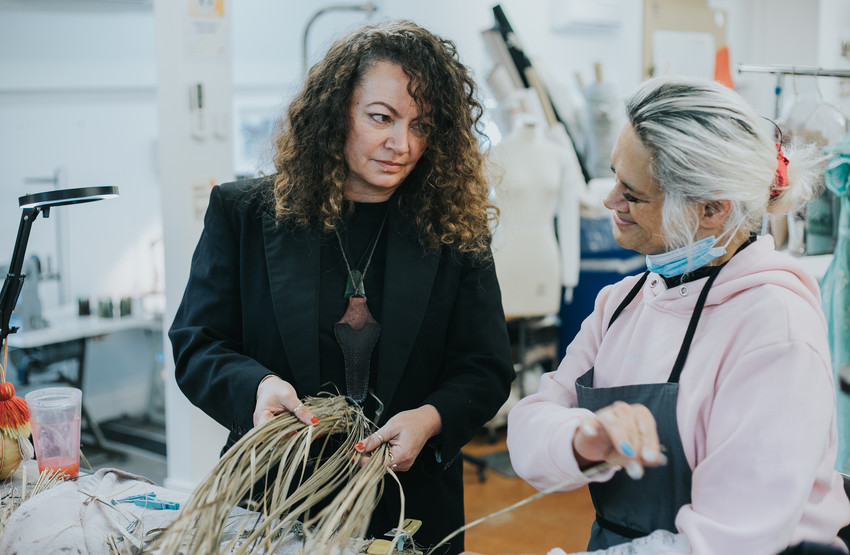
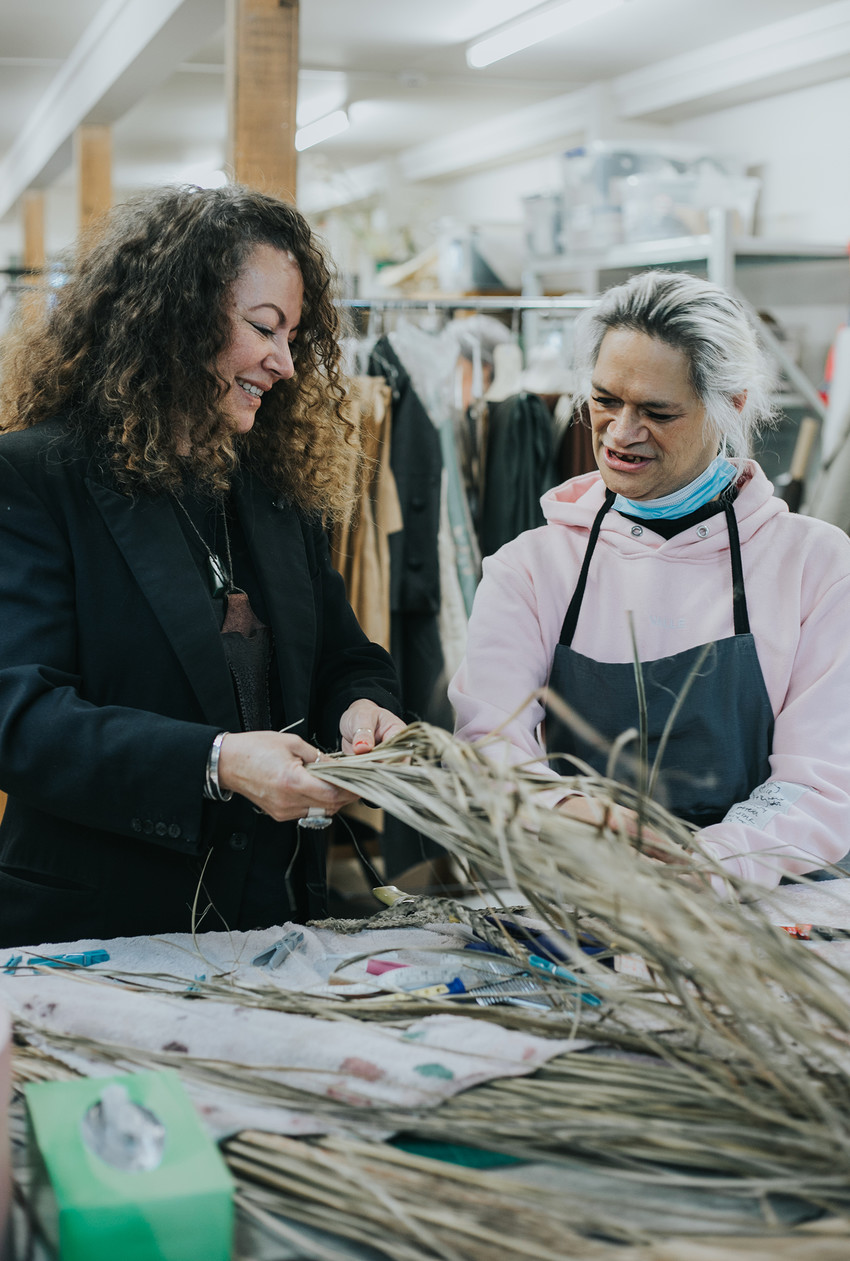
"At first it was hand sewing which I learnt from my late mother Mele Ti, then my weaving skills were utilised on Once Were Warriors where I helped weave leather in making costumes for the gangs depicted in the film."
On Hercules: The Legendary Journeys, she wove Hercules' leather trousers for costume designer Barbara Darragh.
"And anytime there was a need for something to be braided or woven, I would put my hand up."
But McGregor's experience went beyond weaving and sewing.
"I also always dealt with the cultural aspects on the films I have worked on."
Working as assistant designer to costume designer Ngila Dickson, she worked on the Samurai Village in The Last Samurai, the Kamajor warriors in Blood Diamond and the Bougainville villagers in Mr Pip.
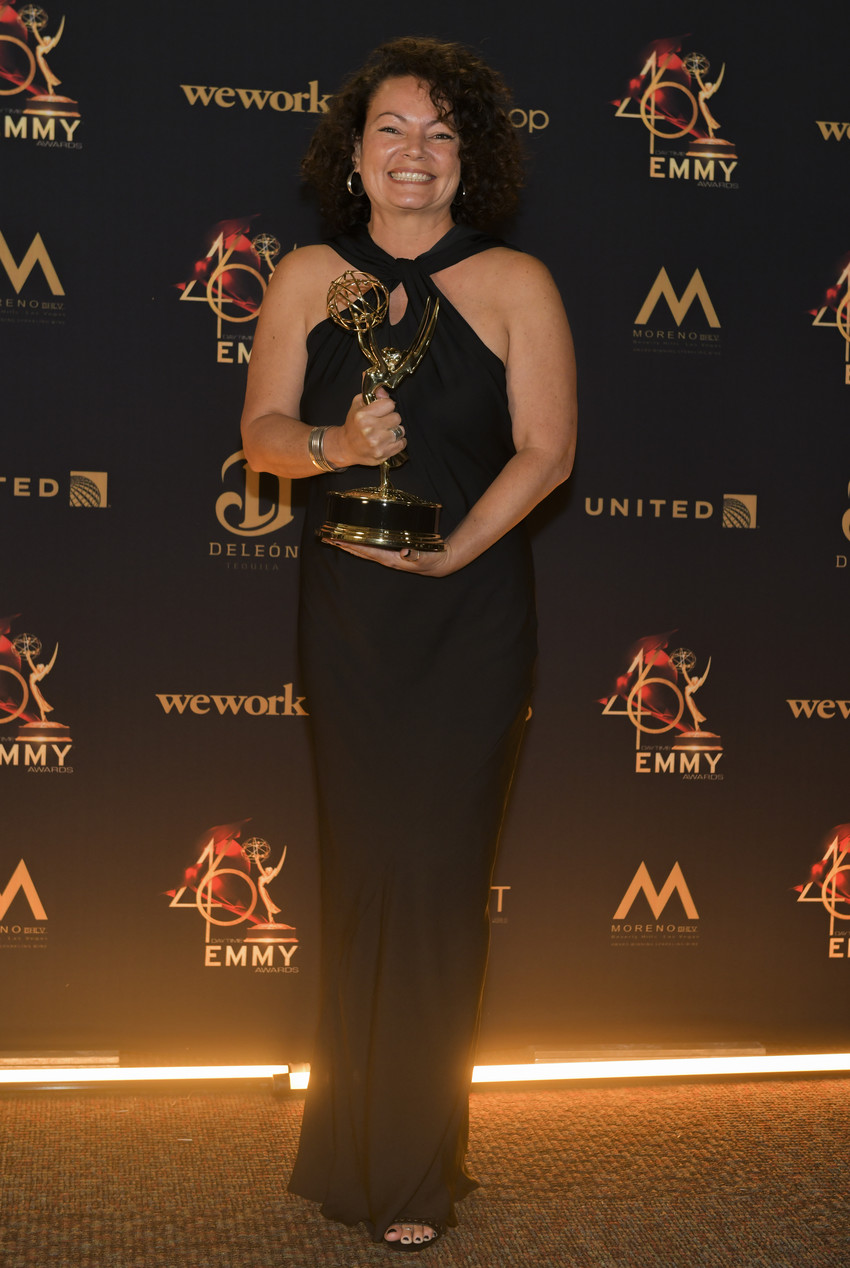
"On The Convert for beloved late director Lee Tamahori, I recreated Maori warriors and villagers from Aotearoa in the 1830s."
Looking back, McGregor says her career and upbringing had prepared her for the moment Disney came calling.
"So by the time Moana came to me, you could say that I had a lifetime of experience of depicting cultures, both from my own upbringing in Tonga and life in Auckland, but also from my years of costuming work in film and TV to date."
Why Maui's famous leaf skirt had to be real
Even after decades of experience, Maui's costume presented a new challenge.
McGregor decided early on that she didn't want to simply recreate the animated character using whatever materials were easiest to source.
"Firstly I decided to not use any other leaves other than ti leaves as A / some of the leaves depicted in the animation were not actually native to the Pacific and B / ti leaf skirts are actually one of the oldest forms of garments used in the history of the Pacific."
The production considered fake leaves because of the length of the shoot.
"Then I thought that we could use fake leaves due to the length of time we were filming over but after a lot of R&D I realised absolutely nothing else looked/ moved or felt like the real thing."
The solution was to use the real thing.
"So we made fresh ti leaf skirts for Maui every day for months!"
Maui's necklaces were also woven and bound by the "incredible talents" of award winning Rotuman jeweler Sofia Tekala Smith who made a number of the adornments for the production.
Sofia - known as the ‘mother of mother of pearl’ says her favorite original piece was Moana’s ‘celebration necklace’ that is layered mother of pearl and black pearls worn in the final scene.
My heart bursts with pride
For McGregor, the greatest reward hasn't been working for Disney.
It's hearing from Pasifika audiences who have seen themselves reflected on screen.
"My heart bursts with pride when I see, hear and read how this movie has affected Pasifika people around the world."
"How seeing their own faces and culture reflected back at them has moved them to tears."
The emotional response wasn't only coming from audiences.
It happened on set too.
The costumes had been created by a huge team of artists and craftspeople who poured themselves into the work.
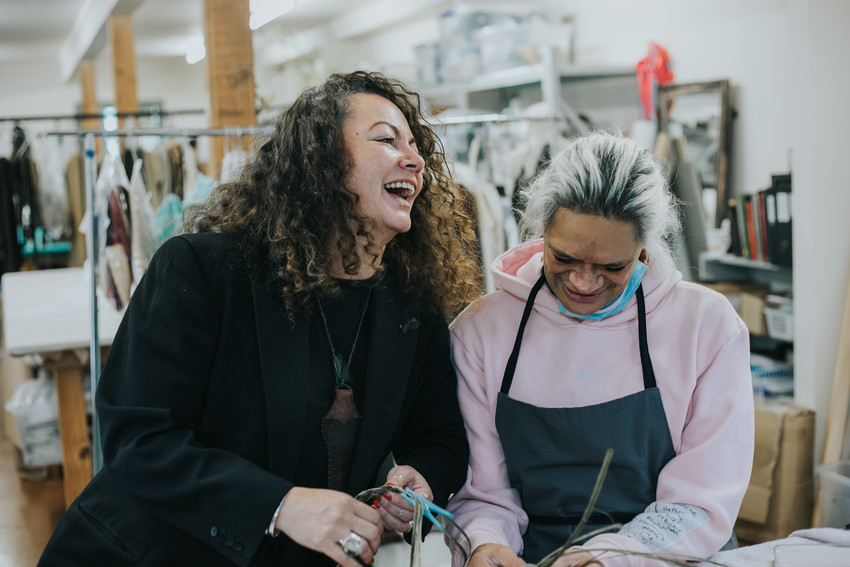
"It literally took a village to make these costumes."
"And that we poured our hearts and our souls into it and ... try to imbue as much mana into everything that we were making, so that when people walked in and they put those costumes on, and adornments on that they could feel their culture present and their ancestors there."
When the Pacific dancers began coming through in Atlanta, the response was overwhelming.
"When we were actually in Atlanta and we had all our dancers coming through ... so many people broke down in tears because it was so overwhelming for them feeling all of this."
For McGregor, those moments captured what the project had always been about.
From birth, she says, Pacific people are taught to carry their culture with them.
"From birth we are brought up to respect and uphold our culture and traditions, to honour our families, to learn our stories and songs and to feel the mana and wisdom of our ancestors."
"I felt all of this and more as I embarked on my part of this film."
She knew the responsibility wasn't hers alone.
It belonged to every Pacific person whose culture was being represented.
"I truly felt the weight of the responsibility I had been entrusted with and hope the work we achieved honours the Pacific cultures and peoples they represent, including my own."
And after everything, after the years of research, the thousands of handmade elements, the long days and the countless decisions behind every costume, what remains for McGregor is pride.
"I will be forever thankful that I was part of that."