
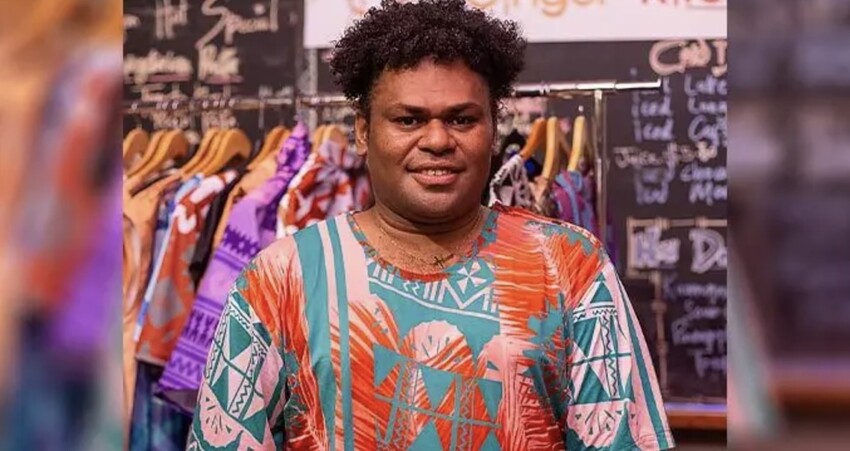
From Viti to Manhattan: Epeli Tuibeqa takes KUIVITI to New York
“KUIVITI may have been the name on the collection, but Fiji and the Pacific walked into that room with me. I didn't walk into New York alone.”
Fijian designer Epeli Tuibeqa arrived at New York Fashion Week carrying a collection shaped by the people, places and cultural knowledge of home.
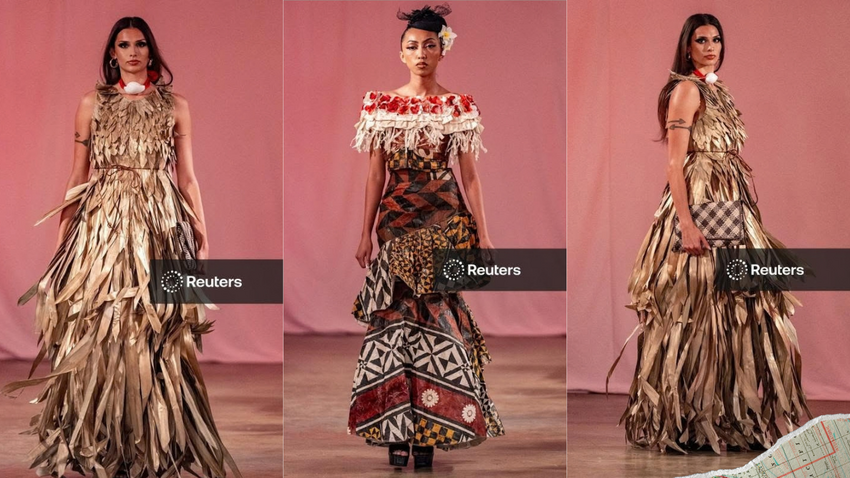
After months of preparation, Tuibeqa found himself backstage in Manhattan watching models being dressed in masi, voivoi, kiekie and other pieces connected to Fiji and the wider Pacific.
“It was a surreal experience, but I was also super nervous and anxious at the same time,” Tuibeqa told Coconet.
“But I arrived like a Pasifika rugby player after half-time: go hard or go home!” he jokes.
The nerves eventually gave way to the excitement of seeing the collection come together.
“There was so much work, stress and preparation leading up to Sunday, so to finally be there in New York and realise, ‘Okay, this is actually happening,’ was pretty special.”
When planning his first New York Fashion Week collection, Tuibeqa knew he wanted to begin with Fiji.
“As I was planning this, I asked myself, what would my first-ever collection at NYFW be?”
“Being Fijian, I knew the styling and design aesthetic was always going to lean towards Viti, but I also wanted to carry some Pasifika elements with me.”
Tuibeqa worked with artisans and creatives in Fiji to bring the collection together, including Lewanibole Cultural Collections, who took his direction on what and how to print the tapa, and the team of reigning Miss Hibiscus Salamalawa Korosaya, who cut and tailored the pandanus pieces.
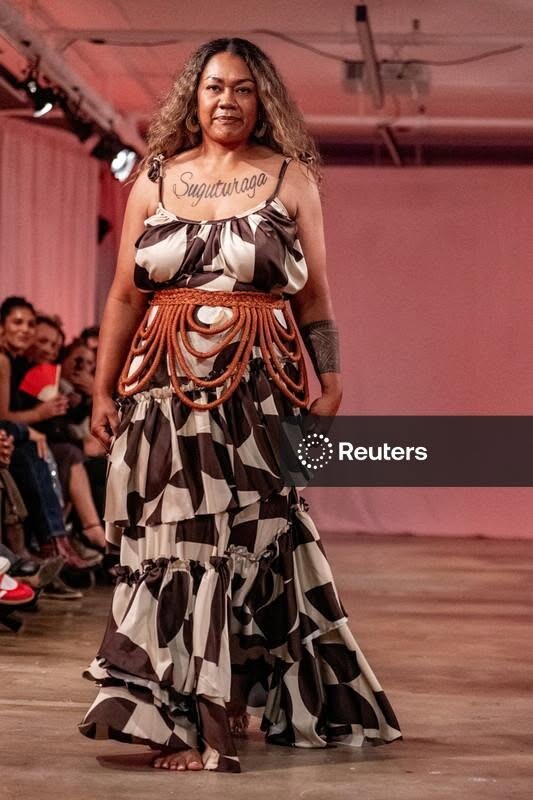
The collection also included a kiekie and a Samoan selu originally designed by the late Afa Ah Loo and recreated by Lisiate Wolfgram.
Mrs Amele Tarakinikini, the spouse of Fiji's Permanent Representative to the United Nations, also contributed pieces including the iri ni daku, masi, magimagi and salusalu.
“These weren't simply accessories to me,” he said.
“They brought another layer of Fiji, our craftsmanship and our cultural identity onto that runway.”
Having pieces from so many people and places represented in the collection made the experience even more significant for him.
“I am beyond proud because although I got to show KUIVITI, when I walked backstage I was carrying pieces from all these different people and places with me.”
“KUIVITI may have been the name on the collection, but Fiji and the Pacific walked into that room with me. I didn't walk into New York alone.”
Bringing Viti into a new space
The collection drew on specific parts of Fiji, including the CBML Confederacy, Cakaudrove, Bua, Macuata and Lau.
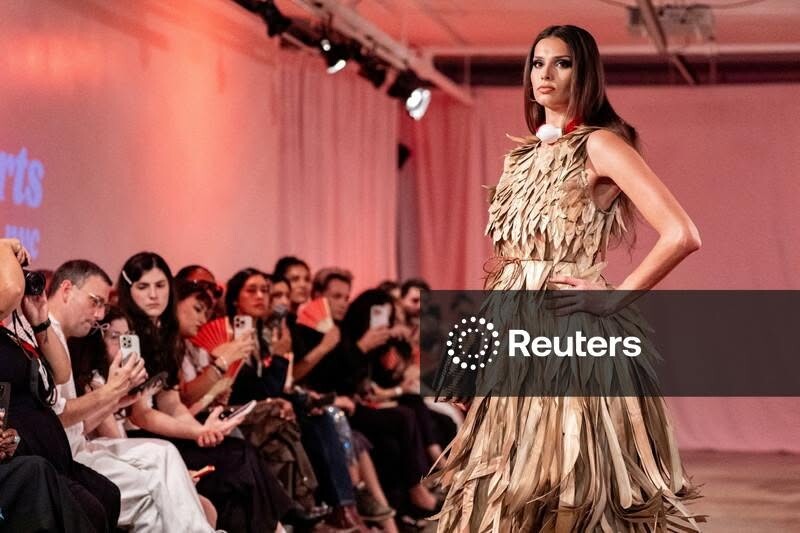
Tuibeqa also wanted to highlight the gold mines of the Tavualevu province through a gold voivoi dress.
“For me, it was about taking references that have a very specific connection to Fiji and allowing them to exist in a completely different environment without losing where they came from.”
The collection was also shaped by the relationship between contemporary Pacific life and ancestral knowledge.
“Pacific people are navigators, wayfinders and storytellers,” Tuibeqa said.
“With that in mind, I set about styling the collection by trying to find a bridge between the modern-day traveller and the traditional navigator.”
“I wanted to capture this modern Pasifika traveller who can be chic, contemporary and move comfortably through the world, but who is still rooted in the teachings and identity of our ancestors.”
Masi and voivoi were central to that idea.
“I love the idea that these materials aren't just decorative. There are people, places, skills and generations of knowledge behind them.”
One masi piece was printed in a quilt-like form to represent the lacadrau, a design familiar in many Fijian homes.
“We can come from different provinces, islands, families and backgrounds, but when brought together, we create something beautiful.”
Tuibeqa was conscious of presenting traditional materials alongside contemporary silhouettes without turning them into costume.
“I didn't want to take something traditional and turn it into a costume,” he said.
“I wanted to ask: how does this knowledge travel with us? How can something that reminds us of our grandmother's house, our villages, our ceremonies or our islands walk confidently into Manhattan and still belong there?”
Seeing Fiji on the runway
The reality of the collection reaching the runway did not fully sink in until Tuibeqa was backstage in Manhattan.
“You spend so much time looking at sketches, fabric, fittings and individual pieces that sometimes you stop seeing the bigger picture,” he said.
“Then suddenly I'm backstage in Manhattan watching the models get dressed and seeing everything come together.”
“Seeing masi, voivoi and all these very familiar Pacific elements in that environment was quite emotional. I think that was when it really sank in for me.”
The finale was particularly memorable.
“Watching that final walk and knowing what it took just to get everything there was a moment I'll remember for a very long time.”
“Standing there on Sunday and seeing that final picture, I think my brain finally allowed me to say, ‘We did it.’”
The audience response also created opportunities for people unfamiliar with Fiji to ask about the materials, prints and stories behind the collection.
“For me, that curiosity is important,” he said.
“Fashion can be a doorway. Someone might first notice a silhouette or a print because they think it is beautiful, and then that creates an opportunity to tell them about Fiji, about masi, about voivoi, about our artisans and about the Pacific.”
Beyond the postcard
Tuibeqa hopes international exposure can broaden how people understand Fijian creativity.
“It means a lot, but I also don't want the conversation to stop at me being ‘a Fijian designer in New York.’ I want people to see that fashion coming out of Fiji and the Pacific can stand confidently in international spaces.”
“We have designers, textile artists, weavers, printers, craftspeople and creatives with an incredible amount of knowledge and talent.”
He also wants people to look beyond the familiar images associated with Fiji.
“We are more than the postcard.”
“Fiji is beautiful. We know that. The beaches, resorts and landscapes are part of us, but there is so much more depth to our creative identity.”
“I wanted people to see that Fijian creativity can be traditional without being frozen in time. It can be luxurious, experimental, contemporary, sexy, tailored, dramatic and international while still being unmistakably rooted in Viti.”
Opening doors for the next generation
New York has also given Tuibeqa a chance to think about what opportunities could look like for other Pacific creatives.
“I actually don't want to give advice to the young Pacific creative. I was once that young creative, and I knew the direction I wanted to go. I had the ideas, I had the ambition, and I knew what I wanted to achieve.”
“What I needed was for the people around me to see it, support it and help create opportunities for it.”
He believes Pacific communities can play an important role by supporting emerging creatives, making introductions, sharing their work and helping create opportunities.
“What took me years to achieve could take another Pacific creative only a few months if the right people opened the right doors for them.”
“We already have the talent in the Pacific,” he said.
“Imagine how much further and faster that talent could travel if, as a community, we became just as passionate about promoting our creatives as we are about celebrating them once they've already succeeded.”
New York has given Tuibeqa a glimpse of what could come next, but he sees the showcase as a beginning rather than a conclusion.
“For me, Sunday wasn't an arrival. It was a door opening.”
“There is still so much I want to explore with KUIVITI, particularly how we take Fijian and Pacific design into international spaces without watering it down or changing it simply to make it understandable to somebody else.”
After returning home, Tuibeqa was already thinking about where the collection could go next.
“So I came home grateful, exhausted and very proud, but also hungry.”
“New York showed me that there is space for us. Now the question is: how much further can we take it?”