
Opinion: "Who Asked for a Live Action Moana?" Brown People, Actually.
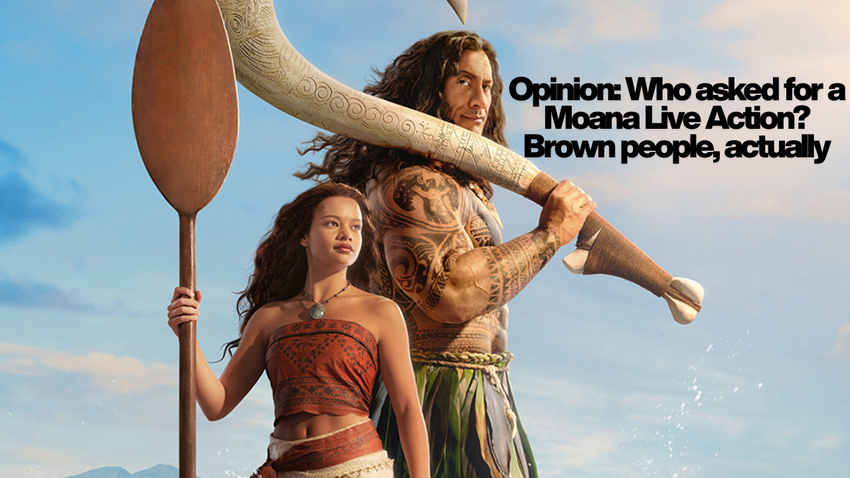
"For many of us in the Pacific, these stories don't just exist as films. They're part of a much longer continuum of identity, language, culture and belonging. They carry the weight of generations who rarely saw themselves reflected on screen, and they create a sense of possibility for the next generation who now can." Tongan Director Vea Mafileo
"Of course this remake feels unnecessary to them. It's not their grandmother's voice they hear when they watch Grandma Tala, or their fiapoko sister they think of when Moana almost gets her and Maui killed. Because it was not. Made. for. Them." Destiny Momoisea: Critic of Moana Live Action Critics.
When the reviews for Disney's live action Moana started rolling in, the critics were quick to ask::
Why?
Why remake a film that was already loved? Why revisit a story audiences could already watch? Why create another version of something that was only released less than a decade ago? Why not a live action of Tangled?
Those are fair questions. But what many western and frankly palagi ‘critics’ so conveniently leave out is - who.
Who is this remake for? Who’s stories are being displayed on the big screen and why should this matter?
Disney’s latest iteration of the ‘Moana’ story that captured the hearts of the world has put this talanoa into the Multi verse and there are several great thought pieces written by Pasifika people around this taking over scrolling feeds.
It’s a space of course that is full of contradictions - as with any story no matter what the form, it cannot be all things to all people all at once.
Is it white washed with all the afa kasi playing key roles along with Charlies Angels style wavy wigs? - looks like. Is it full of indigenous references of Pasifika people and our navigational super powers? Also yes. Does it make legions of Pasifika watching it in white spaces proud af? - Ioe. Is it rampant capitalism profiting off exotic Pasifika - probably also yes…
New Zealand reviewer captured one of the dominant criticisms of the remake, opening with the headline: "Who asked for a slightly worse version of Disney's Moana?"
Well Reviewer from Europe, not you evidently. But that’s ok because ‘Moana Live Action’ was not made for the reviewers of the world, no. They were made for little girls running around savai’i barefoot, for our Grandmothers whose native language was beaten out of, and her diasporan grandchildren who now don’t know a lick of their mother tongue.
And before you sit there and ask - YES it really is that deep. .
His review argues that the remake struggles to justify itself because audiences can simply return to the 2016 animated original. "The feeling that you could just be watching a better version of the same thing is unshakeable," he writes, describing the film as being "so close to a shot-for-shot, beat-for-beat remake" that the question of "Why?" becomes unavoidable (in his opinion) and many others apparently.
Self Proclaimed 'Film Critics' have also taken to social media to claim the film had, and I quote 'No love, no heart, no nothing' as seen by 'Cinecultured' on tikok
But for people who have spent their whole lives seeing themselves reflected in movies - of course you would question the necessity of this film.
We spoke to actual Pacific people who bring Pasifika stories to screen for a living.
Award-winning Tongan, Samoan and Māori singer and actor Bella Kalolo says that's exactly what gets lost every time this conversation comes up.
"I think what's sometimes overlooked is that, for us, it's never been just about box office numbers or whether the film meets Western expectations. It's about seeing ourselves, our stories, our cultures, and the generations who came before us reflected on the big screen."
Award-winning Tongan-New Zealand filmmaker Vea Mafile'o, who was recently invited to join the Academy of Motion Picture Arts and Sciences, (cough* big flex) says that's been happening for generations.
"So often our stories are judged almost entirely through a Western lens, whether the script works, whether it's faithful enough, whether it succeeds as entertainment. Those conversations absolutely have their place, but they can miss something much bigger."
That "something bigger" wasn't just on screen, It was behind the camera too.
Disney assembled one of the largest groups of Pacific creatives ever entrusted with shaping a major Hollywood production. Samoan linguist Dr. Grant Muāgututiʻa led the film's Cultural Trust, working alongside director Thomas Kail to guide language, protocol and cultural authenticity throughout production.
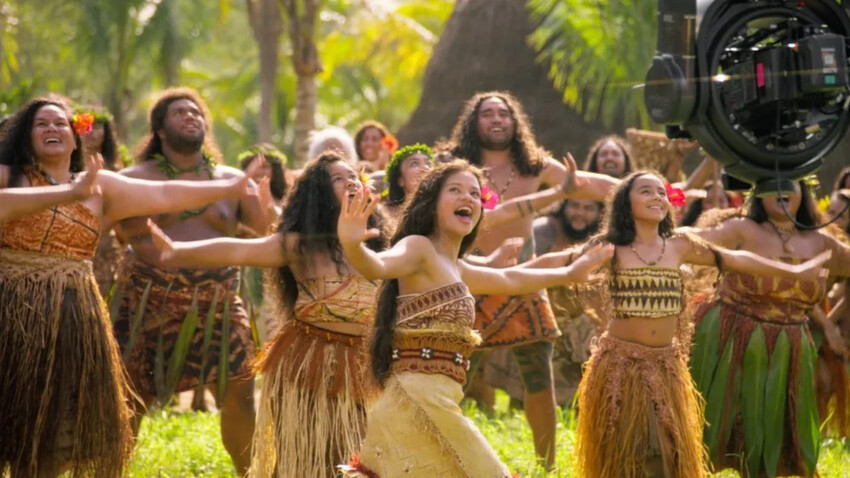
Samoan choreographer Tiana Liufau wasn't just brought in to teach dance. She served as associate producer, helping shape the film at a decision-making level alongside producers Dwayne Johnson and Auliʻi Cravalho, while assistant choreographer Kayla Faʻamaligi, legendary Tokelauan musician Opetaia Foaʻi, and dozens of Pacific dancers, performers, musicians and cultural practitioners helped build the world audiences see on screen.
As Dr. Grant Muāgututiʻa puts it:
"Wherever you're from in the Pacific, you can see yourself and your culture represented here."
That's a very different thing from Hollywood borrowing Pacific culture.
A critic may watch Moana and see a familiar Disney formula.
A Pacific child may watch Moana and see their culture celebrated on one of the biggest stages in global entertainment.
Both people are watching the same film - but they are not experiencing the same thing.
This is why conversations about Indigenous storytelling are often more complicated than a simple rating out of five stars.
What many of the loudest Moana Critics fail to see is the bigger picture, that stories like Moana don’t exist in isolation, they at least signal our visibility and celebrate knowledge, language and identity, even in a simplified and exoticised Disney telling.
Mafile'o says:
"For many of us in the Pacific, these stories don't just exist as films. They're part of a much longer continuum of identity, language, culture and belonging. They carry the weight of generations who rarely saw themselves reflected on screen, and they create a sense of possibility for the next generation who now can."
Representation feels invisible when you have always had it. And it becomes all you see when you haven’t. And pacific communities online have taken to social media to remind everyone of that fact;
For generations, Pacific cultures have often been represented through outside perspectives .Others have decided which stories are worth telling, which parts of our cultures are highlighted and how those stories should be understood.
That does not mean Pacific stories should be protected from criticism. They should not.
There are important conversations to have about Disney, cultural ownership, commercialisation and whether Pacific communities should have greater creative control over stories inspired by their cultures - those conversations matter.
But there is a difference between saying a film has flaws and saying it has no value, because this value depends on who's watching.
If you watched Moana and saw another unnecessary Disney remake, that's your experience.
If I watched Moana and saw my grandmother, my language, my ancestors and the faces of little brown girls finally reflected back at them, that's mine.
Neither experience cancels out the other.
But only one of us walked into a cinema and saw ourselves.