One in Many, Many in One: Our Ocean of Islands Exhibition
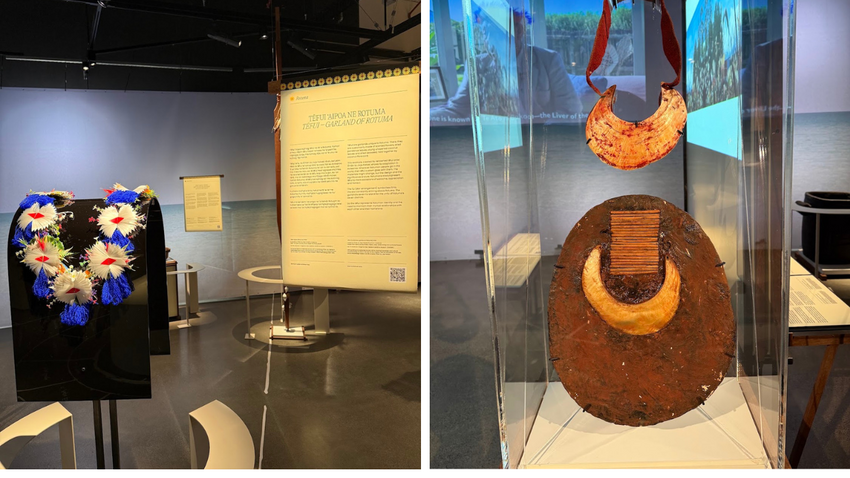
There is something interesting that happens when you put 24 Moana Oceania island nations into one room.
At first, you notice the differences - different languages, objects, names for things. Different relationships to land and ocean. Different ways knowledge has been carried, practised and passed between generations.
Then you stay a little longer and you listen, you observe, and slowly the relationships begin to appear.
That was one of the ideas that sat with Toluma'anave Barbara Makuati-Afitu and Kolokesa Uafā Māhina-Tuai as they developed Our Ocean of Islands, the new Indigenous-led exhibition at Hui Te Ananui a Tangaroa New Zealand Maritime Museum.
The exhibition has been more than three years in the making, built through relationships and conversations with knowledge holders from across 24 Moana Oceania island nations.
Somewhere along that three-year journey, during a talanoa with one of their elders and advisors, Barbara and Kolokesa were reminded that perhaps the way to understand the Moana was as “one in many and many in one.”
Not one because we are the same, but because somewhere within our differences, we keep finding each other.
One room, 24 nations
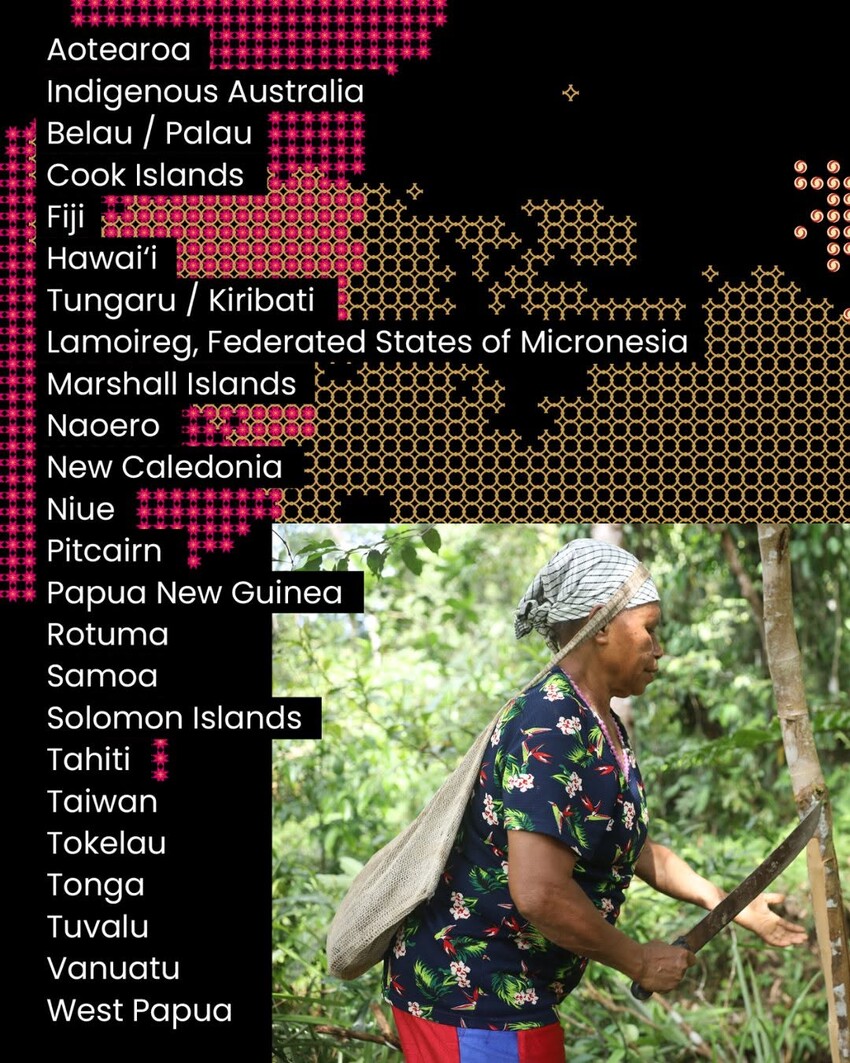
Our Ocean of Islands brings together knowledge holders and contributions from 24 Moana Oceania island nations, including Tangata Whenua and all 17 island nations with diaspora communities in Aotearoa.
Bringing that many communities into one space also means resisting the tendency to generalise them as one. Barbara and Kolokesa spoke about some of the “layers of shifting” within the exhibition, including the choice to use Moana rather than Pacific.
“We can be connected, but it’s our differences that make who we are. And in standing strong in distinctiveness, you then come across similarities with others.”
Rather than beginning with what 24 nations had in common, the exhibition allowed each to stand in what was their own. Communities determined the knowledge and practices they wanted to share, the languages they wanted to use, and even how they wanted their island nations to be named.
Some of those shifts are immediately visible in the exhibition, while others sit in the language around it. Communities were asked what they wanted their island nation to be called rather than simply using a name someone else had given them.
That can be seen in names like Tungaru/Kiribati and Naoero, and in the simple act of asking each community, "What do you call yourselves?"
These might look like small choices on a museum wall, but they speak to something much bigger. Who gets to name a people? Whose language do we begin with? And what changes when communities are given the authority to answer those questions for themselves?
Those layers required everyone involved to keep learning too. Maybe learning each other begins with accepting that we don't already know.At one point during the three-year development of the exhibition, a conversation came up around its target audience. The museum's marketing and communications team identified Moana communities as a key audience.
Barbara and Kolokesa laughed - “The coconut wireless has already been working.”
Contributors knew their communities. Communities knew who was involved. Families knew families. Information was already moving through relationships that existed long before a marketing plan was written.
Those relationships sit at the centre of Lagi-Maama Academy & Consultancy, founded by Barbara and Kolokesa. Their work involves mediating between Indigenous communities and institutional spaces, bringing different ways of knowing, feeling, seeing and doing into the same space.
For Our Ocean of Islands, that meant more than three years of working with knowledge holders across the Moana. As Barbara explained, with high trust comes high responsibility.
They understood how institutions operated, but they also understood their communities and their role was often to hold the va between the two.
There were museum deadlines that genuinely could not move. There were contributors who were community leaders, academics and cultural practitioners with responsibilities far beyond the exhibition. There were difficult conversations and compromises along the way.
At times, Barbara and Kolokesa described it as having to educate and do the work at the same time.
Some things could be negotiated - the knowledge and cultural practices of their communities could not, but other negotiations were a little more practical.
Like trying to fit generations of knowledge into 120 words.
What can 120 words hold?Then there was the very practical problem of the museum labels.
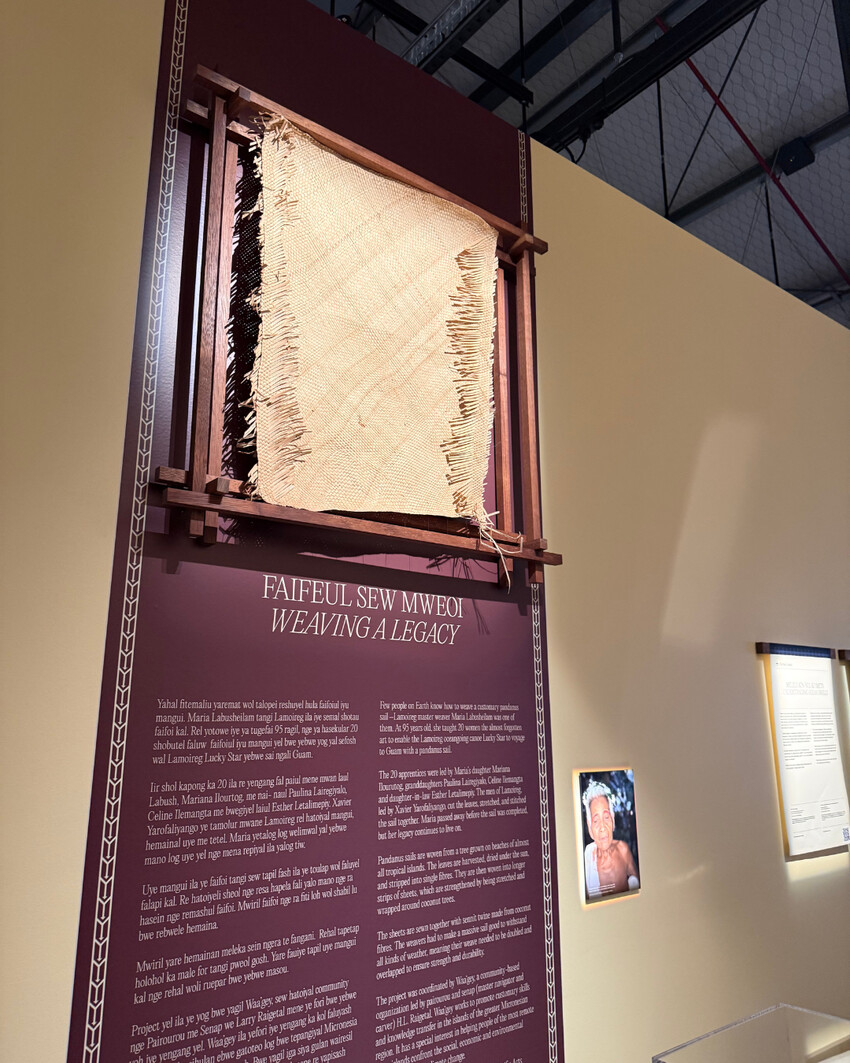
The museum brought in an experienced label writer who had worked across other institutions. His parameter was simple: no more than 120 words. For a general audience, his research and experience suggested that was about the attention span they were working with.
Barbara laughs -“120 words? That's just my whakapapa!”
Because how do you fit ancestral navigation, generations of cultural practice, a relationship between people and sharks, or a seasonal calendar into 120 words? How do you condense knowledge systems and practices layered across generations into something that can be read in a few minutes? You can't, not really.
But it became another example of the mediation Barbara and Kolokesa had been doing throughout the three-year process. They were clear that they “do not compromise when it comes to knowledge and practice of our communities.” How that knowledge was presented, though, was something they could negotiate.
The 120-word label was one of those compromises. The selling point was the QR code, which let visitors access more of what contributors had shared.
It came back to a question they had been navigating throughout the process: what do we let go, and what do we hold on to?
Some things could bend. Others couldn't. What the communities brought, how it was brought on board, and how that knowledge shaped everything around it had to remain at the centre.
A museum is just another context
Museums have historically had a complicated relationship with Indigenous peoples. Our peoples have been studied, collected, written about and interpreted through frameworks that were not our own.
Barbara is pretty clear that doing things differently doesn't mean getting better at fitting into those systems.
“We have to stop trying to fit into these structures that were not made for us anyway.”
For Our Ocean of Islands, communities had authority over what they wanted to share, how they wanted to be represented and how much of their knowledge they wanted to make available.
But Barbara and Kolokesa don't talk about the museum as though it has suddenly become the home of that knowledge either.
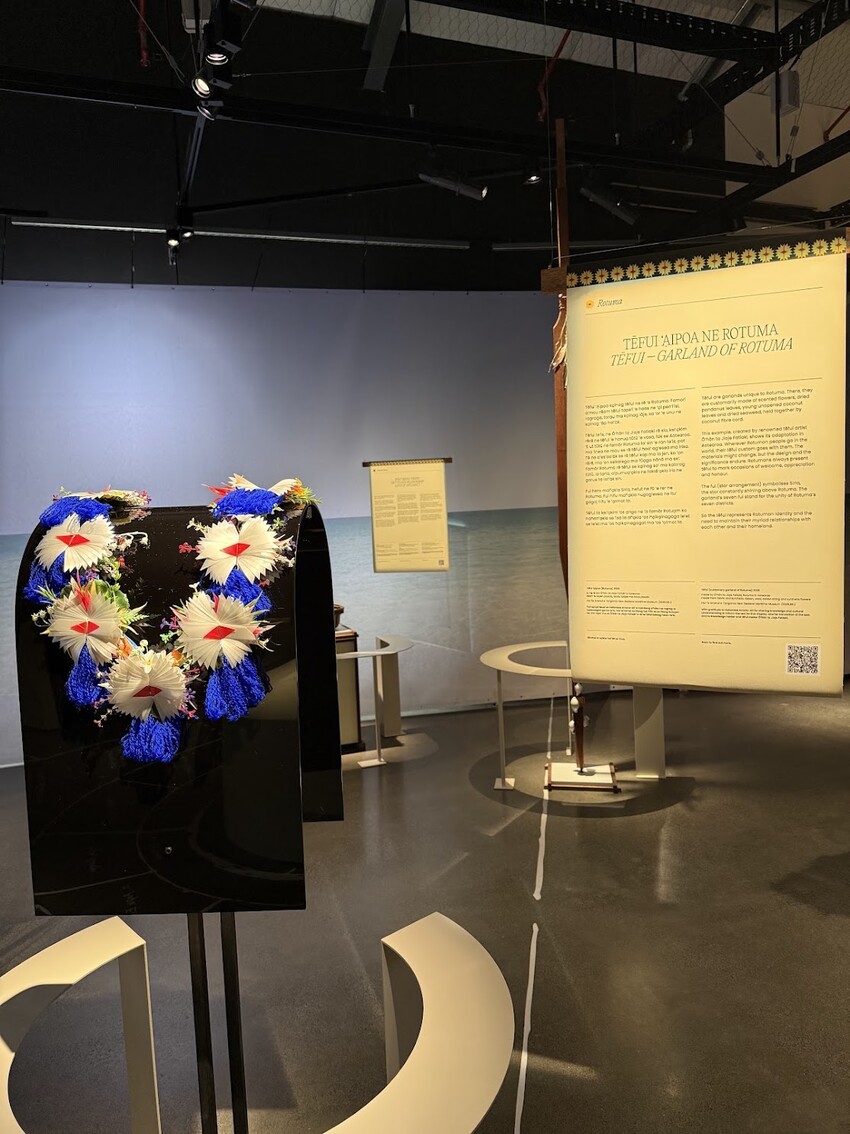
“A museum is just another context.”
There are already living cultural contexts where our communities gather, share, practise and pass knowledge between generations. The museum is another space, another platform and another way for people to encounter it.
This knowledge does not suddenly become valuable because it has entered an institution. It came in valuable.
That attention to language and context kept coming up. Even the familiar term diaspora was questioned when one of the knowledge holders offered “straddlers of culture” instead.
Living away from an ancestral homeland doesn't necessarily mean living outside of your culture. Sometimes you're carrying it between contexts. Between island and city, home and institution, one generation and the next.
Barbara and Kolokesa remembered children at a previous exhibition seeing cultural pieces and realising they had the same things sitting in cupboards at home.
“We have so many treasures.”
The museum hadn't made those things valuable. They already were. Maybe it had just given those kids another way of seeing what was already theirs.
For the next 18 months, Our Ocean of Islands can be another place for those moments. Somewhere a child recognises something, an elder explains something, or one Moana community learns something about another.
In this way, it doesn't replace the places where our cultures already live -it just joins them.
What kept us alive
Kiribati unimwane (elder) Baitika Toum, one of the knowledge holders contributing to the exhibition, spoke about cultural knowledge in perhaps its simplest terms.
“Our cultural values and skills are for our survival. We navigate for our survival. We cultivate for our survival.”
His contribution explores the relationship between people and sharks, but moving through the wider exhibition made him think about what lies beneath many of the practices gathered in the room.
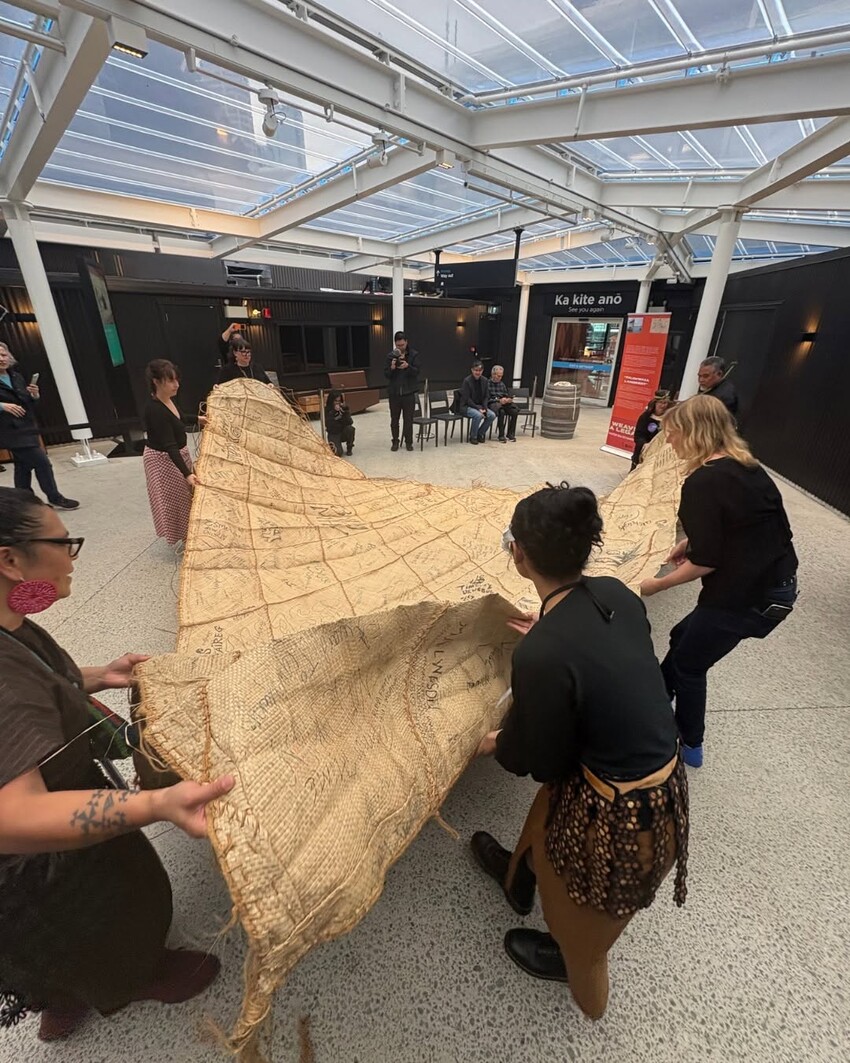
Different environments demanded different knowledge, but across the Moana our ancestors learned how to read the worlds around them. The stars, tides, seasons, land and ocean all had something to tell you if you knew how to read them.
For Baitika, much of that knowledge remains embedded within language.
“Most of our knowledge and skills are stored in our language.”
That makes language about more than preserving the words our ancestors spoke. It can also be a way back into how they understood the world around them.
Baitika's attention was firmly on the generations coming next. Give young people access to that knowledge, he suggested, and with the technology and possibilities available to them, they may carry it somewhere we cannot yet imagine.
Maybe the responsibility isn't to make the next generation repeat us. It's to make sure they have something to carry forward.
Learning each other
Our Ocean of Islands isn't an exhibition where 24 Moana nations are simply explaining themselves to everyone else. It's also a chance for us to learn about each other. Even Barbara and Kolokesa found themselves discovering new languages, ideas and cultural practices from communities across the Moana that they hadn't encountered before. A knowledge holder might arrive to share the story of their own island, then leave carrying a deeper understanding of someone else's.
The magic of bringing so many nations into one space may be that you start noticing the things that make each culture completely its own, but at the same time you recognise little pieces that feel familiar. A way of welcoming people and a connection to the ocean, and that nobody has to become the same for those connections to exist.
Maybe that's what "one in many, many in one" really means. Not blending all our cultures into one Pacific identity, but understanding that our strength has always been in our relationships. Those connections have existed for generations and this exhibition gives them another place to meet, reminding us that while every island has its own story, we're all part of the same ocean.
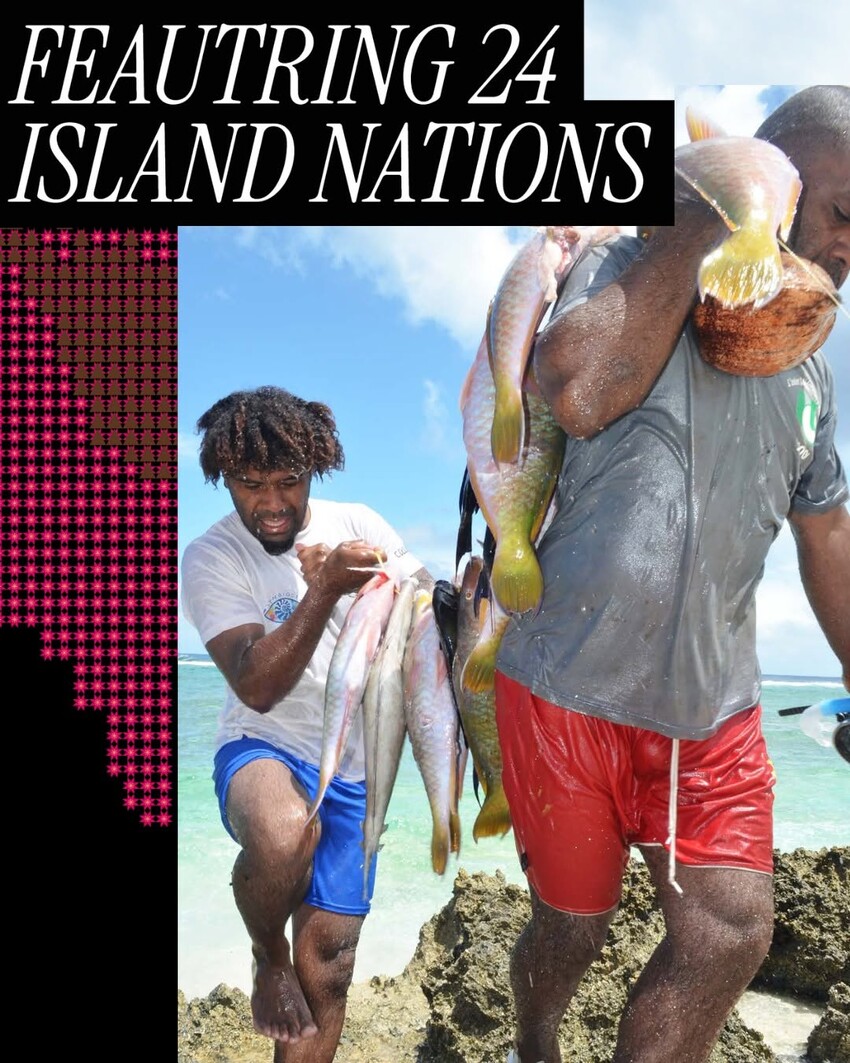
Our Ocean of Islands
On now for 18 monthsEdmiston Gallery, Level 2 Hui Te Ananui a Tangaroa New Zealand Maritime Museum Free with museum entry | Free museum entry for Auckland residents
Our Ocean of Islands was devised and led by Lagi-Maama Academy & Consultancy in partnership with Hui Te Ananui a Tangaroa New Zealand Maritime Museum.
Featuring contributions from: Aotearoa | Indigenous Australia | Belau / Palau | Cook Islands | Fiji | Hawai‘i | Lamoireg, Federated States of Micronesia | Marshall Islands | Naoero | New Caledonia | Niue | Pitcairn | Papua New Guinea | Rotuma | Samoa | Solomon Islands | Tahiti | Taiwan | Tokelau | Tonga | Tungaru / Kiribati | Tuvalu | Vanuatu | West Papua