
From West Auckland To Forbes: How Aunty Tommy’s Is Taking Koko Samoa Global
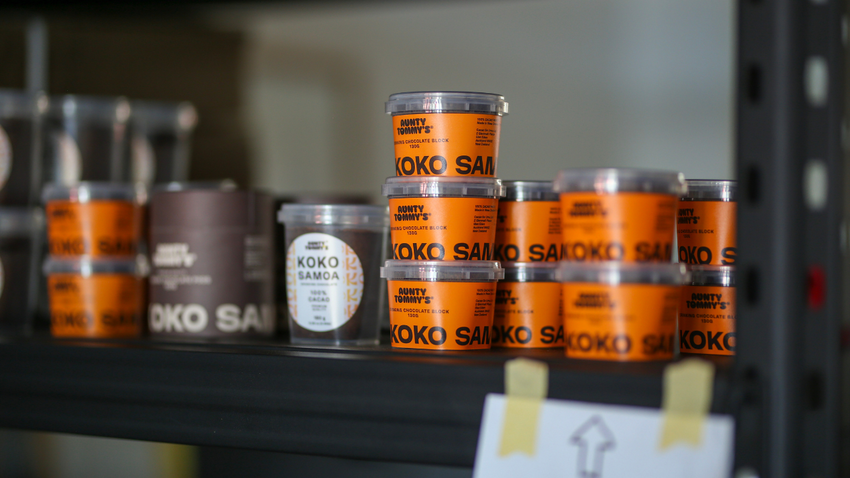
For Aunty Tommy’s, koko Samoa has never just been a product. It’s a feeling! memories of home, nostalgia.
The Samoan-owned family company has built a loyal following by staying deliberate about how they grow, balancing international recognition with the responsibility of protecting something many Pacific families hold deeply sacred.
“When something carries memory like koko does, you can’t just put it in a wrapper and treat it like any other product. Our community are buying feelings as much as food.”
That tension sits at the heart of the company’s approach. While Aunty Tommy’s has recently gained recognition from Forbes and featured at both of New Zealand’s TIME World’s Greatest Places 2026 selections, the focus remains on preserving the integrity of koko itself.
“We know koko is sacred to a lot of our people. If we ever start sounding like we’re selling ‘the experience of being Samoan,’ we’ve lost the plot.”
Instead of adapting koko for mainstream audiences, Aunty Tommy’s says they invite people to experience it on its own terms.
“We tell people this isn’t chocolate, it’s koko.”
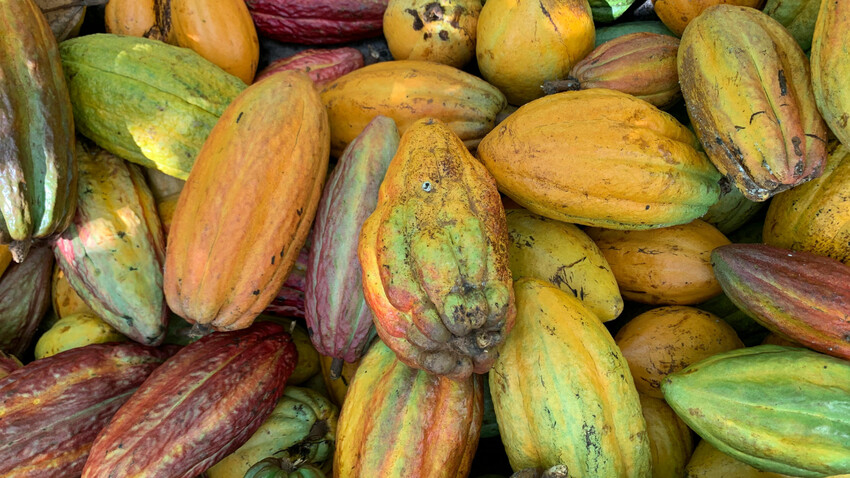
The company also sources cacao from across Samoa, Vanuatu, Papua New Guinea and the Solomon Islands, while trying to ensure Pacific growers benefit from the growth too.
“‘Pacific-owned’ can’t just mean the brand is owned by Pacific people. It has to mean the value loops back through the islands too.”
Even within the Samoan community, the company says trust had to be earned.
“If I’m completely honest, they were and still are suspicious” he laughs.
But for Aunty Tommy’s, that scrutiny matters.
“These questions keep us honest and we wouldn’t have it any other way.”
As the business continues to grow, the company says protecting the traditional “by feel” process remains central to everything they do.
“We don’t dabble in trends, we’re koko people! We’d rather master one thing than dilute ourselves trying to be everything.”
Read full Q+A
You’ve called koko “a physical embodiment of home” – what responsibility comes with turning that into a commercial product?
Honestly, a big one! When something carries memory like koko does, you can’t just put it in a wrapper and teat it like any other product. Our community are buying feelings as much as food. The responsibility for us is about trying not to break that feeling. While we can't duplicate the traditional manufacturing process from Samoa because of compliance reasons, our product still retains some of the same aspects — it's slow roasted, the koko is stone ground, it’s not tempered, we don’t add filler, and we don’t take shortcuts.
It also means we have to be careful not to flatten the story into marketing which isn’t always easy. Optimistic brand voicing etc. always sounds good on paper as a value proposition when you’re starting out, but the realities of the commercial market show you something else when you get there, that’s something that causes us tension and that we juggle all the time, not because we don’t believe in them, but because we need to be pragmatic and balance our own brand voice with the realities of business and keeping the lights on.
We’re a family company, we have a responsibility to honour the people whose memory we carry, especially Aunty Tommy herself. We know koko is sacred to a lot of our people. If we ever start sounding like we’re selling “the experience of being Samoan,” we’ve lost the plot. We just make good koko and we trust our people to bring the rest of themselves to the cup.
What does it mean to you that a deeply Samoan product is now being recognised by platforms like Forbes?
Very surreal, but also probably overdue! Koko Samoa has been a national drink in Samoa for over a century. It’s been on Pacific tables for just as long so when international media notice, we think the world is finally catching up to what our nanas always knew. What we’re most proud of isn’t the recognition itself, it’s more the opportunities it opens up. Right now, our koko is featured at both of New Zealand’s TIME World’s Greatest Places 2026 selections — Tala in Parnell, and Flockhill Lodge in the South Island. The only two Oceania entries on the entire 100-places list.
How do you balance staying culturally authentic while introducing koko to people who didn’t grow up with it?
We don’t water it down for newcomers and we don’t gatekeep it from them either. The koko speaks for itself but we do do a lot of work around making it more accessible to help people meet it who may not have been familiar with it before. For someone who’s never had it, koko can be confronting at first. 100% cacao, bitter, earthy, smokey, and nothing like the sweet drinking chocolate they grew up with. We’re upfront about that. We tell people this isn’t chocolate, it’s koko. It’s a different category wit it’s own ritual, grate, simmer, sweeten of you want, then share. Once people understand they’re stepping into a tradition rather than buying a substitute for Milo, something shifts and they lean in. Authenticity isn’t a vibe for us, it’s a method. We’re not interpreting koko for a new audience. We’re inviting a new audience in to try koko, on koko’s own terms.
You source cacao from across the Pacific – how important is it that Pacific growers benefit from this growth?
It’s pretty central for us. It’s no secret that we source from not just Samoa, but also from Vanuatu, Papua New Guinea, and the Soloman Islands. If we grow, they grow, but more importantly if we don’t carry that forward, we’re just another company extracting from Pacific land for a brand story. The truth is cacao prices and farmer livelihoods across the Pacific are uneven, and a lot of growers don’t see the value that ends up in retail. There have been instances where we’ve had the rug pulled out from under us while in negotiations with a Pacific farmer because another non-Pacific company has come along and signed a contract with the farmers and then act as a middleman who basically do nothing other than clip a ticket and tick a box to satisfy a funding obligation. Fair play if these third parties are promoting and helping these farms in good faith, but to us it just looks like a homogenisation of the region they are in. Visit a village, take some pictures, post them to show how culturally aware they are, then gate keep the supply from other indigenous businesses who would actually do a better job of highlighting their own people and cultures. We can’t fix this single-handedly. But we can and we do pay fairly and source consistently. Over time we want to build long-term relationships where growers know we’re showing up next season, and the one after that. We can also tell their story properly, not in the post-card social media way, but with integrity - from one Pacific person to another.
Fo us, “Pacific-owned” can’t just mean the brand is owned by Pacific people. It has to mean the value loops back through the islands too. We’re still working on that; there’s no finish line but it’s the right kind of work to keep doing.
What has the reaction been from the Samoan community – did they embrace Aunty Tommy’s straight away or question it?
If I’m completely honest, they were and still are suspicious 🤣 I still field multiple calls a week from grandmothers or grandfathers about who we are and - Are you a Samoan company”? Who are you to package the koko making it look fancy? Are you doing right like in Samoa? Who told you to do it like that? Is this just another diaspora project repacking the homeland? These questions keep us honest and we wouldn’t have it any other way. We know Pacific communities are tight, observant, and protective, as they should be. We’re a Samoan owned family company; all our shareholders are born and raised there; plus it gives me a chance to sharpen my Samoan and also puts them at ease when I switch to my first language. It’s more a verification process for them to make them feel more confident that what they’ve just bought (or are thinking of buying) comes from a Samoan company.
We’re not the only local NZ Koko Samoa manufacturer, BUT, we’re the only local NZ Koko Samoa manufacturer that is wholly Samoan/Pacific owned. Aside from the familiar plastic wrapped/non labelled/styrofoam cup versions of suitcase koko from Samoa, anything else in a branded container that doesn’t have an Aunty Tommy’s logo on it, is not from a Samoan company.
As Aunty Tommy’s grows, how do you protect the “by feel” process and keep it from becoming diluted?
We’ve asked ourselves this question daily right from the beginning. It’s not an easy one to answer. A lot of our calls are made “by feel”, when the roast is right, when the grind is silky enough, when the batch is ready. You can’t fully automate that, well not in the way we’d be comfortable with because as soon as we hand that process over to full automation, to a machine that doesn’t know what koko is supposed to "feel like” we’ve lost the thing that makes us, us. Our approach so far has been to grow slow and grow deliberate. I keep getting surprised looks from people after they find out we’ve been operating for 5 years and why they haven’t seen us in more stores, or why our follower count isn’t as high as it should be, my answer is always the same.
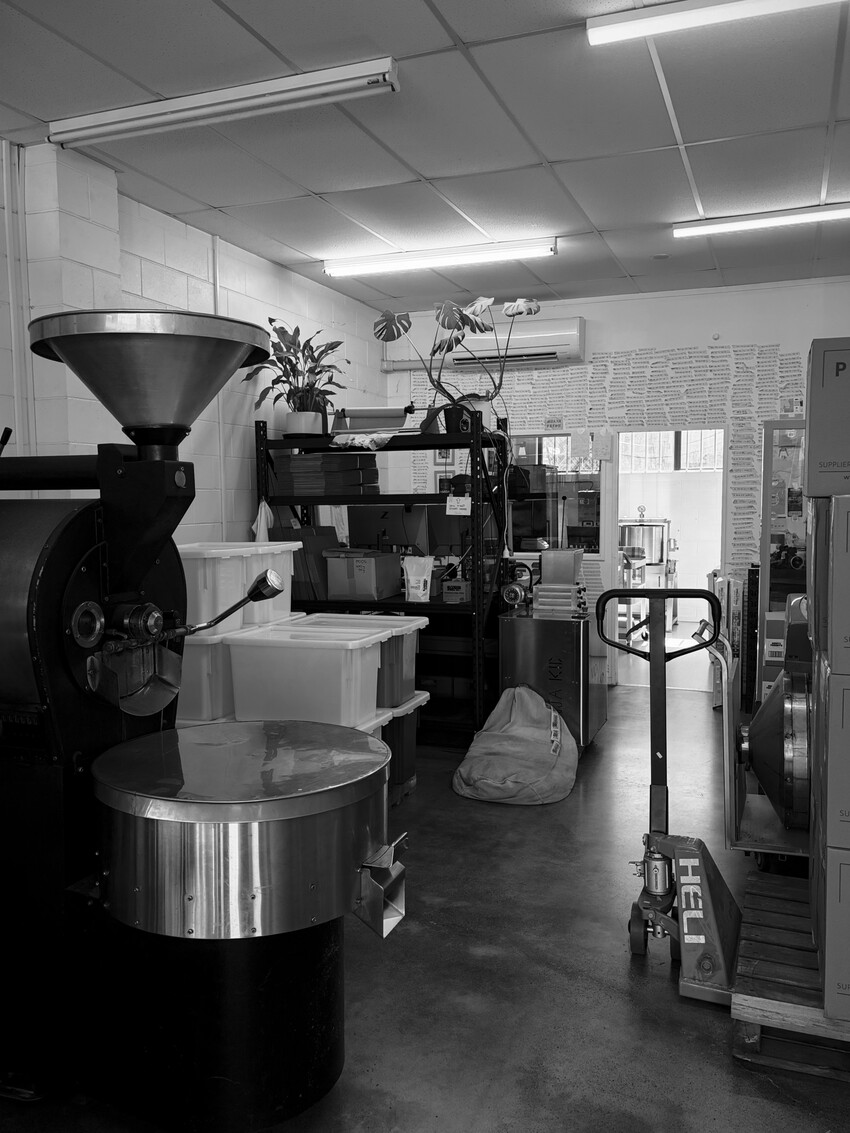
I used to be in advertising in Asia, I’ve designed campaigns selling products to audiences in the high millions across 5 countries simultaneously, I understand consumer retail habits, supply chain manufacturing, and have been one of the few allowed into a factory in an area that make a majority of the worlds luxury goods. I’ve seen the source, I’ve seen the conditions, I’ve looked into the eyes of a machinist who just didn’t have a choice - that was it for them at that particular time; so I have a better understanding than most of what actually goes into making their ‘cool shit’ at scale. That’s not what I wanted for Aunty Tommy’s. There’s a discipline in saying no. We don’t put out a new SKU every quarter. We don’t dabble in trends, we’re koko people! We’d rather master one thing than dilute ourselves trying to be everything. If growth ever asks us to compromise the koko, I’m not sure I would know how to.
Do you feel a responsibility to honour your family’s name in a different space, moving from music into food?
Maybe, I never really look at it that way. It’s the classic cliche, do what love and you’ll never work a day in your life. In my case, work lots of jobs (some you hate) then discover you like making koko because it lets you test and experiment with all those things that smart people said in all the unnecessary books you were made to read 🤣
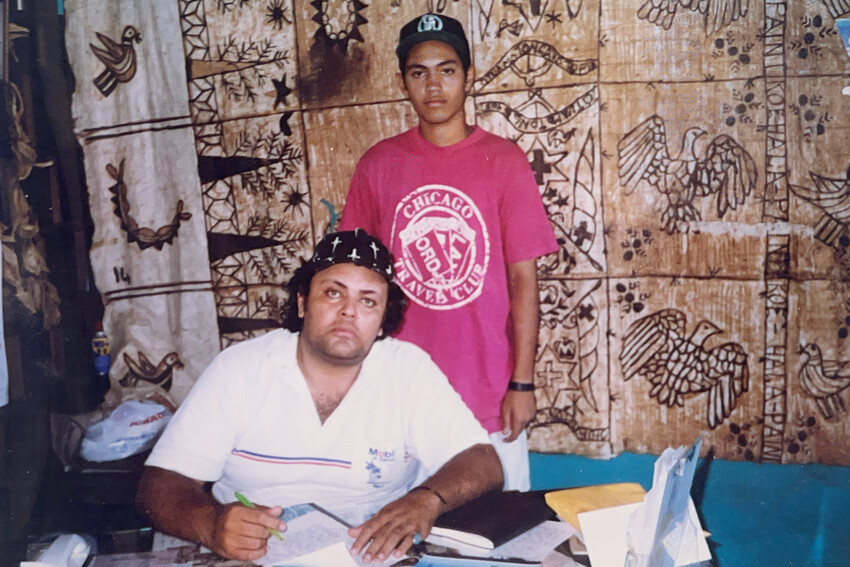
Given our family’s musical pedigree in both NZ and the world, it definitely wasn’t planned. My aunty Mavis Rivers was the first NZer and more importantly, first Samoan/Polynesian to be nominated for a Grammy for best new artist — the first time that category was introduced at the second ever Grammy Awards in 1960. She was the first female artist signed to Frank Sinatras Reprise label and was called the purest voice in Jazz. Aunty Mavis was and is — the Jazz musicians Jazz musician!
My father, Muaausa, Shane Rivers carried that lineage forward and created Piula Studios in Apia in the early 80’s. He did a lot of early seminal contemporary Samoan recordings for groups who didn’t want to travel to Pago to record at Daystar, as was normal at the time. Tiama’a, Five Star, were only a small number of the hundreds of recordings by famous Samoan groups my father did over 20 years of running Piula. Herbs stayed at our house on the Samoan leg of their Pacific tour. His legacy in NZ is just as important. He adapted traditional Samoan songs into an early childhood resource for the Ministry of Education that taught a generation of our kids how to sing in their own language. He also managed the ethno music library at the University of Auckland, working alongside Dr Richard Moyle, the world’s foremost expert on Pacific Ethnomusicology, cataloguing old Samoan fa’agogo and early recordings.
My younger brother equally carried on this legacy, signing and releasing a double album on Sony Music when he was barely out of high school. He now produces music exclusively for the European market. Music wasn’t just something the Rivers family did, it was how we showed up for our culture, here and overseas. For me that’s a heavy name to carry into a different space but the more I’ve done this work, the more I’ve realised that the medium changes, but the Kaupapa doesn’t. My aunty took a Samoan voice to the world stage. My dad put Samoan songs into the hands of Samoan kids, my brother makes European festival goers lose their minds incorporating aspects of Samoan music. I’m just trying to do my thing with koko, take something that lives deep in our culture and put it somewhere people can receive it, on its own terms!