What We Love About Being Sāmoan: Voices From Our Community
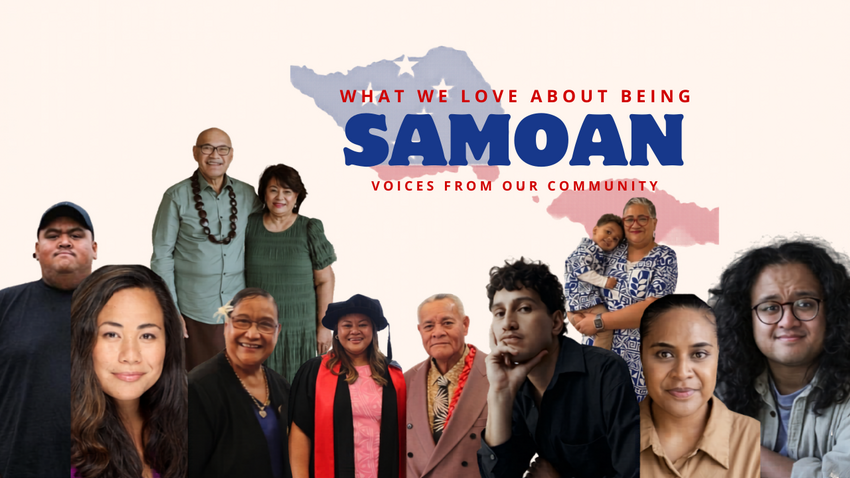
What Do You Love Most About Being Sāmoan?
- By Fa’aso’otauloa Matilda Poasa
The answers touched on faith, family, service, food, identity and community, revealing the many ways Sāmoans carry their culture wherever they are in the world.
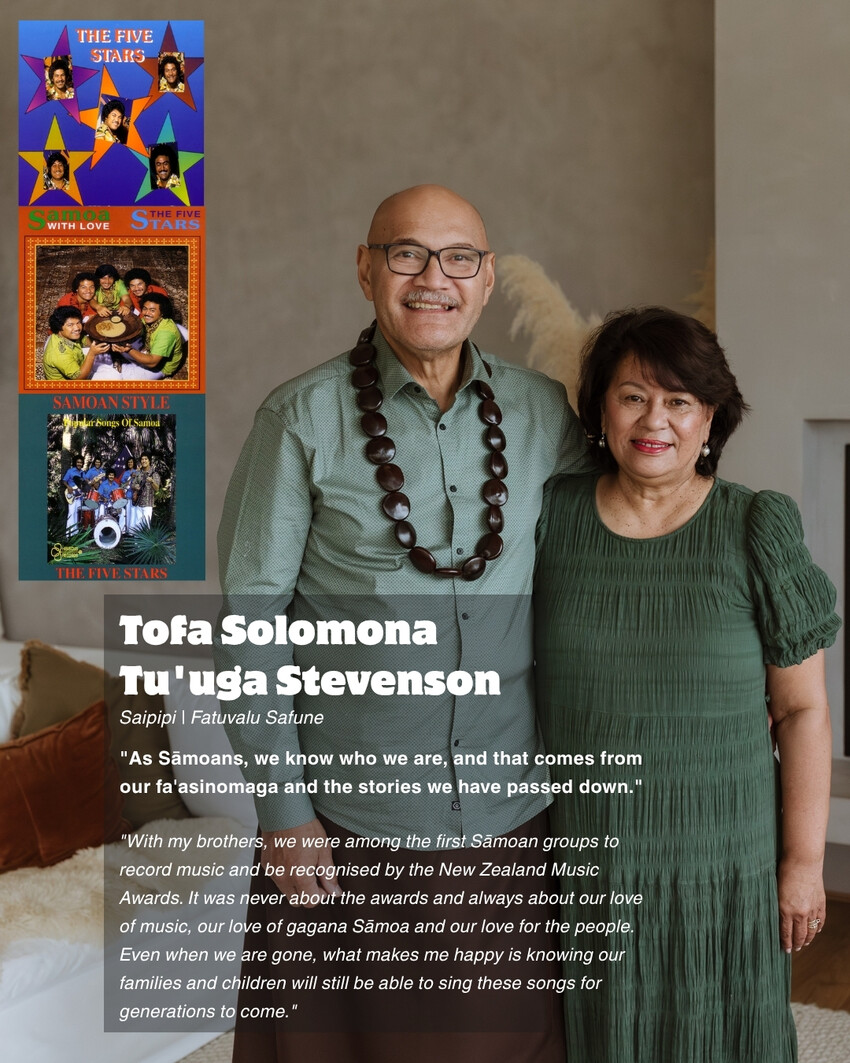
For legendary musician Tofa Solomona Tu'uga Stevenson, being Sāmoan begins with identity.
"E fa'avae i le Atua Sāmoa"
he reflects on the importance of knowing who we are through our faith, our fa'asinomaga, and the stories passed down through generations.
Stevenson, together with his brothers, formed iconic Sāmoan group The Five Stars, whose music soundtracked countless family gatherings, church functions, road trips and fiafia nights across the Pacific.
The Five Stars became a cornerstone of Pacific music in Aotearoa, helping bring gagana Sāmoa into homes and communities far beyond the islands. Their contribution to New Zealand music was recognised in 1986, when they became one of the first Pacific groups to win a New Zealand Music Award for their hit song ‘My Sweetheart', cementing their legacy as pioneers of Pacific music.
But Stevenson says the music was never about trophies or recognition.
"It was always about our love of music, our love of gagana Sāmoa and our love for the people."
What brings him the greatest joy is knowing those songs will continue long after he is gone, sung by children and grandchildren for generations to come.
Service Before Self
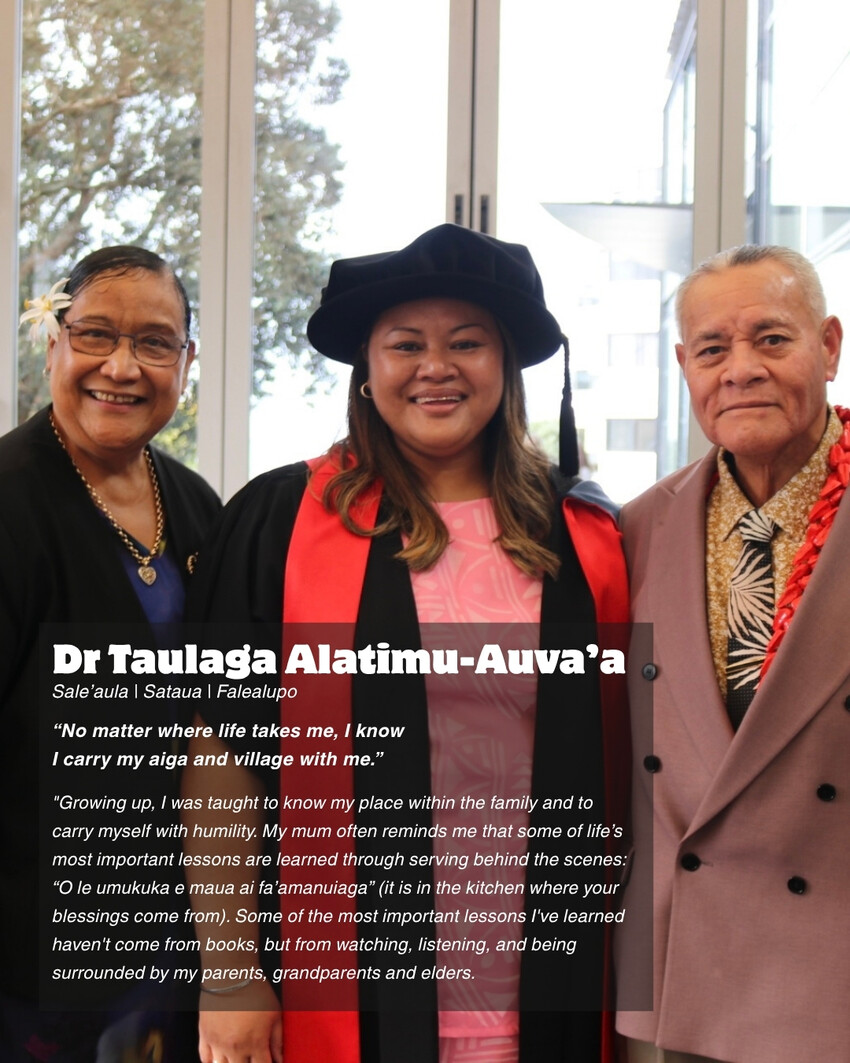
Mental health practitioner, researcher and academic Dr Taulaga Alatimu-Auva'a says one of the most important lessons she learned growing up was understanding her place within family and community.
As her mother often reminds her:
"O le umukuka e maua ai fa'amanuiaga."
(It is in the kitchen where your blessings come from.)
For Dr Alatimu-Auva’a, some of life's greatest lessons were never formally taught. They were observed through parents, grandparents and elders, and through serving quietly behind the scenes.
"Know your place within the family, and in every space you enter; carry yourself with humility"
Even now, she jokes that no matter how old she is, no achievement protects her from being called back into line by her mother.
"My mum will unashamedly call out in front of a crowd, 'Kaulaga, kope mai feau ia,' and just like that, I'm reminded of my place."
It's a uniquely Sāmoan form of love.
The Pathway to Leadership
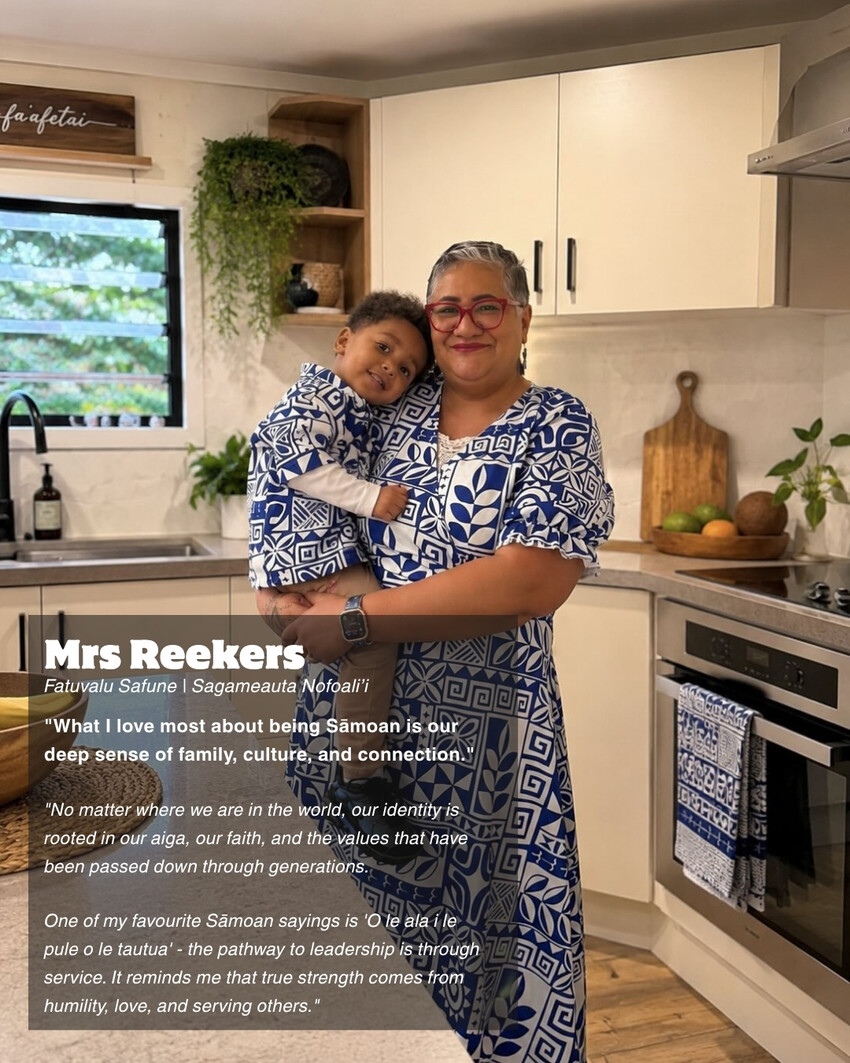
Content creator Mrs Reekers also highlights the value of service as a defining feature of Sāmoan culture.
"What I love most about being Sāmoan is our deep sense of family, culture, and connection."
Her favourite Sāmoan proverb is one many of us grew up hearing:
"O le ala i le pule o le tautua."
(The pathway to leadership is through service.)
"It's a reminder that true strength comes from humility, love and serving others."
She says being Sāmoan is something she carries with pride every day, shaped by the values passed down through generations.
Home Tastes Like Oka and Pisupo
If there was one topic that appeared almost as often as family, it was food.
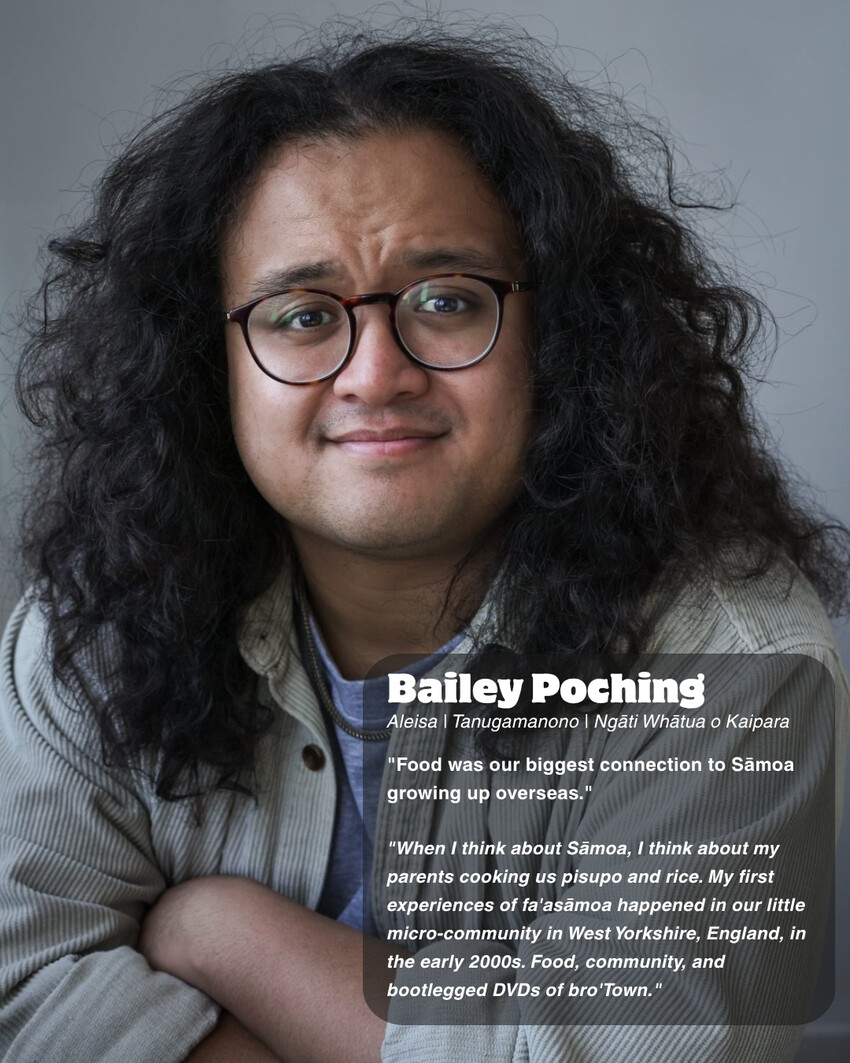
For actor Bailey Poching, memories of Sāmoa are inseparable from childhood memories.
Growing up in England, food became one of the strongest links to home. His parents would cook pisupo and rice, and while his English classmates often struggled to understand what he was talking about, those meals became a connection to culture thousands of kilometres away.
"Food was our biggest connection to Sāmoa growing up overseas."
As Bailey puts it, English corned beef "doesn't hold a candle to Pacific", but it did the job.
That connection extended beyond the dinner table.
"My first insights to and experiences of fa'asāmoa happened in our little micro-community in West Yorkshire in the early 2000s. Food, community, and bootlegged DVDs of bro'Town."
These days, Bailey still finds joy in sharing food. His mum's chop suey remains "truly unbeatable", and he's become a passionate advocate for the new-age practice of adding red chilli to oka.
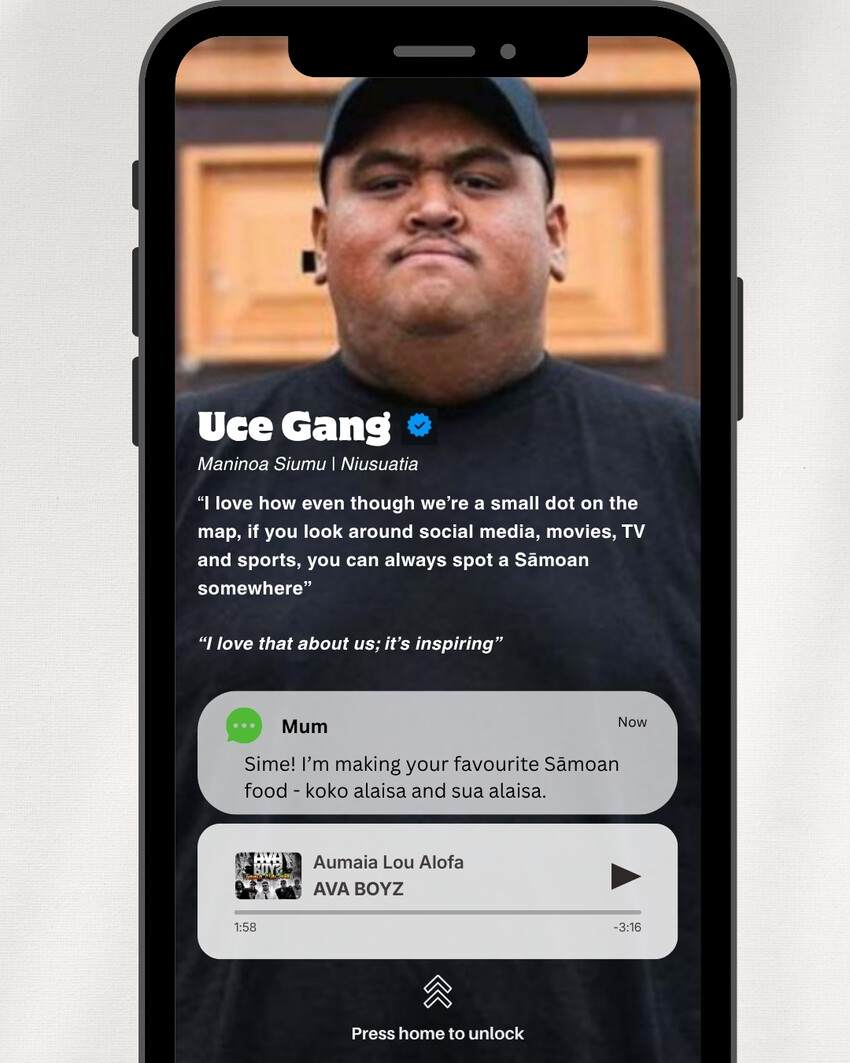
For content creator Simeon Fiapule, better known as Uce Gang, food is equally tied to memory.
While his favourite dishes include koko alaisa and sua alaisa, one of his strongest memories comes from a family trip to Sāmoa in 2009.
"Core memory," he laughs, recalling the sapasui from Pinati's, a legendary burger from Amani’s, and time spent with family.
For both Bailey and Uce, food is more than something on a plate. It's memory, identity, and a reminder that home can travel with us wherever we are in the world.
We Find Each Other
Across the responses was another common thread: no matter where Sāmoans go, we somehow seem to find one another.
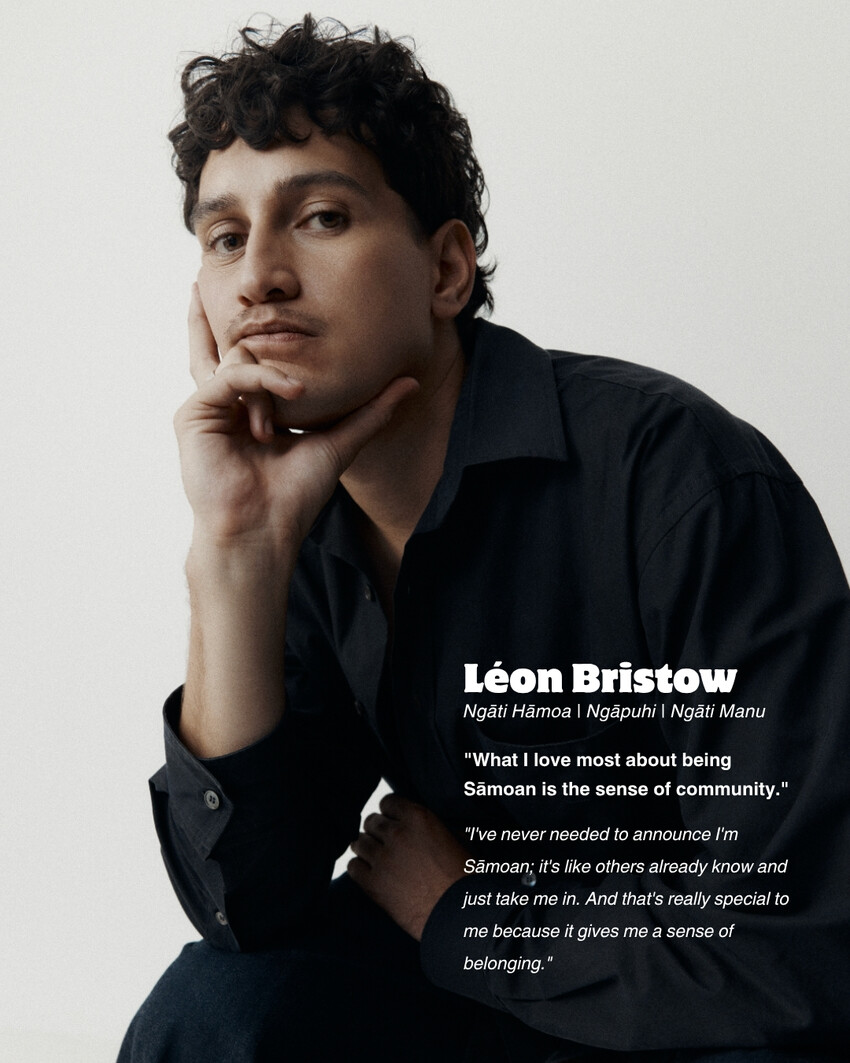
For Entrepreneur, Art Director and Forbes 30 Under 30 recipient Léon Bristow, community has always been the strongest pull.
Even though he grew up with strong Māori influences and is still navigating his relationship with his Sāmoan heritage, he says he has always gravitated towards other Sāmoans.
"I've never needed to announce I'm Sāmoan. It's like others already know and just take me in."
That sense of belonging is something he treasures.
"Sāmoans just know how to have the best time. Never half-hearted, always fully present. The experiences and natural connections I've made have been far more valuable and enriching than with some people I've known for years. There’s just so much time and alofa to go around"
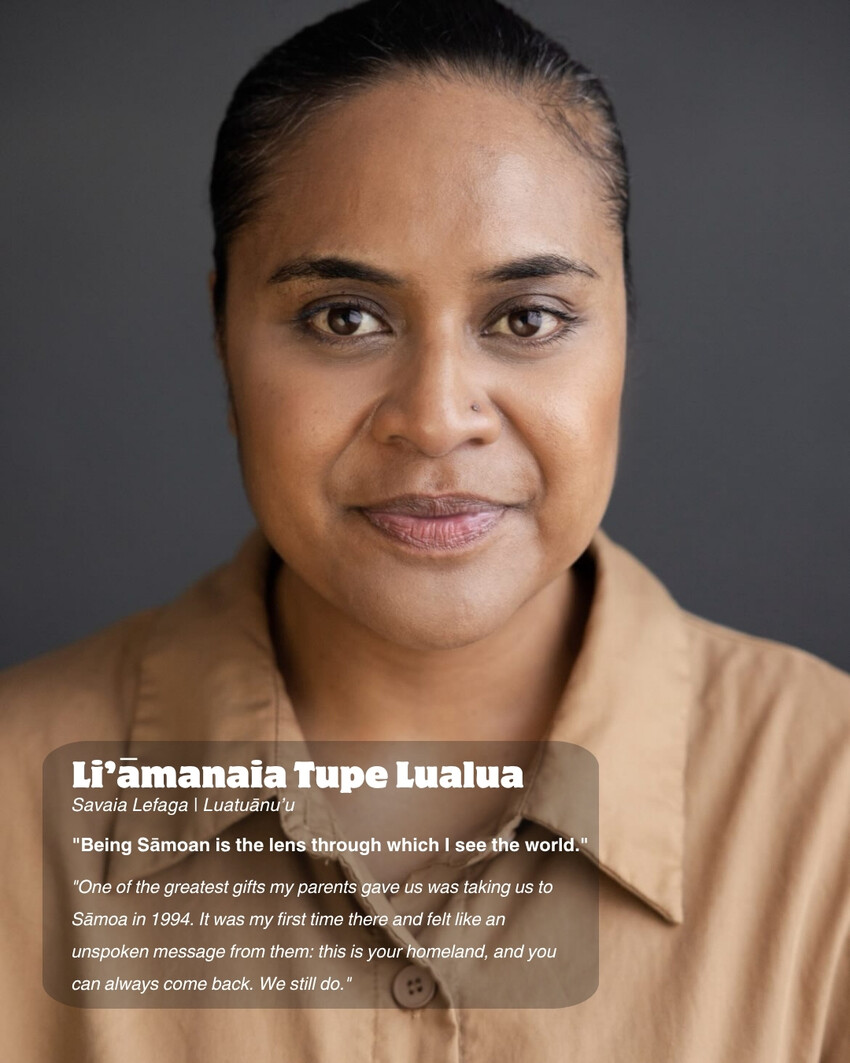
Similarly, dreamweaver, choreographer, and director Li'āmanaia Tupe Lualua describes herself as a "685 tracker."
"Wherever I go, I try to find other Sāmoans and Pacific Islanders. Learning about all of the different ways we exist in the world fascinates me."
One of her strongest memories is visiting Sāmoa for the first time in 1994.
"It was like an unspoken statement from my parents. Letting us know that this was our homeland and that we could go back anytime."
And they still do.
The Happy People
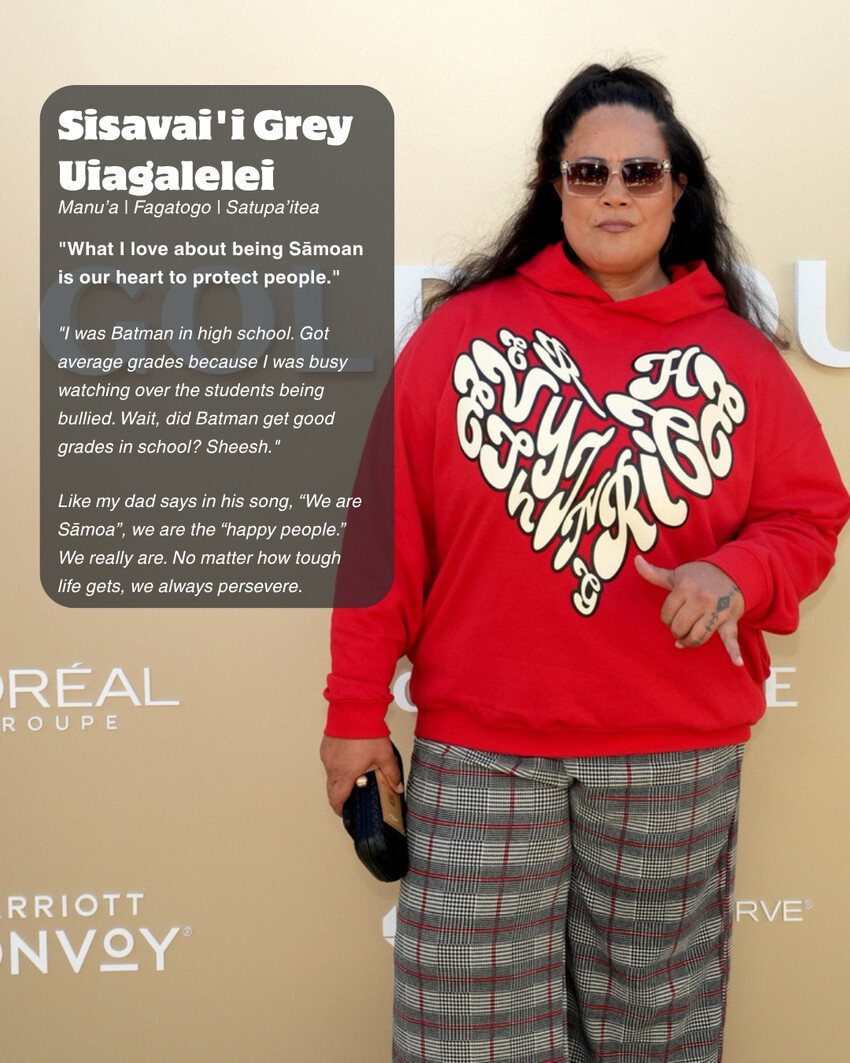
Perhaps no response captured the spirit of Sāmoans quite like actress and comedian Sisavai'i Grey Uiagalelei.
"What I love about being Sāmoan is our heart to protect people."
Recalling her school years, she jokes that she was essentially “Batman”, too busy looking out for students being bullied to worry about getting top marks.
But beneath the humour sits something deeper.
"We are the happy people,"
she says, echoing the message of her father Jerome Fa'anana Grey, legendary Sāmoan musician and composer of the iconic anthem ‘We Are Sāmoa’, which has been sung by generations of Sāmoans around the world.
"We really are. No matter how tough life gets, we always persevere."
Carrying Sāmoa With Us
Being Sāmoan is more than where we were born or where our families come from.
It is the values we carry, the people who raised us, the villages that continue to shape us, and the connections that find us no matter where we are in the world.
As Li'āmanaia Tupe Lualua beautifully puts it:
"Being Sāmoan is the lens through which I see the world. It is the glisten that bounces off my skin, it is the sound that emanates from my voice, it is the grounding of my step and the elation of my spirit."
And perhaps that is what all of these reflections have in common.
Sāmoa is not simply a place we come from.
It is something we carry with us.