
Who Sets the Rules in Today’s Kava Circle?

The sexualisation of tou’a in faikava ceremonies isn’t new, but an explicit video that recently went viral has caused huge concern about the exploitation of women in these spaces.
Tongan woman’s rights advocate Ofakilevuka Guttenbeil- Liliki on the wider cultural issues raised by the sex act filmed at a faikava session that went viral recently;
Social media platforms have challenged, and in many ways shaken, the very foundations of how we live as Tongans 🤷🏽♀️
We often speak proudly of Tongan culture as unique, particularly the deeply rooted concept of faka‘apa‘apa between brother and sister. It is a value we celebrate and frequently hold up as evidence of our cultural distinctiveness, one that extends beyond siblings to first, second and even third cousins (tuonga‘ane ‘aki / tuofefine ‘aki).
Yet things are changing, and changing very fast.
Over the past two decades, faka‘apa‘apa has been increasingly tested. What was once a lived, practised value has slowly shifted into something that is now largely understood and celebrated in principle rather than consistently upheld in practice. In this shift, we are witnessing a deeper erosion of boundaries, restraint and cultural discipline, elements that once structured relationships and protected dignity within families.
At the same time, we are seeing Tongan men and women, in all their diversities, publicly performing what was once private. In digital spaces, behaviours that would never have been acceptable in everyday Tongan life are increasingly normalised, appearing semi-naked, using sexually explicit or degrading language, or performing sexualised acts for public consumption.
This forces us to confront an uncomfortable but necessary question: what does this visibility mean for faka‘apa‘apa between brother and sister? When intimate behaviour is broadcast without regard to who may be watching, brothers, sisters, cousins, elders, the cultural boundaries that once governed respect and dignity are blurred. Faka‘apa‘apa cannot survive as an idea alone. It requires conscious practice, restraint and accountability, especially in digital spaces.
What we are witnessing is not simply a change in technology, but a challenge to intergenerational responsibility.
I am conscious that I now sit in an older generation. At 50 years of age, I grew up in a time when these boundaries were clearly taught and deeply embedded. Faka‘apa‘apa was not debated or negotiated. It was implanted in our way of being, particularly in how we behaved around brothers and male cousins. It shaped how we spoke, how we dressed, how we entered spaces and how we carried ourselves.
Fast forward to 2026. I am married with four children. My eldest is 22 and my youngest is 13. What matters to me is this: my children have received the same teachings, even though they have been passed on differently, by their father more conservatively and by me more liberally. This is not contradiction. It is balance 🤷🏽♀️, at least in my thinking 🤔
When my husband’s sisters come to our home, he still upholds the brother and sister taboo with discipline and intention. He does not enter the house freely unless he knows his sisters are seated in shared spaces and ready to talk or share a meal. If they are resting, he will not enter the house. This is faka‘apa‘apa in action, quiet, embodied and unquestioned.
As for me, I have more flexibility in how I interact with my brothers. But flexibility does not mean the absence of boundaries. I am mindful of the language I use around them. There is no foul language, no sexual references, no casual crossing of lines that would diminish respect. The boundary still exists. It is simply expressed differently.
This lived experience is why I resist the idea that cultural erosion is inevitable. Don’t get me wrong, there are some cultural practices that I believe are harmful and should no longer be practised. Let’s leave that for another post.
Which brings us to the kava circle.
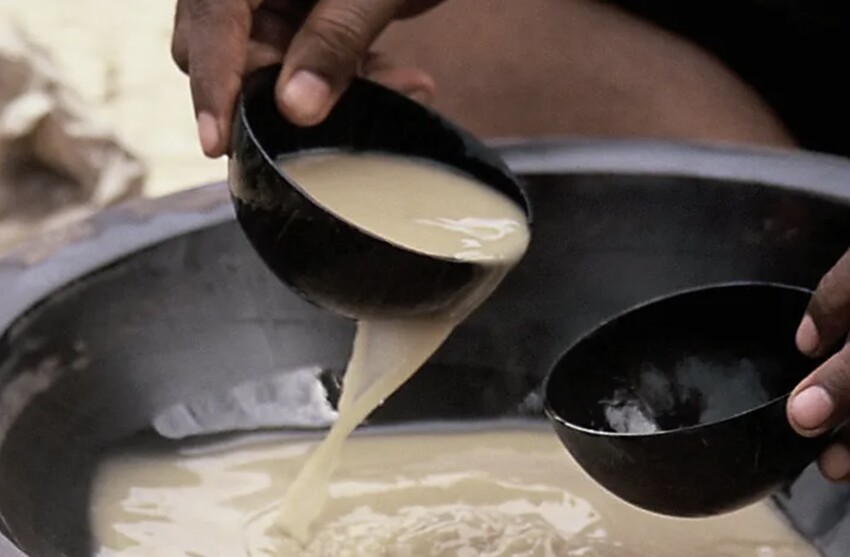
To be clear, this is not an argument that sexual references never existed in fai kava. They did. Comments, sometimes subtle, sometimes overt, were directed at women serving the kava. Women as tou‘a responded in different ways, and I have witnessed this first-hand, some through banter, others by showing clear disapproval and disengaging. What mattered was not the absence of sexual talk, but the presence of limits.
One of the clearest expressions of those limits was relational awareness. If a man entered a kava circle and realised the tou‘a was his sister or cousin, he would leave and find another place to drink. This was immediate and unquestioned. It was faka‘apa‘apa practised, not proclaimed.
What we are seeing now is a fundamental shift.
In contemporary debates around the kava circle, some men have deliberately chosen to change the dynamics, creating a new playbook in which sexualised performance around the kava bowl is normalised. This shift is not neutral. It redefines what is acceptable behaviour, who sets the rules and who absorbs the consequences 🤷🏽♀️
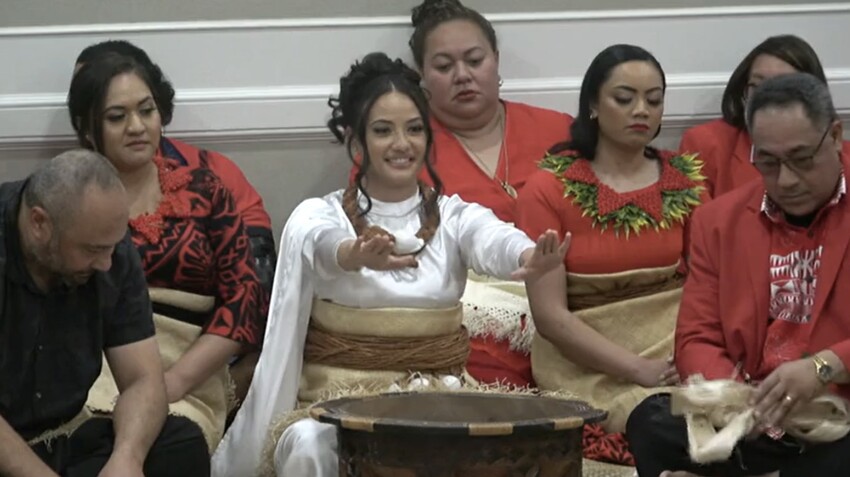
At the same time, the role of tou‘a itself is being reshaped by economic realities. For many women, serving as tou‘a has increasingly become a means of survival rather than a cultural obligation. Some do it to pay school fees or household bills. Others do so while on work leave from Tonga, recognising that serving kava, particularly in Australia, New Zealand or the United States, can be one of the fastest ways to earn cash while overseas. To put this into context, a woman on annual leave in the United States can earn, in just one month serving as a tou‘a, more than half of what she would normally earn in an entire year’s salary at home in Tonga 🤦🏽♀️
More recently, there are cases where women who are already engaged in sex work are drawn into kava spaces where payment becomes tied not to service, but to sexualised performance. In these contexts, the act, the pace and the boundary do not matter so long as payment is made. What is framed as consent is narrowed to transaction.
There are also women who participate not for money, but because they are asked, or feel obliged, to do so as part of cultural, community or church expectations. Yet even here, the shift is evident. What was once grounded in service and protection is increasingly overshadowed by monetisation. Making money as a tou‘a is becoming the default logic rather than the exception.
This is especially visible in seasonal labour contexts. In Australia and New Zealand, Tongan women have been invited to serve as tou‘a during fruit pickers’ pay weeks, when men have disposable income and heightened expectations. This is not simply opportunism. It reflects the intersection of migration, labour precarity, gendered expectations and cultural space, where women’s time, bodies and emotional labour are treated as endlessly flexible and extractable.
What is evident is where responsibility is placed. Scrutiny often falls on women’s behaviour, while the structures that enable and reward this dynamic, male control of space, money, visibility and rules, remain largely unexamined 🤦🏽♀️
As kava circles are livestreamed online, the change happens faster and with more impact. What was once a private, contained cultural space has become a public show. Behaviour is no longer guided by who is physically present or by family relationships, but by who is watching online, reacting and sometimes paying. In the past, when a line was crossed, harm could be limited or stopped. A tou‘a could refuse, a man could be asked to leave or told to change his behaviour, or a cousin could quietly step away.
Those actions helped protect dignity. Today, once something is recorded and shared, leaving no longer fixes the harm. That is why the issue is not whether these things happened before, they did, but why the boundaries that once stopped things from going too far are no longer working.
When payment replaces accountability, when performance overrides relational responsibility, and when visibility becomes more important than dignity, faka‘apa‘apa cannot hold.
Silence becomes permission. Inevitability becomes an excuse.
And so we must stop asking whether this is “just how things are now” or “it is what it is” and start asking who benefits from that story.
When men control the space, the money and the narrative, and women are expected to adapt, perform or remain silent, this is no longer culture. It is power without responsibility.
We must be honest about who is watching.
Our young boys are watching men turn the kava circle into a stage where sexualised behaviour is tolerated, rewarded and even celebrated. They are learning that power comes from controlling space, money and attention, and that accountability is optional. Respect becomes negotiable. Restraint becomes irrelevant.
Our young girls are watching too. They are learning that visibility brings reward, that money follows performance and that dignity is praised in words but traded away in practice. In a world of economic pressure and limited opportunity, the message is clear and dangerous: your value is conditional.
Children do not learn culture from speeches.
They learn it from what adults allow.
If we permit sexualised acts to define cultural spaces, we are not “keeping up with the times”. We are actively teaching boys to dominate and girls to adapt. THIS IS NO JOKE.
If faka‘apa‘apa only survives when it costs nothing, then it was never as strong as we claimed 👉🏽👈🏽
#TongaOkuTauFefe
#OkuIkaiKeTauSaiPe
#TauTalangaiMeaOkuHokoNaaTomui
#TauHangaHakeKuoHokoEMeani
#KoeMeaAnagamaheni 🤷🏽♀️