
Tonga Rugby League Staff Face Possible Two-Year Ban After Eliesa Katoa’s Serious Head Injury
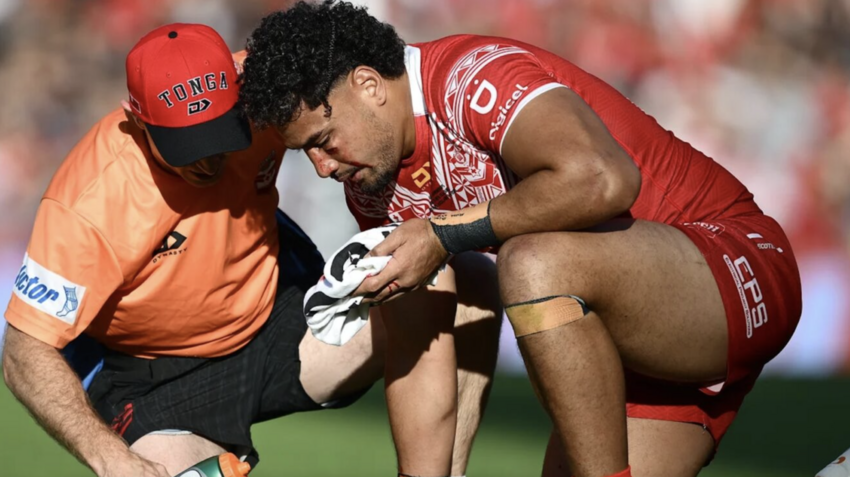
The Pacific is rallying around Katoa, who has undergone brain surgery and will miss the 2026 NRL season.
The Moana rugby community is sending prayers and support to Eliesa Katoa, the 25-year-old Mate Ma’a Tonga forward who underwent brain surgery after sustaining multiple blows to the head during Tonga’s match against the Kiwis in the Pacific Championships on November 2nd.
While Katoa recovers and focuses on his long-term health, the NRL has launched serious disciplinary action against members of Tonga’s medical and training staff — a move that could see three team staff banned from NRL and ARLC competitions for two years.
The NRL Investigation has raised “Serious Concerns” about player safety.
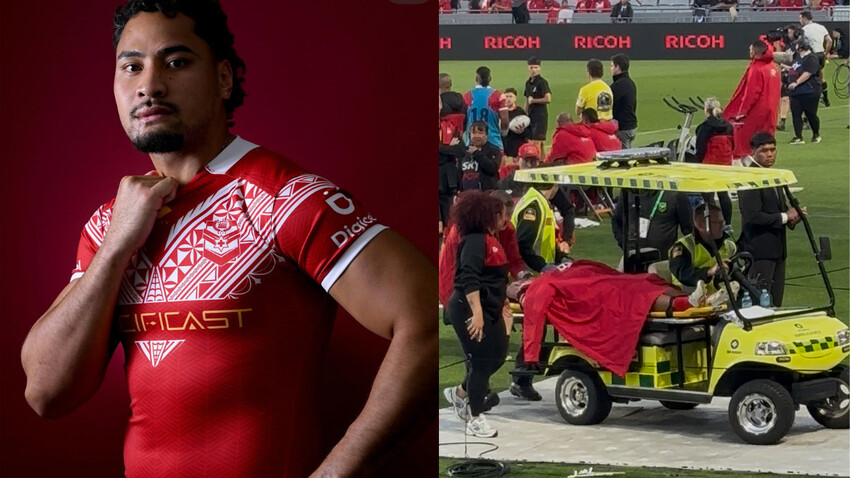
Following the incident, the NRL reported that it had uncovered “serious concerns regarding possible breaches of NRL rules and protocols” in how Katoa was assessed and treated.
According to the NRL, these concerns include breakdowns in communication between medical staff, vital health information not being shared and potential failures to meet required concussion and head injury protocols
For Pacific players who often carry the hopes of entire communities, this highlights how crucial proper medical processes are in high-intensity international competitions.
Three staff have now been issued with proposed 24-month bans with formal breach notices from the NRL issued to the head doctor, assistant doctor and head trainer - with a medical assistant also issued a formal warning.
Each notice proposes a 24-month ban from involvement with any NRL club, team, or competition under the NRL or ARLC umbrella — either directly or indirectly.
All involved will be required to undergo additional training on NRL medical responsibilities and concussion management protocols and they now have five business days to respond to the breach notices.
Tonga Rugby League President Lord Fakafanua says Tonga has fully cooperated with the investigation.
“As the medical staff have now been issued breach notices, they will respond within the designated timeframe. We are committed to respecting this process and refrain from any actions that may prejudice its outcome.”
Earlier, head coach Kristian Woolf defended the team’s decision-making process around Katoa’s availability for the match, though the NRL’s findings suggest serious procedural issues may have occurred.
Katoa, who will miss the entire 2026 NRL season, is reported to be focusing on recovery and hopeful for a return to the sport he loves.
For many Pacific families watching from Aotearoa, Tonga, and across the diaspora, the story cuts deep for our players - brothers, sons, and heroes who put their bodies on the line in every match. An outpouring of comments online have shown the concern for ensuring player safety not just being a rulebook requirement but a wider cultural responsibility.
Mālō ‘aupito, Eliesa — the Pacific is behind you.
HOW THE INCIDENT UNFOLDED ON NOVEMBER 2ND
Katoa’s collapse during the Pacific Championship match at Eden Park has triggered serious questions about player safety and concussion protocols, especially regarding Pacific players who often feel cultural pressure to “push through”.
The Storm forward suffered three separate head knocks in one afternoon.
Warm-up collision — no HIA
In-game elbow — cleared to return
Second-half tackle — ruled out
The first and most debated incident happened before kick-off, when Katoa clashed heads with teammate Lehi Hopoate during the warm-up. Despite visible impact, he did not undergo a Head Injury Assessment (HIA) and was cleared to start the match.
In the 10th minute, he copped a second knock — an elbow from teammate Will Penisini — and was removed for an HIA but later cleared to return.
In the second half, a third head collision occurred when he attempted a tackle on a Kiwi player. This time, he did not return.
Katoa then sat on the sideline for around 10–15 minutes before his condition deteriorated. Teammates later described him becoming disoriented before suffering seizures, prompting urgent medical intervention.
He was fitted with an oxygen mask, loaded onto a medicab, and rushed to hospital where scans confirmed bleeding on the brain.
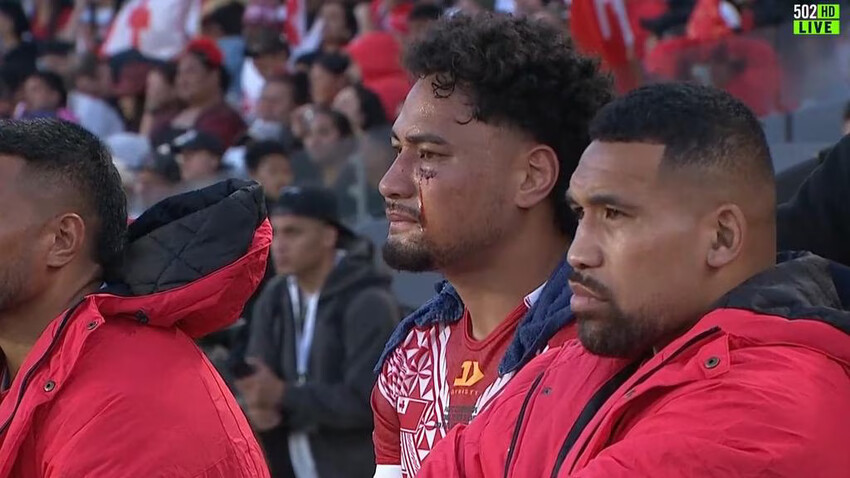
COACH KRISTIAN WOOLF DEFENDS THE PROCESS
At the post-match press conference, Tonga coach Kristian Woolf maintained that protocols were followed:
“The doctors did the usual HIA, we’ve got two very experienced doctors there. They’ve done their usual HIA and he’s passed all that well…. my job isn’t to question doctors. They were both comfortable with him coming back onto the field, so I don’t think there’s anything there in terms of worrying about the process.”
He added:
“Unfortunately I think he’s copped a second hit that was quite heavy and there’s been a poor result out of that - he had two HIA’s in the game. He passed his HIA from the first one, then the second one he doesn’t go back on anyway. By all reports he was fine when he came back off, but he deteriorated after that.”
The NRL’s independent doctor can only intervene in in-game incidents — meaning the warm-up knock fell solely under Tonga’s medical staff. The NRL has since launched a review into the handling of the situation.
A WAKE-UP CALL FOR THE GAME
The incident has reignited long-standing concerns around concussion management in rugby league. With World Rugby already adopting smart mouthguard technology, many believe league must follow suit quickly.
Head injuries aren’t just part of the game - they change lives and end careers.
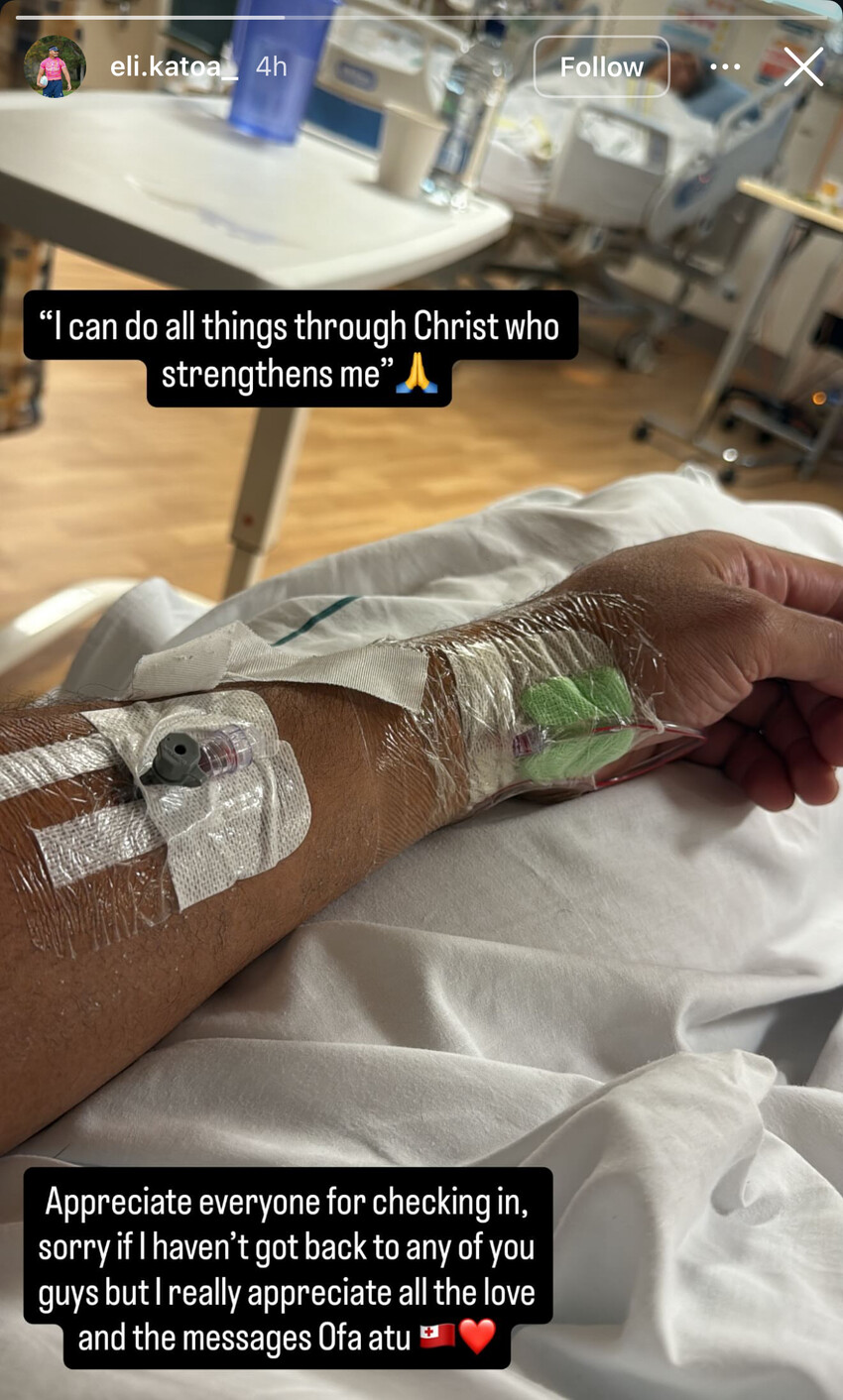
Katoa himself has posted a short message thanking those who have reached out since the incident:
His toughness has never been questioned — but the systems responsible for protecting players are now under the spotlight more than ever.